 11
11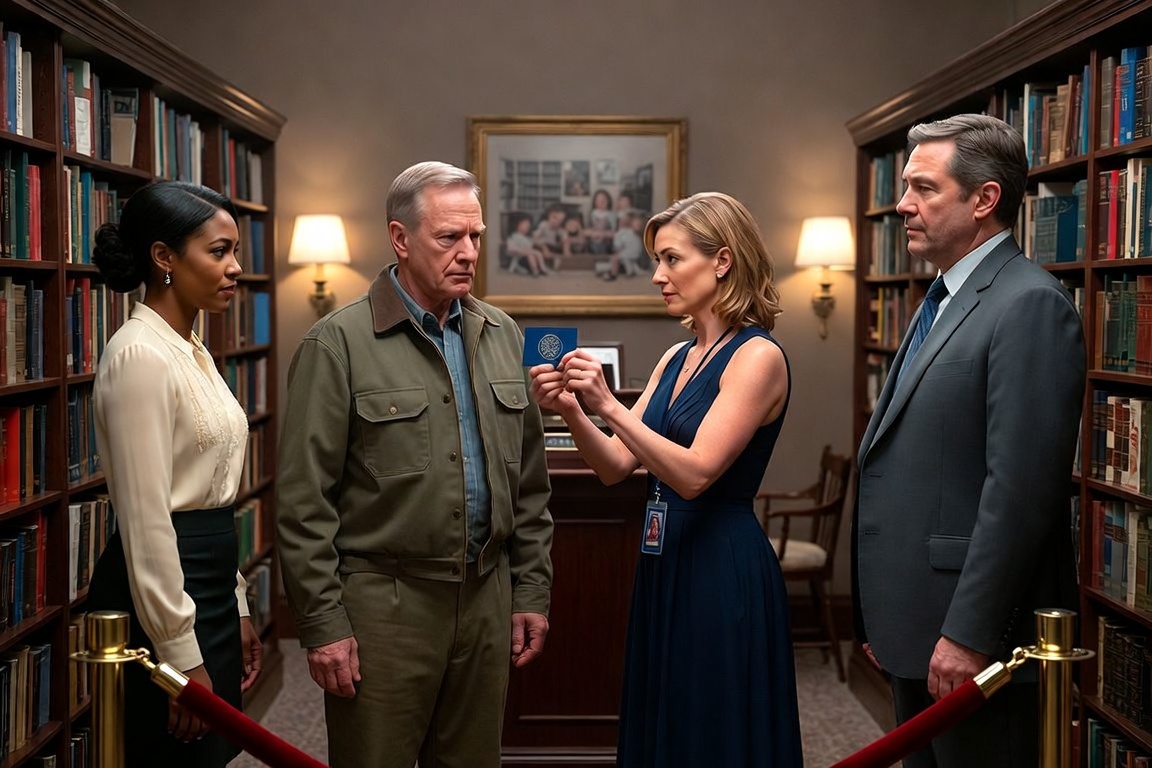
The library fundraiser looked more formal than Harold Finch expected. Tall shelves rose behind rows of chairs, and brass lamps warmed the old wood. A donation podium stood on the small stage, and a framed photograph of the new children’s reading room sat beside it. Harold held a sealed blue dedication card in both hands.
His wife, Marion, would have laughed at how nervous he looked. She had spent thirty years teaching children to sound out words, never caring whether a family could afford tutoring or not. After she died, Harold had come to the library every Thursday to sit in the corner where she used to volunteer. Tonight, he had come because the reading room was being named.
Patrice Lane, the event coordinator, saw him near the front row and moved quickly to intercept him.
“Sir, this area is reserved for donors,” she said, her tone brisk.
Harold nodded, clutching the card. “Yes, I was told to sit here.”
Patrice glanced at his olive work jacket, then at the card in his hands. “The general seating is just behind the center aisle.”
Harold’s face softened with confusion. “I have this card.”
Patrice lifted the velvet rope across his path. “We are about to begin. Please do not block the donor row.”
Robert Shaw, seated nearby, lowered his program, watching the exchange. Harold’s eyes filled. He was not angry; he was embarrassed. He had been a janitor most of his life and knew exactly what it felt like to be looked past—but he had not expected it here, in the building his wife loved.
“I can stand in the back,” he said quietly. He stepped away, retreating toward the shadows.
That was when Lena Brooks, the library director, came from between the shelves carrying event notes. She saw Harold behind the rope, then saw the blue dedication card. Her expression changed instantly.
“Mr. Finch?” she called out.
Patrice turned. “Lena, we are starting.”
Lena ignored her and went straight to Harold. “Why are you back here?”
Harold tried to smile. “I think there was a misunderstanding.”
Lena looked at the rope, then at Patrice. “Yes. There was.”
She took Harold’s hand and guided him toward the podium. Patrice’s face tightened as the room began to watch. Lena opened the blue dedication card and placed it beside the framed photo of the children’s reading room.
“This room exists because of Harold and Marion Finch,” Lena announced.
A profound silence moved through the hall. Harold lowered his eyes; he did not like attention, but the mention of Marion’s name anchored him.
Lena continued. “Marion taught children here for years. After she passed, Harold used the savings they had set aside for travel and gave it to build a reading room in her memory.”
Robert Shaw stood slowly, a gesture of quiet honor. Patrice went pale, realization hitting her all at once.
Harold wiped his cheek. “She wanted every child to have a quiet place.”
Lena nodded. “And now they do.”
Patrice stepped closer, her voice small. “Mr. Finch, I am sorry. I did not realize.”
Harold looked at the velvet rope, then at the photo of bright chairs and low shelves made for children. “You saw what you expected to see.”
No one spoke. It was not cruel; it was simply true.
Lena moved the velvet rope aside completely. “Please sit in the front row.”
Harold hesitated. “Marion should have been here.”
“She is,” Lena said, touching the blue card.
Harold sat slowly in the front row. Robert reached over and shook his hand. Patrice remained near the podium, her event badge catching the lamp light. She had planned a polished evening of gratitude, but true gratitude had arrived in an olive jacket, holding a blue card with trembling hands.
In the photo of the new room, the little chairs were empty, waiting for Monday morning. Harold looked at them and cried quietly, not from shame this time, but because Marion’s love had finally found a place to stay.


