 11
11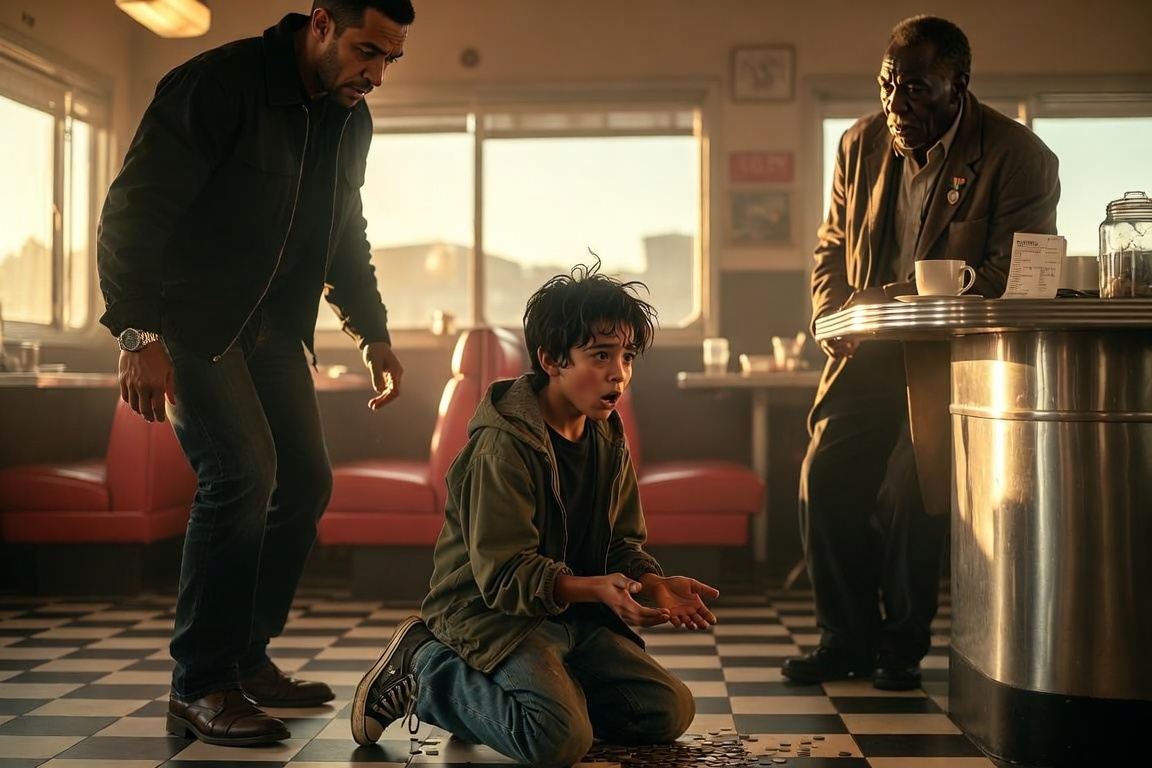
I saw the boy before anyone else noticed him. He stood near the end of the chrome counter, counting coins from a small cloth pouch with both hands. He was thin, his green hoodie had faded at the elbows, and one sneaker had been repaired with a strip of dark tape. He counted carefully, not like a child choosing candy, but like someone making sure every coin had a purpose. Across from him, an elderly veteran stared at an unpaid meal receipt beside a cooling cup of coffee.
The diner was busy enough to make patience disappear. Plates struck the pass-through shelf, the doorbell rang every few seconds, and people waiting near the register shifted their weight as if a delay were a personal insult. Derek was one of them. He wore a black jacket that probably cost more than the boy’s entire wardrobe. He checked his watch, looked at the line, and decided the smallest person in front of him was the easiest one to move.
He pushed past Noah with his shoulder. The coin pouch flew from the boy’s hand and hit the checkered floor. Coins spun under stools, rolled toward the booths, and stopped beneath Derek’s polished shoes. The sound was small, but the diner went strangely quiet around it. Noah dropped to his knees. His eyes filled immediately, yet he did not ask anyone to help. He began collecting the coins one by one.
Derek rolled his eyes. He stepped around the boy and placed his order as if nothing had happened. I wanted to confront him, but before I could leave the register, Noah found the last coin. He stood, wiped his cheek with the sleeve of his hoodie, and walked past the pastry case. I expected him to buy the grilled cheese he had been watching through the glass. Instead, he stopped beside the veteran.
The old man had ordered the cheapest breakfast on the menu and eaten slowly. When I brought the bill, he searched every pocket twice. He found a folded bus schedule, a photograph, and a few crumpled bills, but not enough to cover the meal. He had apologized quietly and asked whether he could leave his military pin until he returned with the rest. I told him we would work it out. Noah must have heard us.
Without making a speech, the boy placed every coin beside the unpaid receipt. The pile was uneven, mostly small change, but it was enough. I looked at him, then at the empty pastry shelf where his eyes had rested earlier.
He had not been counting money for himself. He had been deciding whether hunger could wait so a stranger would not have to surrender something that mattered.
The veteran stared at the coins for a long second. His shoulders, which had been tight with embarrassment, finally dropped. He covered his mouth with one hand. Derek turned when the diner became quiet, and the confidence in his face began to fade. He had pushed aside a poor child because he assumed the boy was slowing him down. Now he was watching that same child do what no adult in the line had considered.
The veteran removed the military pin from his coat. He cleaned it with his thumb, then placed it gently in Noah’s palm. The boy tried to refuse. The old man closed Noah’s fingers around it and pulled him into a brief embrace.
There was no dramatic announcement. The meaning was visible in the way the veteran held the boy’s shoulder and in the way Noah finally allowed himself to smile.
Derek looked down at the floor. He reached for his wallet and offered money, but the gesture came too late to erase what had happened. Noah accepted nothing from him. The veteran accepted only the cost of a second meal for the boy, because he insisted they should eat together. I brought them two plates and fresh coffee for the veteran. Derek stood beside the register with his expensive watch and nowhere comfortable to look.
As they ate, the veteran told Noah that the pin had belonged to a unit he served with decades earlier. He said courage was not always loud and generosity was not measured by the size of a bank account. Noah listened as if each word were being placed carefully beside the pin. The boy had arrived carrying a pouch of coins. He left carrying proof that someone had seen the value of his choice.
Before Derek left, he returned to the counter and paid for every open ticket in the diner. It was a generous act, but I did not treat it as a grand redemption. Sometimes shame opens a door, but what a person does afterward decides whether they walk through it. He apologized to Noah directly, without excuses. The boy nodded, then turned back to the veteran. Forgiveness did not require forgetting the shove.
I kept the unpaid receipt after the meal was settled. Not because of the amount, but because it reminded me how easily people confuse appearance with worth. The poorest person in the diner had given the most meaningful gift. The man with the most expensive clothes had created the ugliest moment. And the veteran, who had nearly surrendered a treasured pin, used it to honor a child who understood dignity better than anyone else in the room.
Noah later told me he had been collecting the coins for nearly three weeks. He earned some by carrying groceries for an elderly neighbor and found others beneath vending machines. He had planned to buy a hot meal after school because the refrigerator at home was almost empty. Knowing that made his choice harder to romanticize.
Generosity should move us, but no child should have to choose between eating and protecting an adult’s dignity.
The veteran contacted a local community center the next day. With his permission, the diner helped connect Noah’s family to a food program and school support. We kept the story private within the neighborhood. The boy did not need to become a public symbol or a fundraising image. He needed reliable meals, safe adults, and the freedom to remain a child.
Derek returned several weeks later. He did not arrive with a camera or another dramatic payment. He asked whether the diner needed help repairing a damaged booth and spent Saturday morning working beside the owner. It was a smaller gesture than paying every ticket, but it felt more honest. Change often appears not in the apology people witness, but in the quiet behavior that follows.
The military pin remained with Noah, but the veteran asked him to promise one thing: that he would not believe suffering was required to prove he was good. Children often receive praise for sacrifices adults should have prevented. Noah deserved to be generous without going hungry, brave without being pushed, and respected before a dramatic moment forced everyone to notice him.
A small photograph of Noah and the veteran later appeared behind the diner counter, placed there with the family’s permission. It did not mention the coins or identify anyone as poor. It showed two friends sharing breakfast. That was the ending they preferred, not a child on the floor or a man unable to pay, but two people whose dignity survived the moment.


