 11
11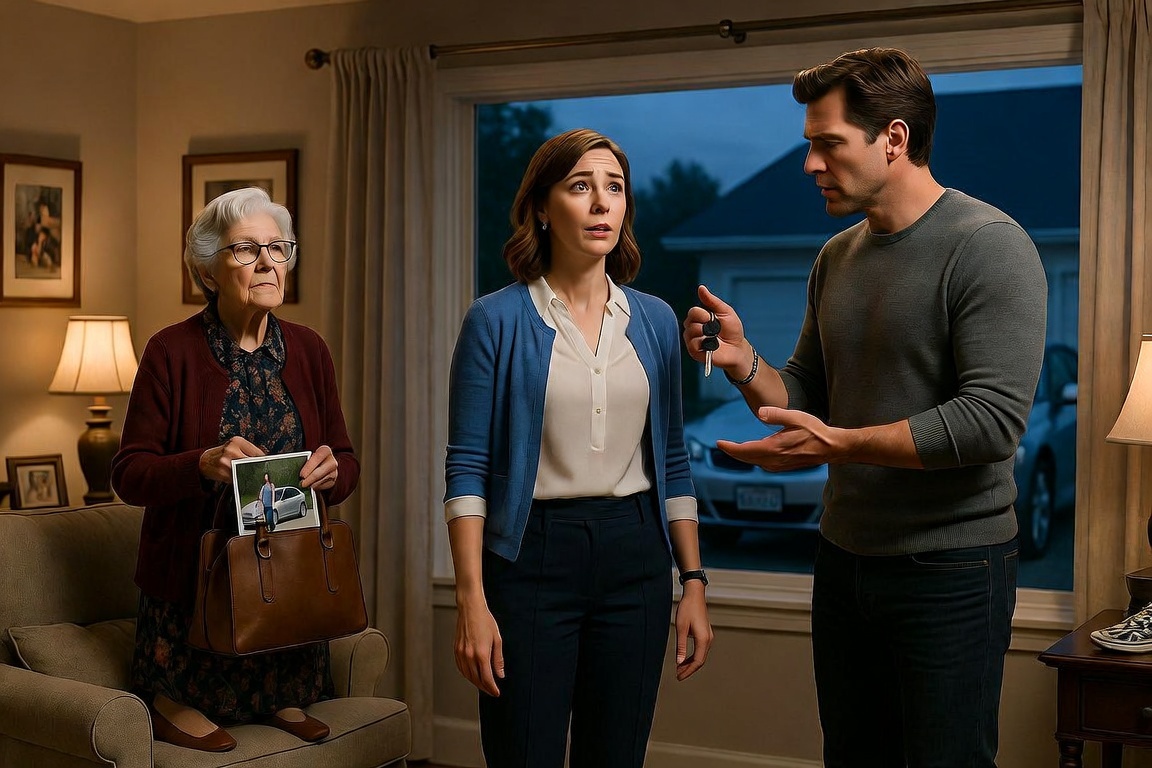
My brother took the car keys from my hand before I had even finished looking at them. One second, the metal rested in my palm. The next, Evan had closed his fingers around the key ring and pointed through the front window toward the silver car in the driveway. He spoke with the easy certainty of someone who had rarely been told no. The family living room went quiet, but nobody moved. I watched him place the keys in his pocket as if the decision had already been made.
That pattern was older than either of us wanted to admit. Evan was the child who needed opportunities. I was the child who could manage without them. When money was tight, his sports fees were protected and my art class disappeared. When our parents needed help, I rearranged my schedule because his work was always described as more demanding. When Grandma June began missing appointments, I drove across town before sunrise and returned after dark. Nobody forced me. I loved her. But love became an excuse for everyone else to expect more.
The car had appeared that afternoon with a ribbon tied across the hood. Grandma told us she had arranged a family surprise, but she had not said for whom. Evan immediately began explaining why his current vehicle was inconvenient. He had a longer commute, better clients, and an image to maintain. By the time I entered the room after bringing Grandma her medication, he had turned a gift with no announced owner into something the family supposedly owed him.
I had allowed that logic to win too many times. Still, when Grandma placed the keys in my hand, I felt something open inside me. My old car had failed three times in six months. I had missed work while waiting for repairs and spent evenings calculating whether I could afford another used vehicle. Grandma knew all of that. She had watched me arrive late to her appointments in borrowed cars, apologizing before I even sat down.
Evan did not ask why the keys had been given to me. He simply took them. He said I lived closer to work and could manage with public transportation. He said his meetings mattered. The words were familiar, but seeing the car through the window made the unfairness impossible to ignore. I looked toward our relatives, waiting for someone to say that a gift was not a family vote. Their silence felt like agreement.
Grandma had been watching from her beige chair. At seventy-eight, she moved carefully and sometimes needed help standing. That evening, she rose without accepting anyone’s hand. The room changed with her. She extended one palm toward Evan. No argument, no pleading. Just a quiet command. My brother laughed once, then stopped when he saw her expression.
He returned the keys slowly. Grandma opened her leather handbag and removed a printed photograph. In it, I stood beside the same silver car with a ribbon, unaware the picture had been taken during a test drive weeks earlier. On the back, she had written the date and a simple note about every mile I had driven for other people. She had purchased the car for me because she wanted at least one journey to become easier.
When she placed the keys back into my palm, she closed my fingers around them. The gesture was gentle, but it carried years of things nobody had said. She told Evan, with her eyes more than her voice, that generosity toward one person was not an invitation for another to claim it. For once, he had no list of reasons ready. He stood near the window with the car behind him and nothing in his hand.
I hugged Grandma and tried not to cry. The tears came anyway. They were not only about transportation. They were about being seen. People often praise the dependable person while quietly exhausting them. They call that person strong, then use the compliment to justify giving them less. Grandma had noticed the cost hidden inside my reliability.
Later, Evan apologized. At first, the apology centered on confusion. He said he assumed the car was for the family and believed he needed it most. I told him the problem was not one mistaken assumption. It was the confidence with which he had taken something from me, trusting that I would surrender it to keep the peace. He listened because Grandma remained in the room, and because the keys were still visible in my hand.
The next morning, I drove Grandma to breakfast. She chose a small diner across town simply because she could. As we moved through the morning traffic, she rested one hand on the door and watched the city pass. She said she did not buy the car to repay me. Love was not a debt. She bought it because care should move in both directions, and she wanted me to feel that truth every time the engine started.
I still help my family. I still answer when Grandma calls. What changed is that I stopped confusing kindness with automatic surrender. The car became more than a practical gift. It marked the moment someone interrupted the pattern in front of everyone. Evan saw that my needs were not smaller because I spoke about them less. I saw that accepting care did not make me selfish. And Grandma, appearing frail in her chair, reminded the entire room who had been paying attention.
The family conversation continued after Grandma went to bed. For the first time, I described how many decisions had been made around Evan’s convenience and my silence. Our parents became defensive, then quiet. They had not intended to make me feel less important. Intent, however, did not restore the time, money, and opportunities that had moved in one direction for years.
We agreed on practical changes. Grandma’s appointments would be shared through a rotating schedule. Family expenses would be discussed openly instead of assigned to whoever complained least. Evan offered to drive Grandma twice a week and began using his own car without another word about mine. The changes were ordinary, but ordinary fairness was exactly what had been missing.
The photograph Grandma kept in her bag now rests inside my glove compartment. It shows me smiling beside the car before I knew it would be mine. Whenever I feel guilty for accepting help, I look at that picture. Being dependable does not mean living without support. It means support should finally recognize the person who has been carrying everyone else.
Driving the car also changed practical parts of my life. I arrived at work without checking the temperature gauge, accepted a promotion that required occasional travel, and stopped calculating repair costs every week. The gift created opportunities that my family had assumed I could continue postponing. Fairness is emotional, but it is also material. Reliable transportation gave me time, money, and choices.
Grandma never asked me to prove I deserved it. That may have been the most healing part. She had already watched. She knew care does not become more valuable because it is performed loudly. Her decision told me that being seen can happen quietly, over years, through the person who remembers every ordinary sacrifice.


