 11
11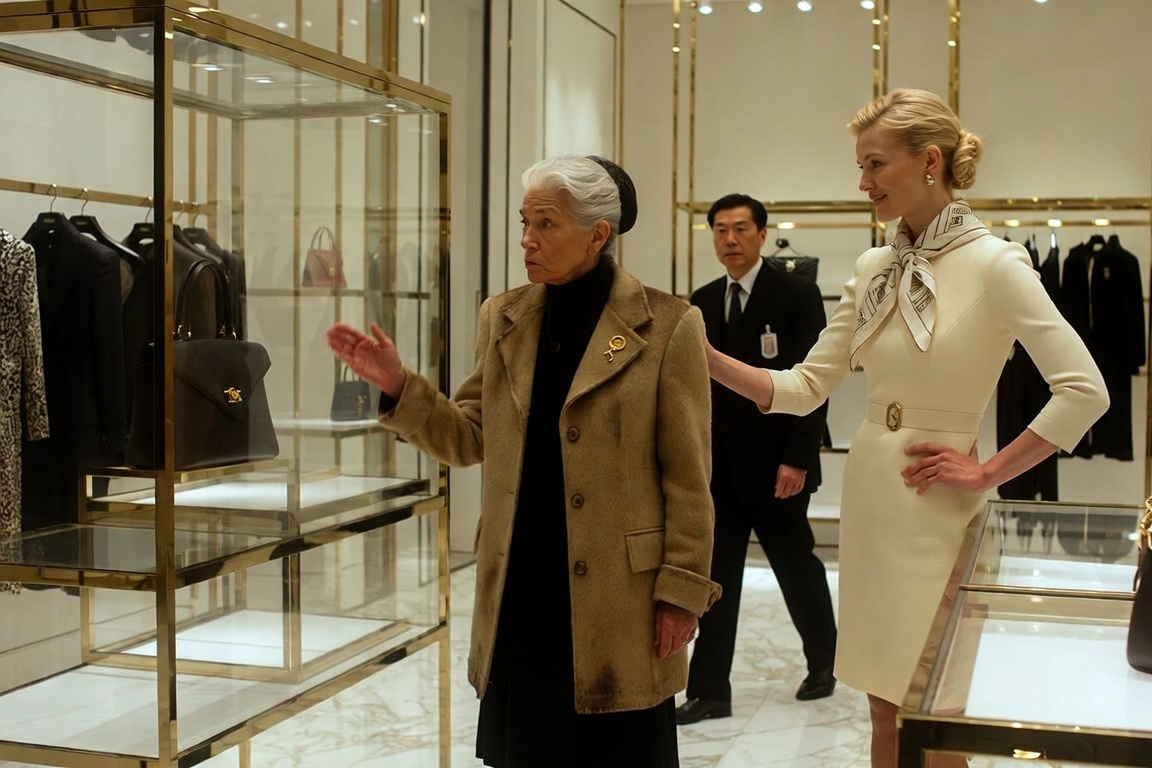
The sales associate moved my hand away from the handbag as if I might stain the glass. Her gesture was quick, polished, and practiced enough to appear accidental. Then she stepped between me and the display, turned the small key in her fingers, and gave me the smile people use when they want rejection to look like customer service. I looked down at my worn camel coat and understood the story she had written about me.
I had entered the boutique without an appointment because I wanted to see the brand as an ordinary customer would. The company carried my name only in its earliest records. Decades of expansion had turned the small workshop I founded into an international label with stores designed to make every object feel precious. I had approved the marble, the warm lighting, and the gold fixtures. None of that mattered if a person at the door could make someone feel cheap.
The coat Celeste judged had belonged to my older sister. It was softened at the cuffs and slightly faded across one shoulder. I wore it because it reminded me of the winter when we started the business in a rented room above a bakery. My sister cut patterns while I stitched samples late into the night. We could not afford proper heat, so she gave me the coat and worked beside the small oven vent.
The vintage brooch on the lapel was the first emblem we ever designed. It was not a public logo anymore. The shape appeared only on original pieces and in the private archives. I wore it during quiet store visits because longtime employees recognized it, while new employees simply saw an old accessory. That difference told me who had learned the history and who had learned only the price list.
I asked to see the handbag inside the display because it was based on our first successful design. Celeste looked at my practical shoes, then at the coat, and decided opening the case would waste her time. She suggested a less expensive section near the entrance without asking what I wanted. When I reached toward the glass again, she brushed my hand aside and moved the key behind her back.
The insult hurt more than I expected. Not because I needed her approval, but because the brand had been built for women like the ones we once were: women who saved carefully, repaired what they owned, and wanted one beautiful object to mark a meaningful moment. Somewhere along the way, luxury had begun to confuse exclusivity with humiliation. Celeste was not the entire problem. She was a symptom standing in gold heels.
The store director noticed the brooch from across the room. His face changed immediately. He had joined the company twenty-two years earlier and had seen the emblem in the archive. He crossed the marble floor quickly, bowed his head, and asked for the display key. Celeste did not understand why until he unlocked the case and removed the original handbag.
He presented it to me with both hands. The bag carried the same gold emblem pinned to my coat. The matching symbols connected the past to the room in one silent image. Celeste’s smile disappeared. Her shoulders tightened, and the key stopped moving in her fingers. She looked toward the private office door bearing the founder’s name, then back at me.
I did not announce my title. I removed the branded scarf from her uniform carefully and handed it to the director. The scarf represented the company in every customer interaction. Until we understood whether her behavior was isolated or repeated, she would not wear it. Accountability did not require a public spectacle. It required making clear that polished cruelty was still cruelty.
Inside the founder’s office, I asked to review training, customer complaints, and sales incentives. We discovered that employees were being rewarded almost entirely for high-value transactions. They had learned to rank customers by appearance before offering service. Celeste had made her own choice, but the system had taught her which customers management valued. Fixing the person without fixing the incentive would only produce a more careful version of the same behavior.
We changed the evaluation process. Mystery shoppers arrived in ordinary clothing. Customer care mattered as much as transaction size. Every new employee learned the story of the first workshop, the cold room, and the coat my sister gave me. The original handbag remained in the display, but a small internal training note explained why it existed: beauty should make people feel seen, not measured.
Months later, I returned wearing the same coat. A new associate greeted me warmly without recognizing the brooch. She asked what had brought me in and listened to the answer. I watched her open the glass case for a young woman who admitted she could not buy the bag yet but had saved a photograph of it for years. That moment felt closer to the company I had built. A luxury brand should protect craftsmanship, not arrogance. The most valuable thing in the boutique was never the handbag. It was the dignity people carried through the door.
Celeste participated in the review and eventually returned after retraining, but not to the sales floor immediately. She worked with the customer-care team and listened to recorded complaints from people who had felt dismissed. Hearing the same pattern in different voices made the impact harder to explain away. She had believed luxury required filtering people. She began to understand that real service requires curiosity.
I also asked leadership to examine the visual standards we imposed on employees and customers. The boutique celebrated individuality in advertising while rewarding sameness inside the store. We adjusted policies so staff could express more personality and stopped treating expensive appearance as a shortcut for purchasing intent. People do not enter a store as walking transaction estimates.
My sister never lived to see the brand become global, but her coat still reminds me what she wanted the company to be. She believed beautiful objects should hold memory, not prove superiority. Every time I fasten the old brooch, I remember the rented room, the bakery heat, and two women who would have been ignored by the boutique we later built.
The boutique also created a repair program inspired by the coat. Customers could bring older pieces for restoration instead of being pressured toward replacement. The program became popular because people wanted to preserve objects carrying memory. It reminded the company that luxury can mean longevity and care, not constant proof that someone can buy something new.
Celeste eventually greeted me again without the scarf. This time she asked about the coat before asking what I planned to purchase. Her curiosity was sincere. I told her about my sister, and she listened. Improvement did not erase the first insult, but it showed that accountability can produce more than fear when a person is willing to confront what shaped their behavior.
At the next annual meeting, I placed the old coat beside the original handbag. One item had been treated as worthless and the other as priceless, yet both came from the same history. Employees were invited to discuss what value meant beyond price. The conversation changed how designers, sales teams, and executives spoke about customers. The coat became an internal symbol of memory, resilience, and the danger of confusing polished appearance with human worth.


