 11
11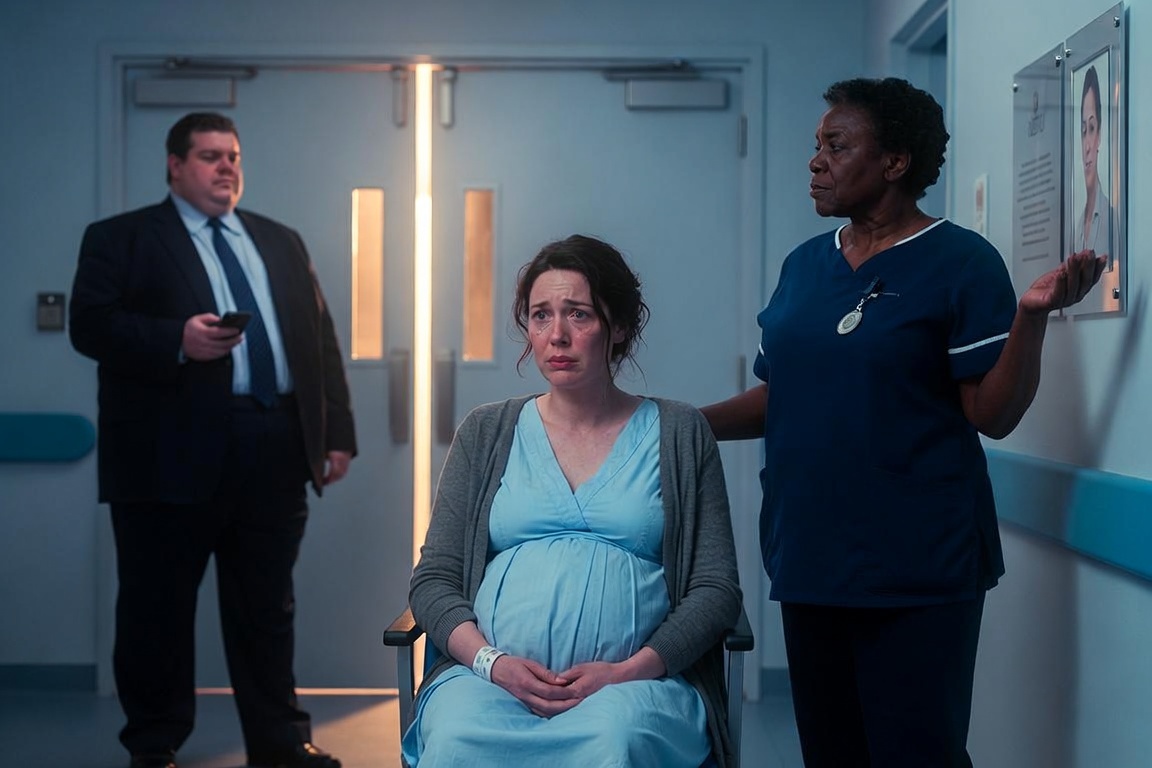
Mark pulled his hand from mine as if my fear were something contagious. We were sitting outside the maternity wing, beneath white lights that made every surface look calm. I had been admitted earlier than expected after a difficult morning, and the nurse had asked us to wait while the room was prepared. Mark checked his phone, stood, and said he could not keep missing work. Then he walked toward the exit before I found the words to ask him to stay.
The hospital bracelet felt too tight around my wrist. I turned it between my fingers and watched his navy suit move farther down the corridor. We had spent months telling friends that we were ready for this chapter. In private, the distance between us had grown quietly. Mark treated every emotional need as a scheduling problem. I kept believing the pressure would pass once the baby arrived.
The maternity wing existed because of a promise I made years earlier. My younger sister had died after a complicated delivery in a small facility without enough support. I did not speak publicly about the details. Instead, I created a foundation in her name and funded family rooms, staff training, and the renovation of this wing. The hospital offered to place my name everywhere. I requested one portrait and a discreet dedication inside the corridor so families would know the space had been built from love, not tragedy.
Mark knew I donated to the hospital, but he never asked how much or why. We kept our finances partly separate, and he viewed the foundation as one of my private projects. He attended one fundraising dinner, left early, and joked that hospitals always found another reason to ask for money. I told myself he was uncomfortable with grief. The easier truth was that he had learned to avoid anything that did not center his own urgency.
When he stood to leave, I did not remind him whose name was on the wall. I wanted him to stay because I was his wife, not because I had funded the doors behind me. The distinction mattered. A title, donation, or public reputation can reveal someone’s mistake, but it cannot transform neglect into care. I lowered my eyes because I was trying not to break in a corridor designed to make other families feel safe.
The senior nurse, Angela, saw him walking away. She had known me since the first planning meeting for the renovation. She rushed toward me, supported my arm, and asked whether I wanted her to call someone else. Then she looked toward Mark. Her expression changed. She pointed to the donor wall, not as a performance, but because she needed him to understand the woman he had chosen to leave alone.
Mark turned. His eyes followed her hand to my portrait and the dedication beside it. He stopped in the middle of the corridor. For the first time that day, his phone lowered. The wall did not make me more deserving of care. It simply removed the excuse that I was helpless or dependent on him. The hospital knew my name, my history, and the reason the wing existed. He realized he was not abandoning someone with nowhere to turn.
The maternity doors opened. Angela helped me stand and placed herself between Mark and the path forward. He moved toward us, suddenly ready to explain, but she did not let him rush into the space he had just left. She asked me with her eyes whether I wanted him there. I looked at the doors, then at him. For once, I chose what protected me instead of what preserved appearances.
I walked through without looking back. My sister’s photograph was inside my bag. The room beyond the doors was warm, quiet, and staffed by people trained to support families through fear. The wing had been created because I knew what abandonment could cost in a medical crisis. I never imagined I would need its protection from my own husband.
Mark waited outside. Later, he sent messages filled with explanations about deadlines, pressure, and panic. I did not answer immediately. The hospital social worker sat with me, Angela remained nearby, and my closest friend arrived before the evening. I was not alone. That truth became the beginning of a different kind of strength, one that did not depend on convincing an unwilling person to stay.
In the weeks that followed, Mark asked for another chance. I agreed only to conversations grounded in accountability, not dramatic promises. We discussed the pattern behind the corridor, the years of emotional absence, and the way he expected my competence to erase my need for support. Whether our marriage could change remained uncertain. What changed immediately was my refusal to minimize what happened.
The portrait still hangs on the donor wall, but I no longer see it as the image that shocked Mark. I see it as a reminder of why the wing was built. Dignity is not a reward for wealth or generosity. It is something every frightened person deserves when they enter those doors. On the day I needed that truth myself, the staff protected it. The warm light ahead of me mattered more than the man standing speechless behind.
The experience also changed how the hospital supported families. Angela asked permission to use the incident, without names, in training about emotional safety. Medical care includes more than procedures. Staff members often witness abandonment, coercion, and family conflict during vulnerable moments. Clear protocols help them protect the patient without escalating the scene.
My closest friend stayed through the night and helped me call the people I trusted. Accepting that help felt unfamiliar. I had spent years being the organized one, the donor, the person who solved problems before others noticed them. The corridor taught me that strength is not refusing support. Sometimes it is choosing support from people who offer it freely.
When I later walked past the donor wall with my child, I paused beneath the portrait. The image no longer belonged to a public version of me. It belonged to the woman who had sat nearby gripping a bracelet and chosen to move toward safety. That private decision became more important than the amount attached to any donation.
Mark’s regret became real only when he stopped asking for immediate forgiveness. He began therapy, rearranged his work, and learned to listen without turning every conversation into a defense. I watched the changes from a careful distance. Reconciliation, if it came, would be built from repeated actions. A shocked face in a corridor was not evidence of transformation.
For me, the lasting twist was not that the wing carried my name. It was discovering that I could walk through those doors without him and still be surrounded by care. The identity I had built as a wife was only one part of me. I was also a sister, friend, mother, advocate, and person capable of choosing a safer future.
The birth of my child remained private, protected from the conflict outside. Angela made sure the room stayed calm and that every decision came through me. That control mattered after a corridor where I had felt abandoned and powerless.
When I finally held my baby, I understood that the family I created would need a different foundation: care that stayed present when moments became inconvenient, frightening, or emotionally demanding.


