 11
11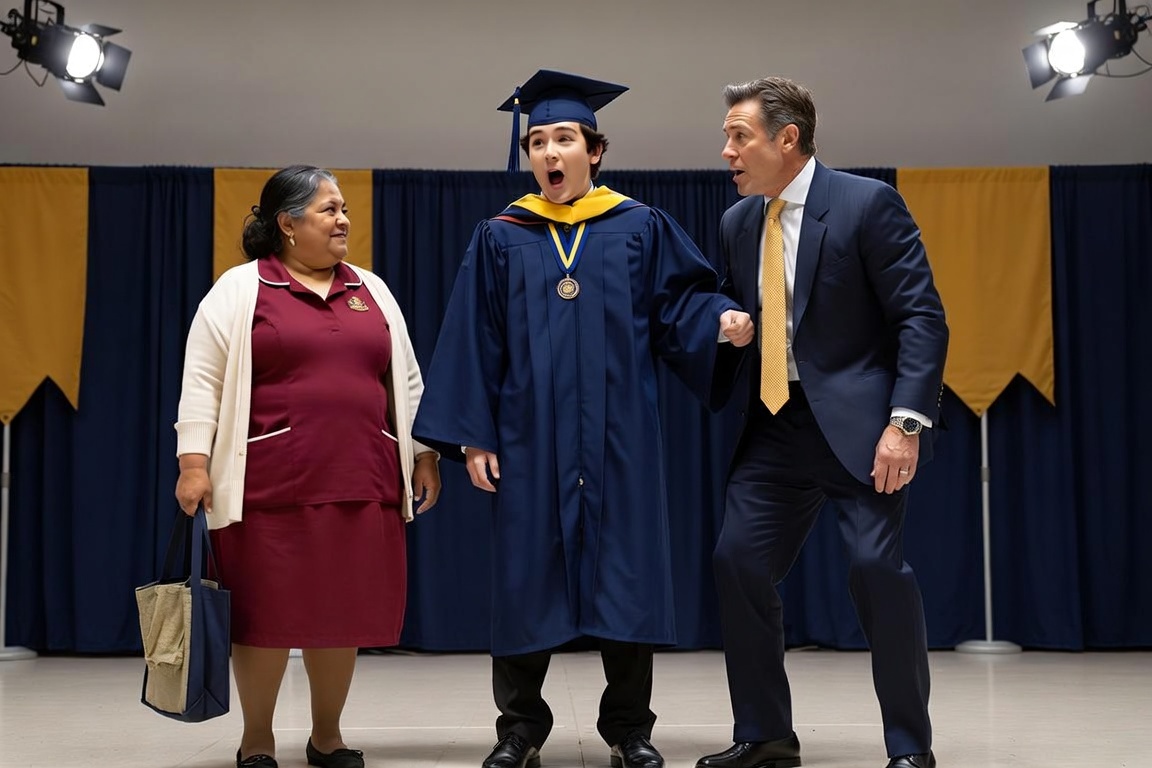
My former husband moved me out of the graduation photograph with two fingers against my elbow. The gesture was small enough to look polite from a distance. Up close, it was unmistakable.
Adrian glanced at my burgundy cafeteria uniform, then toward the navy-and-gold backdrop where our son waited in his gown. He said the photographer needed a cleaner frame. My smile disappeared before I could stop it, and the folded apron inside my tote slipped into view.
I had worked in that university cafeteria for six years. Every morning, I arrived before sunrise to prepare breakfast for students who rarely knew my name. I refilled trays, wiped tables, and learned which young people were quietly struggling. Some needed an extra piece of fruit. Others needed someone to notice when they had stopped eating. The work was honest, exhausting, and close enough to the lecture halls that I could watch my son build the future we had planned together.
Liam’s tuition came from scholarships, loans, and every extra shift I could accept. Adrian contributed when it was convenient, but he preferred visible gestures. He bought the laptop presented at orientation and posted the photograph. I paid the smaller costs that arrived every week: transportation, lab materials, meal credits, emergency repairs, application fees, and the rent increase that nearly forced Liam to leave school during his third year.
I never asked our son to choose between us. Divorce had already divided enough of his childhood. Adrian attended ceremonies in tailored suits and spoke confidently about Liam’s ambition. I stood in the back, usually arriving directly from work. Liam knew where the money and support came from, but I did not need him to announce it. Watching him cross the graduation stage was supposed to be enough.
The ceremony ended with music, applause, and hundreds of families pressing toward the photography area. Adrian had reserved a professional package. He arranged his shoulders beneath the school banner, adjusted Liam’s cap, and checked the camera angle. When I approached, he looked at my uniform and decided the image should tell a different story. He said I could take a separate picture later.
A separate picture. The phrase carried years of being placed outside the polished version of our family.
I remembered working through fevers, counting coins at the kitchen table, and sitting in my car during Liam’s evening classes because driving home would waste fuel. None of those moments belonged in Adrian’s preferred photograph. The uniform made the labor visible, and that visibility embarrassed him.
I stepped aside because the hallway was crowded and I did not want Liam’s achievement to become a public argument. My eyes filled anyway. The cafeteria apron slipped farther from the tote, marked with a small flour stain from the bread station. Adrian moved into the center beside Liam and straightened his gold tie. The photographer raised the camera.
Liam looked toward me at the last second. His eyes dropped to the apron, then returned to my face. He understood immediately. The pride in his expression changed into hurt, not because I looked wrong for the photograph, but because someone had tried to erase the work that made the photograph possible. He stepped away from Adrian before the picture was taken.
My son removed the academic medal from his neck. It was awarded for graduating with honors, the symbol Adrian had been most eager to display. Liam walked across the polished floor and placed it around me. Then he lifted the gold honor cord over his cap and added it beside the medal. I tried to give them back, but he closed my hands around the ribbon.
Adrian remained beneath the backdrop with his perfect suit and empty space beside him. Liam guided me to the center, placed the diploma folder in my hands, and wrapped one arm around my shoulders. The photographer captured my tears before I could wipe them away. For once, the visible story matched the truth: a graduate standing beside the mother whose labor had carried him there.
Liam did not reject his father. He simply refused the version of success Adrian was trying to create. Achievement is rarely the work of one person, and sacrifice does not become less valuable because it wears an apron instead of a suit. The medal had been earned through Liam’s study, discipline, and talent. Placing it on me did not transfer his achievement. It acknowledged the foundation beneath it.
Later, Adrian apologized in the parking lot. He said he had wanted the official photograph to look formal. I told him formality was not the problem. Shame was. He had looked at honest work and treated it as something that needed to be cropped out. He had not protected Liam’s image. He had revealed his own understanding of whose labor deserved to be seen.
The graduation photograph now hangs in my kitchen. I am still wearing the cafeteria uniform. The apron is visible at the edge of the frame, and Liam’s medal rests against the burgundy fabric. Some people might see an imperfect picture. I see the truth preserved without editing. Every early shift, late payment, and quiet worry exists inside that image even though none of it is written.
Liam began graduate school the following year and continued visiting the cafeteria. He greeted every employee by name and often stayed to help stack chairs after closing. He said leadership should remember the people who clean the room after the celebration ends. I do not know whether one graduation moment taught him that lesson or whether he had learned it slowly by watching me. Either way, the medal returned to him. The photograph stayed with me, proof that dignity does not need formal clothing to belong at the center.
The university later asked permission to display the photograph during an employee appreciation event. I agreed only if every worker in the building was included, from professors and advisers to cooks, cleaners, security staff, and maintenance crews. A campus celebrates graduates each year, but thousands of ordinary tasks make those ceremonies possible. The picture became powerful because it widened the definition of who belongs inside an academic achievement.
Adrian and I continued rebuilding a more honest relationship as parents. He began asking about costs before assuming they were handled and stopped treating visible contributions as the only ones that counted. Liam did not need us to become close again. He needed both parents to respect the full story of his education. The graduation photograph forced that conversation, but the real change came through quieter decisions afterward.
On my final day working in the cafeteria, students formed a line that had nothing to do with lunch. They brought notes describing moments when I had noticed them struggling, saved a meal, or asked whether they were okay. Liam stood at the end holding the same diploma folder. I had believed my role was mainly financial. The letters showed that the work had supported more futures than I understood.
Months after graduation, Liam asked me to attend a scholarship dinner as his guest. I wore a simple dress, but he brought the cafeteria apron folded inside the diploma case. During his speech, he held it up as a reminder that opportunity is rarely created by one dramatic gift. It is built through repeated acts that may look ordinary until the person receiving them finally understands the total cost.


