 11
11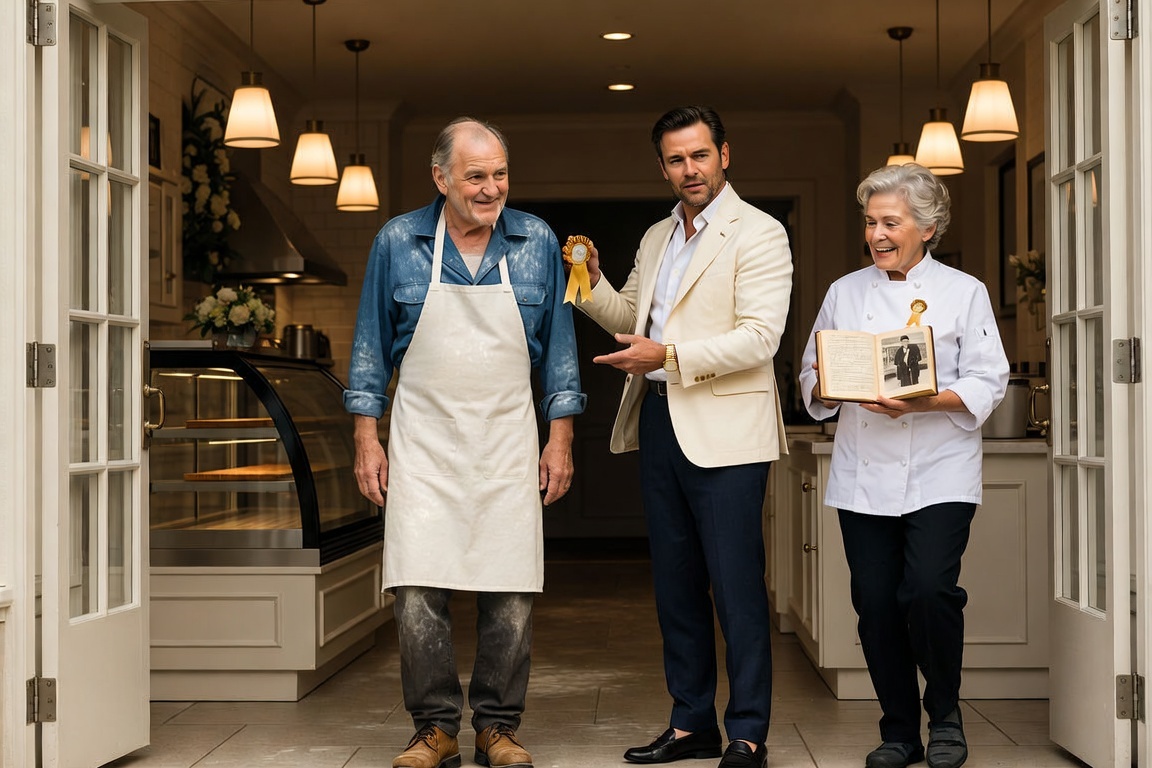
My son removed the anniversary ribbon from my apron before the photographer raised the camera. Colin looked at the flour across my chest, then at the polished cream backdrop behind us. He pulled me toward the kitchen door and said the official photograph needed to represent the bakery’s future. My hands still smelled of butter and yeast. I had been shaping the morning dough while he arranged flowers around the glass cases.
The bakery began in a room smaller than the current walk-in refrigerator. My wife and I borrowed an oven, painted the walls ourselves, and slept upstairs because we could not afford another apartment. I woke at two every morning to mix dough by hand. She worked the counter with our infant son resting in a basket near the flour sacks. We sold enough bread to open again the next day, then enough to survive the first year.
Colin grew up beneath the sound of mixers. He did homework at a table near the kitchen and learned to count using rolls placed in paper bags. I wanted him to have choices beyond the bakery. I paid for business school and encouraged him to study branding, technology, and expansion. When he returned with new ideas, I listened. Online ordering, cleaner packaging, and a second location helped the business grow beyond anything my wife and I had imagined.
Success also changed the story Colin wanted to tell. The new website showed perfect pastries, bright counters, and employees in spotless uniforms. The original photographs disappeared because he thought the old bakery looked poor. He replaced my handwritten signs with gold lettering and asked me not to work near the front during influencer visits. I told myself every generation needed to shape the business differently.
The fiftieth anniversary celebration was Colin’s largest event. He invited local media, decorated the shop, and created a backdrop showing a timeline of growth. My name appeared in the earliest date, but my face was missing from most of the promotional material. Maria, our head baker, noticed. She had trained beside me twenty-four years earlier and knew which recipes came from the notebook I kept locked in the kitchen office.
That morning, I arrived before everyone and baked the first batch of anniversary rolls. Flour covered my apron because the mixer seal broke. I did not change before the photographer called the family and leadership team together. The apron was clean enough for work but not for Colin’s polished frame. He removed the ribbon labeled for the founder and guided me away as if the kitchen were the only place where I still belonged.
I could have argued. Every tile, oven, and recipe around us carried years of my decisions. Instead, I looked at the pastries inside the glass case and wondered when the work that built the bakery had become an embarrassment. Colin stepped into the center, straightened his cream blazer, and smiled toward the camera. The celebration continued as though the founder had simply missed his place.
Maria came through the kitchen doors carrying the original recipe book. The cover was stained with butter and heat, the corners softened by decades of use. She opened it to a faded photograph of me and my wife standing behind the first counter. I was wearing the same style of flour-covered apron. Baby Colin was visible in the basket beside us.
The photograph stopped him. He looked from his infant face to the man near the kitchen door. Maria took the gold founder apron from the display wall and placed it over my shoulders without brushing away the flour beneath it. Then she returned the anniversary ribbon to my chest. Staff members stepped out of the kitchen and gathered behind me.
The photographer lowered the camera, then reframed the shot around the original recipe book. Maria guided me to the center. Colin moved to the side without being asked. I did not want to replace him or deny what he had contributed. The modern bakery existed because his ideas expanded it.
But a future built by erasing its foundation becomes branding without truth.
After the event, Colin found me at the mixing table. He apologized and said he had become afraid that customers would associate the old images with poverty and limited ambition. I told him the worn notebook and flour were not signs of failure. They were evidence that the polished bakery had been earned. People trust a family business when the family is honest about the work behind it.
We restored the original photographs to the anniversary wall. Colin created a small archive near the front, including my wife’s first handwritten menu and the basket where he had slept. The bakery did not lose its modern design. It gained memory. Customers began asking about the old recipes, and younger staff understood that every perfect pastry came from years of imperfect mornings.
Maria now keeps a copy of the recipe book in the kitchen, but the original remains with me. I still arrive before sunrise twice a week. Flour still lands on the apron no matter how carefully I work. Colin no longer asks me to avoid the front. Sometimes he introduces me to visitors as the founder. Other times he simply says, this is my father. The second introduction means more.
The anniversary photograph hangs above the main counter. My apron is dusty, Maria is holding the old book, and Colin stands beside us with his cream blazer slightly marked by flour from the embrace that followed. It is not the clean image he planned. It is better. The future, the present, and the beginning all fit inside one frame, with nothing important removed.
The anniversary also changed how we trained new employees. Before learning the modern production systems, every baker now spends one morning making the original bread by hand. They feel the dough, wait through the slow rise, and read the notes written in the margins of the recipe book. The exercise is inefficient by current standards, but it teaches where the standards came from and why shortcuts can damage more than flavor.
Colin created a profit-sharing program for long-serving kitchen staff after recognizing how many people had protected the business while he focused on expansion. Maria helped design it. A family name may appear above the door, but loyalty and skill from employees turn a shop into an institution. Returning me to the photograph was symbolic. Sharing the future more fairly became the practical correction.
My wife’s name was added beside mine on the history wall. She had died before the fiftieth anniversary, and the polished brand had gradually reduced her to a small date. The original photograph restored her place too. She had managed the counter, raised our son beside the ovens, and written the first menu. The bakery was never one man’s achievement.
Colin and I now review major decisions together, but I no longer expect him to preserve every tradition. A business survives by adapting. The boundary is honesty. New packaging, faster ovens, and digital orders can replace old methods. They should not replace gratitude.
The bakery became healthier when history stopped functioning as decoration and started guiding how people shared credit.


