 11
11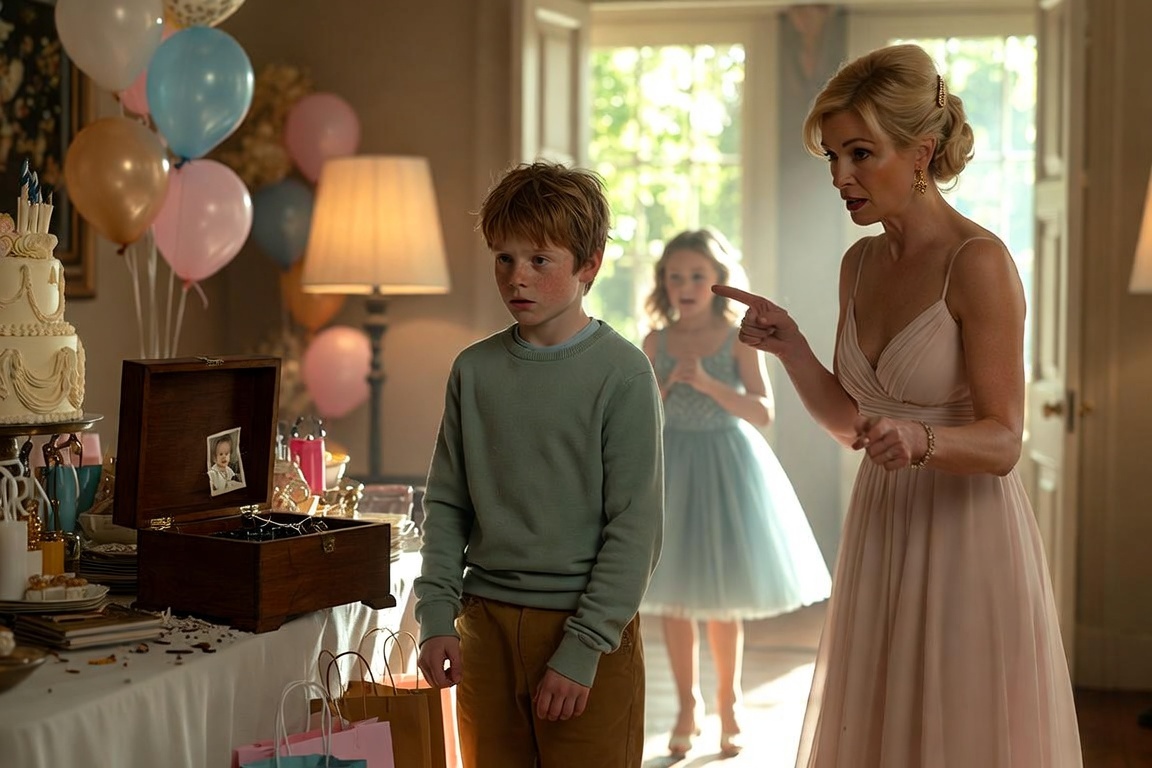
Emma’s mother crushed my gift before her daughter reached the table. Lydia opened the reused wrapping paper, saw the small wooden music box, and pressed it down with one hand as if clearing away trash. The thin lid cracked. She pointed toward the front door while expensive gift bags rose behind her like bright walls. I reached for the pieces, but she pushed them aside and said handmade objects did not belong near the birthday display.
I had not built the box from nothing. Months earlier, Emma found broken wooden pieces near the curb outside her house after a storage cleanout. She recognized part of the painted lid and began crying. The music box had belonged to her grandmother, who died when Emma was very young. Lydia believed it had been damaged beyond repair and placed it with other discarded items.
Emma asked whether I could save it because my grandfather repaired furniture. I carried the pieces home in my backpack. Grandfather and I spread them across the kitchen table. The wood was cracked, one hinge was missing, and the wind-up mechanism had stopped moving. We did not promise anything. We cleaned each piece and began learning what could be restored.
My family did not have money for a new replacement. That was not the point. A new box would not contain the marks left by Emma’s grandmother or the tiny photograph hidden beneath the lid. We used scrap wood to support the corners, straightened the mechanism, and found a small hinge in a jar of old hardware. I sanded the repairs slowly so the box would still look like itself.
The photograph showed Emma as a baby in her grandmother’s arms. It had been protected beneath a loose panel, so Lydia never realized it was inside. Grandfather helped me place a clear cover over it. When the mechanism finally turned, the small figure inside moved again. The sound was faint, but the motion was enough to show that the box had not been lost.
I wrapped it in paper saved from another gift because buying new wrapping seemed less important than protecting the wood. At the party, every package looked expensive. Some were taller than Emma. My gift fit in both hands. Lydia watched me approach the table and looked at my worn sneakers before she looked at the box.
She opened it without calling Emma. The repaired seams and reused paper convinced her the gift was inappropriate. When she pressed the box down, the lid cracked along an old line. I felt the weeks of careful work break beneath her hand. More than that, I felt the trust Emma had placed in me disappear before she could see what we had saved.
Emma heard the sound and ran toward us. She lifted the broken lid from the table. The tiny photograph appeared beneath the warm party light. Her face changed immediately. She touched the image of her grandmother, then turned the wind-up key. The mechanism moved despite the cracked lid, and the small figure began to spin.
Lydia’s hand dropped from the table. She recognized the photograph and the shape of the original box. For months, she had believed the keepsake was gone. The object she dismissed as a cheap handmade gift was the memory she had thrown away because repair looked less perfect than replacement.
Emma hugged the box to her chest, then wrapped both arms around me. She placed it at the center of the gift table while the expensive packages remained unopened. The box was visibly repaired. The wood tones did not match perfectly, and the new hinge was simpler than the original. None of those details reduced its value. They showed how much care had been required to keep the history intact.
Lydia apologized in front of me and later apologized again to my grandfather. She admitted that she had judged the gift before understanding it and that she often tried to protect Emma from appearing different among wealthier families. Her fear of judgment had made her judge a child. The contradiction was painful, but she did not avoid it.
Grandfather repaired the cracked lid one more time. This time, Lydia sat beside us and watched. She learned how the supporting wood needed to follow the old grain rather than cover it. We did not erase the damage from the party. A thin line remains visible across the lid. Emma says it belongs to the story now.
The music box stays on a shelf in Emma’s room, not inside a glass case. She winds it when she wants to remember her grandmother. The photograph remains beneath the lid, and the repaired figure turns slowly above it. Lydia began saving family objects instead of replacing them automatically. She also stopped arranging birthday gifts by price.
I received no trophy and discovered no hidden fortune. The reveal was smaller and more personal. Something believed worthless carried a memory money could not recreate.
The box mattered because Emma’s grandmother had touched it, because Emma trusted me to protect it, and because my grandfather gave his time without expecting recognition. Value was not hiding inside perfect wrapping. It was visible in every repaired seam.
Emma later asked me to show her how the repair worked. Grandfather taught both of us to follow the wood grain, test the hinge gently, and stop before forcing a piece into place. The lesson applied beyond furniture. Repair requires patience with what remains. It cannot begin by pretending the damage never happened or replacing every imperfect part.
Lydia invited my family to the next birthday gathering without arranging separate gift areas. She also started a small memory table where relatives brought photographs and older objects connected to family stories. The change did not turn her into a different person overnight, but it shifted the celebration away from price and toward meaning. Emma helped choose every item.
The music box eventually became a bridge between generations. Emma interviewed her mother about the grandmother she barely remembered and recorded the stories in a notebook kept beside the box. The repaired object could not return the person they lost, but it created a reason to speak about her. Saving the box saved more than wood and a mechanism. It saved a doorway into family memory.
At school, classmates asked why the gift had cracks. Emma answered without embarrassment. She said the box was valuable because people had repaired it instead of giving up. Ben’s name remained written beneath the lid beside his grandfather’s. The recognition was private, exactly where it belonged, attached to care rather than public praise.
Ben’s grandfather refused payment for the repair, so Lydia offered something more useful. She purchased tools for the community workshop and asked him to teach families how to preserve damaged keepsakes. The program did not carry the family’s name. It simply gave people a place to repair objects whose emotional value exceeded the cost of replacing them.
The repaired box stayed imperfect, and that became part of its beauty. Emma learned that preserving a memory often means accepting visible seams. A flawless replacement would have looked better on the table, but it would not have carried her grandmother’s touch.


