 11
11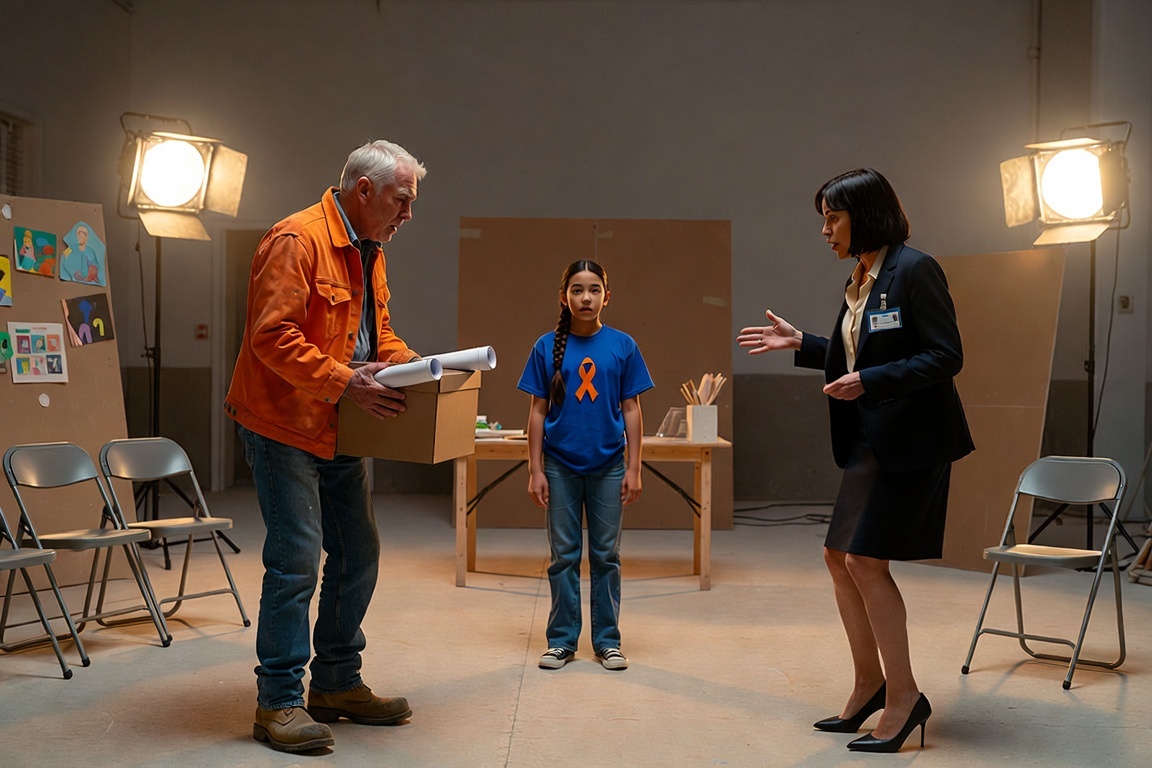
Linda snatches my handmade donation box, shoves it under the table, and removes me from the sponsor photo. The action happened so quickly that the room around me seemed to pause. Linda Crane looked at my clothes, my posture, and the object in my hands, then decided I was the least important person in this community center fundraising ceremony with its unfinished hall, folding chairs, children’s art, construction boards, donation table, and warm evening work lights.
I felt the humiliation before I understood the mistake. People nearby watched without moving, because polished events teach everyone to protect the schedule before protecting a person.
I spent my career building expensive homes, but retirement left me wanting to make one place that belonged to children whose families could not pay for private programs. The community center began as sketches on my kitchen table.
I designed the hall, recruited retired tradespeople, donated labor, and used reclaimed wood. The bank funded visible materials, while most of the actual construction value came from unpaid community work.
I had not come looking for applause. I came because someone who knew the full story had asked me to be present. The invitation mattered less than the chance to see what years of ordinary work had become. Still, I understood the pressure of the event. Cameras, sponsors, guests, and deadlines can make people impatient. Pressure explains speed. It does not explain cruelty.
At the fundraising ceremony, Linda wanted sponsor logos centered. She hid my handmade donation box and moved me from the photograph because my construction jacket looked unfinished.
When Linda Crane removed me from the center, I considered leaving. That instinct had protected me many times. Quiet workers learn that arguing can cost more than the insult itself. Yet leaving would also allow a false version of the story to become permanent.
I held onto the hope as the children unfolded building plans signed with my carpenter mark and revealed donated labor notes, and I waited. I stayed not because I expected rescue, but because the truth was still physically present in the room.
Sofia Ramirez noticed the clue before anyone else. Recognition changed her expression first, then the entire direction of the event. The clue connected my ordinary appearance to the history everyone had gathered to celebrate. It did not magically make me worthy. It made the room confront how quickly worth had been assigned according to clothing, status, and confidence.
The reveal unfolded clearly: Sofia places the center key around my neck and the children pull me into the middle of the photograph.
Nobody needed a speech to understand the reversal. Linda Crane remained beside the evidence of her earlier judgment, suddenly unable to control the image. I was placed where the story had always belonged—not above anyone else, but no longer outside the frame.
I did not use the moment to humiliate Linda Crane. Public embarrassment can expose behavior, but it rarely repairs the system that produced it. I asked what rules, incentives, or fears had made exclusion seem reasonable. The answer was familiar: protect the brand, protect the schedule, protect the appearance of success. Human dignity had been treated as optional whenever it complicated those goals.
The aftermath brought real, structural change to the community center:
The apology came later. I accepted the words without pretending they erased the moment. An apology becomes meaningful when the person stops centering their own embarrassment and begins changing how the next vulnerable person will be treated. I did not need revenge. I needed the lesson to survive after the cameras, guests, or applause disappeared.
The object at the center of the reveal remained important: the building plans signed with my carpenter mark alongside the donated labor notes. At first, it looked worn, cheap, outdated, or inconvenient. By the final moment, it carried the full history.
That transformation is why small props matter in a short drama. They allow the viewer to understand the truth instantly, even without sound. The key around my neck opened a building whose strongest foundation was not money, but hundreds of hours people had given without expecting their names in the photograph.
I returned home as the same person who had arrived. My clothing, age, work, and history had not changed during those ten seconds. Only the room’s understanding changed.
That is the deepest reversal. Hidden status can create a satisfying twist, but the moral is not that powerful people deserve respect. It is that every person deserved respect before the clue made their importance visible.
The event later became a story people repeated, but I always corrected the easiest version. I was not valuable because Sofia Ramirez recognized me. Recognition simply stopped the room from ignoring evidence that had been present from the start.
A fair culture does not wait for a dramatic reveal before offering patience. It creates habits that protect the unknown person, the quiet worker, and the guest who cannot prove their importance quickly.
The people who witnessed the moment reacted in different ways. Some looked away because they had accepted the hierarchy of the event. Others recognized the unfairness but waited for someone more powerful to intervene.
That hesitation mattered. Harm often survives not because everyone agrees with it, but because ordinary people believe the timing is inconvenient, the authority is unclear, or the victim can probably handle it. The reveal forced the witnesses to confront their own silence as well as the antagonist’s behavior. A strong moral drama becomes more satisfying when the reversal changes the whole room, not only two characters.
Afterward, I thought about how easily institutions polish the visible result while hiding the labor, patience, and sacrifice underneath it. Public success prefers a clean origin story. Real life is built through late nights, worn tools, repeated failures, unpaid care, and people whose names never reach the program.
The short reveal worked because one physical clue compressed all of that history into a single image. It allowed viewers to feel the missing years at once. That is why the final frame is not merely a victory pose. It is a correction to the record.


