 11
11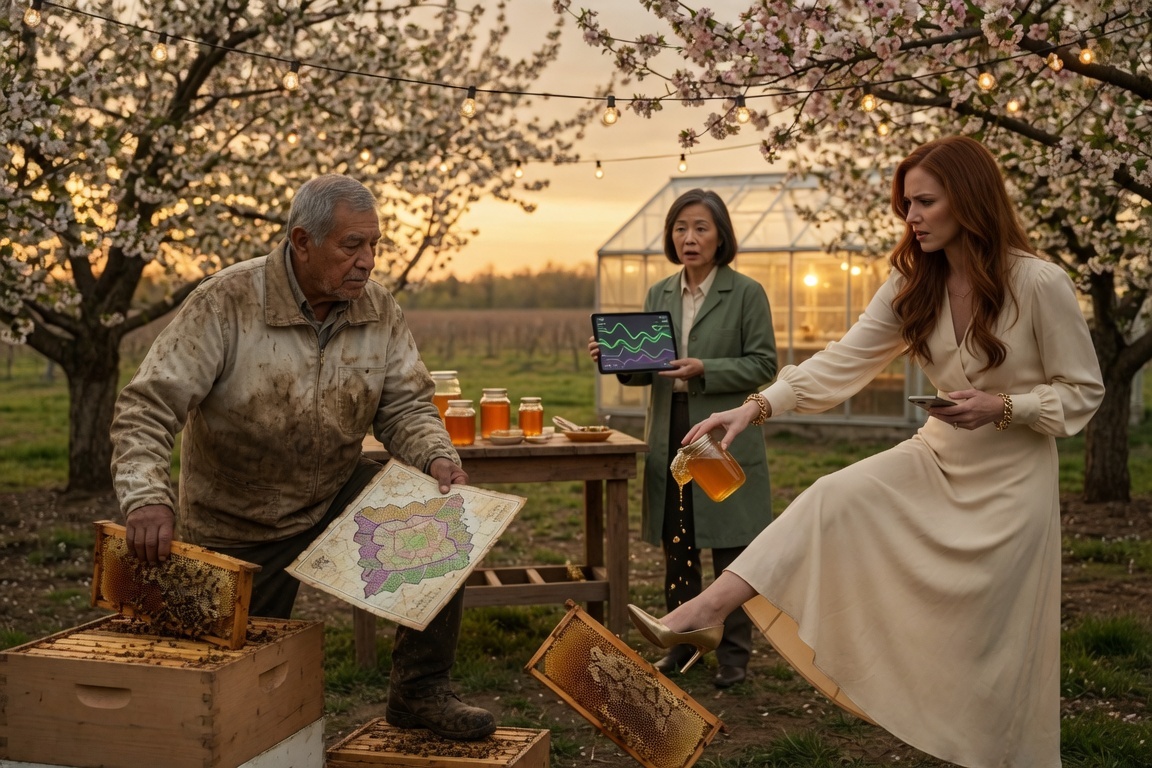
Claire knocks Samuel’s honey jar from his hands and kicks the cracked wooden frame away from the tasting table. It happened before I could explain my invitation. Claire Vaughn looked at my age, my worn object, and the practical clothes I had chosen, then decided I belonged outside the polished image.
The public setting sharpened the humiliation. People saw it, yet the schedule continued as if removing an older person were routine.
My father taught me to approach a hive slowly enough that the bees could understand my presence. Beekeeping was not control. It was attention. Weather, flowers, illness, and movement changed the colony every week. The beekeeper’s job was to notice before damage became visible.
Five years earlier, the orchard lost most of its pollinators after disease spread through commercial hives. I moved small local colonies through the fields according to a hand-drawn route map. Helen used those observations to design the recovery program. The orchard’s first successful harvest came from those routes.
Age changes how strangers read ordinary behavior. A younger person carrying old equipment looks inventive. An older person holding the same object is treated as confused or sentimental. A pause becomes weakness. A question becomes proof that someone cannot keep up. I recognized those assumptions, but experience did not make them harmless.
The new honey brand launched with luxury packaging and social-media guests. I brought the first harvest jar and the original hive map after Helen invited me. Claire saw mud on my boots and an old wooden frame near the tasting table. She knocked the jar down because she believed the objects ruined the clean campaign image.
I could have listed my career, the people I had trained, or the crisis connected to the object in my hands. None of it should have been required. A person deserves patience before proving they mattered to someone important. Respect that arrives only after a reveal is not respect. It is fear that the wrong target was chosen.
I held onto the clue while Claire Vaughn tried to move the event forward: the hive map carries the same colored route pattern displayed on the orchard’s recovery monitor. It looked small beside the cameras and expensive displays. That contrast gave it power. One worn object carried years of labor the polished event had erased.
Dr. Helen Wu noticed first. Recognition appeared in the face before anyone spoke. The planned ceremony stopped. The celebrated person crossed the space quickly, no longer protecting the event’s timing. Authority changed purpose. It stopped excluding the older person and began protecting them.
The reversal became visible: Helen activates the pollination map, reveals Samuel’s hives across the orchard, and places the first harvest jar back in his hands. Claire Vaughn’s confident posture collapsed because the meaning no longer depended on explanation. I remained in the same practical clothes. Nothing about me became more glamorous. The room simply lost the ability to pretend my history was irrelevant.
I did not ask for revenge. Embarrassment exposes behavior, but justice examines why it seemed reasonable. Events often hide age discrimination behind efficiency, brand consistency, safety, technology, or visual presentation. Those concerns sound neutral. They become cruel when nobody pauses to ask one respectful question before touching a person or throwing away an object.
To ensure lasting justice, the company implemented real changes:
Marketing shoots could no longer enter active fields without guidance from the people responsible for the colonies.
Witnesses also faced their silence. Several people had looked uncomfortable during the confrontation, but they waited for someone with recognized authority to intervene. Unfairness survives through hesitation too. A strong culture does not train people to protect the program first. It gives them permission to interrupt obvious humiliation before a famous name or official medal enters the scene.
The orchard lights came on across the recovery map, one cluster after another, following the colors drawn by hand years earlier. The first harvest jar returned to me with a cracked label but unbroken glass. Perfect packaging had not saved the orchard. Patient observation had.
An apology came later. I listened without making the other person’s embarrassment the center of the story. Real regret changes what happens to the next unknown visitor, worker, mentor, or craftsperson. It creates a better process before another older person is forced to prove a lifetime in ten seconds.
People repeated it as a hidden-identity story. I always corrected the easiest version. The famous connection was not what made me worthy. It only made the unfair judgment impossible to defend. The deeper truth was visible from the beginning: an older person was being treated roughly because somebody assumed time had reduced their relevance.
I returned home with the same lined face, slower steps, and worn object I had carried into the room. The twist did not change me. It transformed the audience’s understanding. A lifetime does not become smaller because it arrives quietly, without branding, in a body that no longer moves at the speed of the event.
The object from the reveal remained part of the permanent story. It was not polished into something new or hidden behind a cleaner replica. Its scratches, stains, repairs, and faded marks became evidence. Younger visitors could see that knowledge is often stored outside formal systems, inside tools, notes, routines, and memories carried by people who are easy to overlook.


