 11
11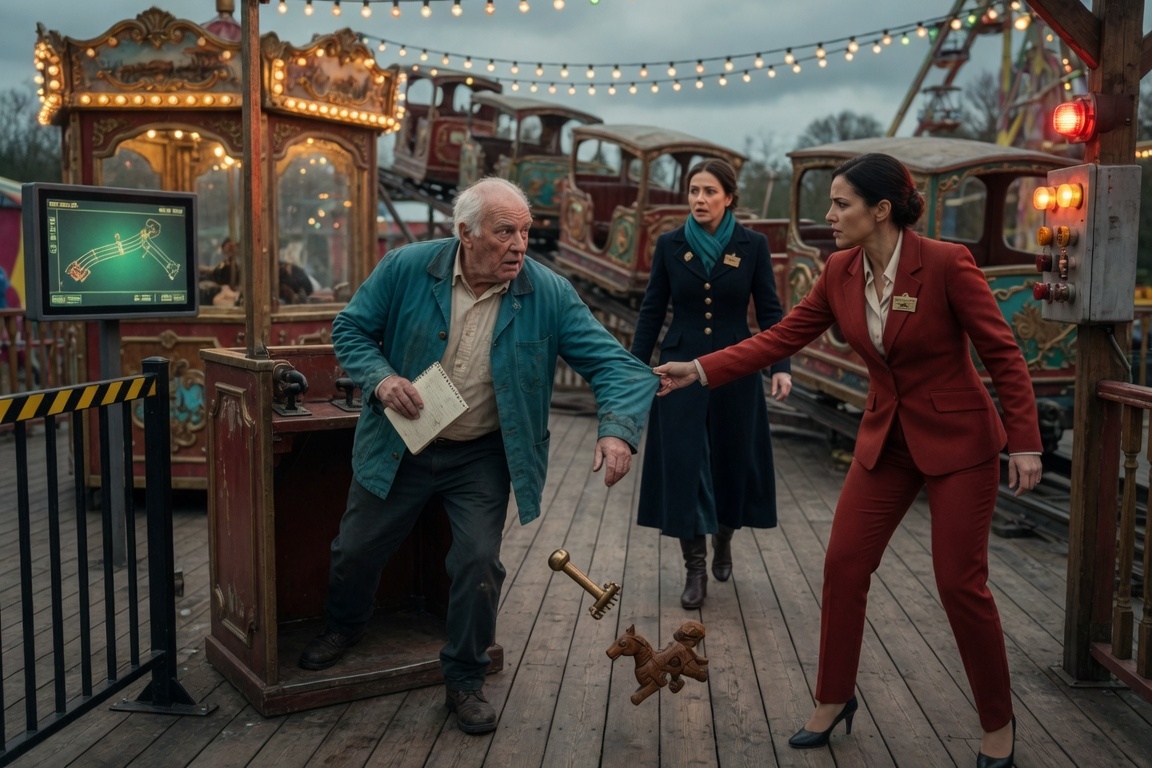
The ride called my name after they pushed me out of the booth.
Not with a voice. With a brass plate inside vehicle number seven.
GEORGE BELL, 1982.
The plate flashed past as the empty ride began moving without the launch signal. Melissa still had one hand on my jacket. She let go.
I had maintained that ride for forty-four years.
It began as a row of hand-painted animal vehicles moving around a simple track. Children loved choosing the fox, the whale, or the red horse. Parents loved that the ride was gentle.
Gentle rides still need serious safety systems.
The founder, Clara’s father, designed the vehicles. I designed the manual reset after a power fault trapped the first test car halfway around the track. The reset used three steps:
We carved a small fox symbol onto the brass key so any trained mechanic could identify the manual control quickly. Modern systems replaced most of the original equipment. The key remained behind a sealed emergency panel.
I retired before the restoration.
The park invited me to the reopening, but nobody had asked me to inspect the final control layout. I arrived early and noticed that the modern safety screen showed the brake as ready while the manual indicator remained between positions.
The ride was empty. The press was not.
Melissa Stone managed the launch. She saw me enter the booth in an old maintenance jacket and assumed I was ignoring the barrier. I told her the brake alignment looked wrong. She said the system had passed digital testing.
I reached for the notebook containing the original reset sequence. She grabbed my jacket and pushed me onto the platform.
The brass key fell from my pocket. So did the carved fox token Clara’s father had given me at retirement.
Then the ride moved.
Vehicle number seven stopped briefly beside the booth, rolled forward, and stopped again. The control system was attempting to complete a launch cycle while the manual brake remained partially engaged.
The engraved plate with my name flashed inside the vehicle.
Clara saw the fox token. She had grown up riding that car while her father and I tested the system after closing. The fox symbol appeared in the original maintenance drawings.
Clara stepped between Melissa and me. She opened the emergency panel. The old lock had been preserved behind the digital controls.
My key still fit.
I turned it once to isolate the motor. Twice to release hydraulic pressure. A third time while watching the track alignment mark.
The ride slowed and stopped without striking the platform. No passengers were aboard. Nobody was hurt. That made the event easier to dismiss as a technical embarrassment.
We refused.
The investigation found that the digital sensor had been calibrated against the wrong brake position during restoration. The automated test passed because it measured the sensor, not the physical alignment.
The manual indicator told the truth.
The reopening was postponed. Engineers recalibrated the system and added a physical cross-check before every launch. Retired mechanics reviewed the restored rides. Their notebooks were digitized, but the originals remained available because diagrams often contained practical notes that formal manuals excluded.
Melissa apologized and accepted disciplinary action for using physical force. She later joined the safety review, where she learned why experienced workers sometimes notice problems before dashboards do.
The carved fox token now hangs inside the booth. My name plate remains inside vehicle seven. Clara wanted to replace it with a polished founder plaque. I asked her not to.
A ride is not safe because one person’s name appears on it. It is safe because generations of mechanics leave accurate instructions for people they will never meet.
The reopening happened six weeks later. I stood outside the booth this time, by choice.
A young mechanic held the brass key. She performed the three-step check without looking at me. That was the best part. Knowledge had moved forward.
The ride started. The fox, whale, and red horse circled beneath the carnival lights. Children laughed. Nobody knew the safety system had almost been treated as an old man’s interference. They did not need to know in that moment. Their job was to enjoy the ride. Ours was to make sure the machinery deserved their trust.
The park later discovered three other rides with similar gaps between digital readings and physical indicators. None was immediately dangerous. All were corrected before reopening.
The review team included current engineers, retired mechanics, ride operators, accessibility specialists, and emergency responders. Each group noticed different risks. I argued for one more addition: operators should understand what the ride feels like when it is healthy.
Dashboards show numbers. Experienced workers also notice sound, vibration, timing, smell, and how quickly a vehicle settles after braking. Those observations are not replacements for sensors. They are another layer.
The park created a sensory checklist alongside the digital one. Young mechanics initially joked about phrases like “listen for uneven wheel rhythm.” Then they found a worn bearing before the sensor threshold detected it.
Melissa became head of guest operations rather than safety. She accepted the change and helped redesign the control-booth access process. Her job became protecting the launch from crowd pressure without treating every unexpected person as a threat.
The carved fox token travels between training rooms. Clara considered placing it in a glass case. We decided against it. Tools and symbols can become dead when displayed too carefully.
The token is passed from one trainee to another while they learn the manual sequence. Its edges are becoming smoother. That is what use does.
The ride still calls my name each time vehicle seven passes the booth. Not because I own it. Because somebody remembered to leave a record of who built the first safe reset and why.
On the first anniversary after reopening, the park invited mechanics to tell one-minute stories before the rides started. Most declined. They preferred the booth to the stage. Instead, the park printed small maintenance symbols near each ride exit. Guests could scan them to learn how braking, restraint, accessibility, and emergency systems evolved.
The fox symbol appears near vehicle seven. Children often think it is part of the ride’s story. In a way, it is. The park’s fantasy depends on real people remaining serious about bolts, signals, pressure, and human error.
Magic works better when safety is allowed to be boring.
George visits the training booth once each season, but he no longer demonstrates the reset first. Trainees receive the notebook, the sensor readings, and the physical indicator. They must explain the problem before touching the key.
Some find it quickly. Others trust the screen too long.
The exercise is not designed to embarrass them. It lets them practice doubt while the ride is empty and the stakes are low. Safety training should create mistakes that teach before real passengers are present.
Melissa eventually asked George what she should notice when approaching an older former employee near a control booth.
He answered, “Start with why they are looking at the machine instead of the camera.”
The sentence became a joke among the maintenance team, but it carried a serious distinction. People seeking attention usually watch the audience. People seeing a problem watch the system.
Not always. Often enough to justify one question before using force.


