 11
11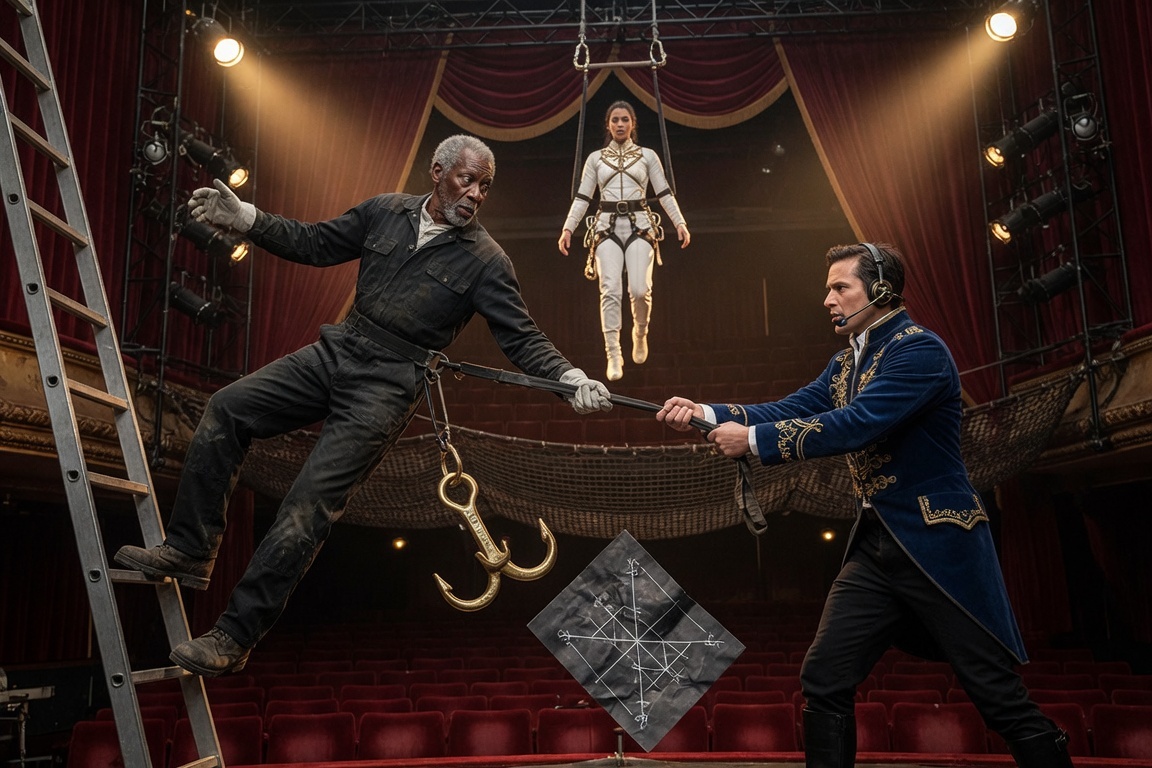
I saw the primary lock open from thirty feet away. The movement was tiny. A silver jaw shifting where it should have stayed closed.
Maya was already in the air. Adrian was still pulling Samuel from the ladder. Everything happened inside one breath.
My name is Maya Reed. I have performed aerial work for eighteen years. Audiences see the release. Rigging teams see everything before it: the angle of the cable, the wear line on a hook, whether a performer clips from habit instead of looking.
Samuel Price taught me that the most beautiful movement in the show is the one nobody notices: the backup taking weight exactly when the primary system fails.
Samuel designed our double-lock method after an accident at another theater decades ago. Two independent connections carry the line. If one opens, the second catches before the performer drops far enough to create dangerous force.
Samuel retired three years ago. The company kept his system, but it stopped inviting him to rehearsals. That contradiction did not seem visible until opening week.
A new trapeze assembly arrived from a supplier. The digital inspection record passed. Samuel came because I asked him to look at the hardware. He climbed only the lower rung.
Adrian Fox, our ringmaster and creative director, was trying to complete a camera rehearsal before sponsors arrived. He saw Samuel beside the rigging ladder and ordered him down. Samuel pointed to the primary lock. Adrian thought he was delaying the act. He grabbed Samuel’s belt and yanked.
Samuel landed on both feet but lost the brass hook and diagram.
At that exact moment, I released from the platform.
The primary lock slipped. The backup caught.
I felt the line change under my weight. Instead of continuing the routine, I folded into the safety descent and landed on the net. Nobody was injured. The catch looked almost gentle.
That is what good safety design does. It turns a dangerous failure into a controlled interruption.
I climbed down and saw Samuel’s brass hook on the stage. The same double-groove shape held the backup above me. I stopped the rehearsal.
Adrian said the lock must have been clipped incorrectly. Samuel picked up the chalk diagram and showed where the supplier’s spring tension differed from our specification. The primary jaw could appear closed without fully seating. The backup had carried the load because Samuel insisted years ago that two different lock actions should protect the same line.
I placed the founder’s rigging badge on his coveralls. The badge had been sitting inside the theater archive. It belonged on the person who built the system still protecting us.
The show opening was delayed, and the culture shifted immediately:
He later apologized to Samuel in the empty theater. Samuel accepted and asked him to climb the ladder. Not high. Two rungs. Adrian looked down at the stage and admitted the distance felt different from below. Samuel showed him how little movement reveals a loose connection.
The company changed rehearsal structure after that. Creative cues begin only after the rigging lead gives an independent safe signal. Performers inspect their own connections, but responsibility never rests on the performer alone. Multiple eyes protect the same movement.
The double-lock incident changed performer training, too. Aerialists had always learned how to inspect visible equipment, but few understood how supplier specifications, fatigue testing, and maintenance records affected the hardware above them.
Samuel created a workshop called Follow the Load. Performers begin at the point where their body hangs and trace every connection back to the building structure:
The exercise removes mystery from the system without pretending every performer must become an engineer. I teach the second half. I demonstrate how panic changes movement after an unexpected catch. A performer who feels the backup engage may instinctively fight the line and create more force. Training helps the body choose the safe descent.
Adrian attends the workshop every season. He no longer introduces it. He carries equipment and listens.
The theater’s board kept him as creative director after suspension because he accepted limits on his authority. He cannot overrule rigging holds, and rehearsal schedules include technical buffers that sponsors cannot remove. Some performers argued he should have been dismissed permanently. The company held that disagreement openly. Accountability does not always produce one answer everyone finds satisfying.
Samuel’s view was practical:
“Keep him only if the system no longer depends on him behaving well.”
The new structure follows that principle. Safety authority sits outside creative leadership. Incident reports go to an independent committee. Performers can stop work without losing roles.
The new rigging apprentice who checked the lock was named Tessa. She had been afraid to speak during earlier rehearsals because Adrian corrected technicians in front of performers. Under the new system, her stop call could not be challenged until the rigging lead completed inspection.
On the first touring show, Tessa stopped the act for a rope showing unusual flattening. The rope passed the minimum measurement.
Samuel asked her what she felt.
“I do not trust it,” she said.
They replaced it. The removed section later showed internal wear. The company did not call her instinct. It called her trained observation. Language can decide whether a young worker learns to speak again.
The theater also changed how near misses were discussed. Previously, a caught fall that caused no injury might remain inside the rigging department. Management worried public records would frighten performers or sponsors.
Samuel argued the opposite. A successful backup is evidence worth studying.
The company now records every unexpected catch, stopped rehearsal, and replaced component. Reports focus on the chain of decisions, not on finding one person to blame. Performers review selected incidents before touring.
They see that safety is not a promise that nothing will fail. It is the preparation that keeps one failure from becoming a tragedy.


