 11
11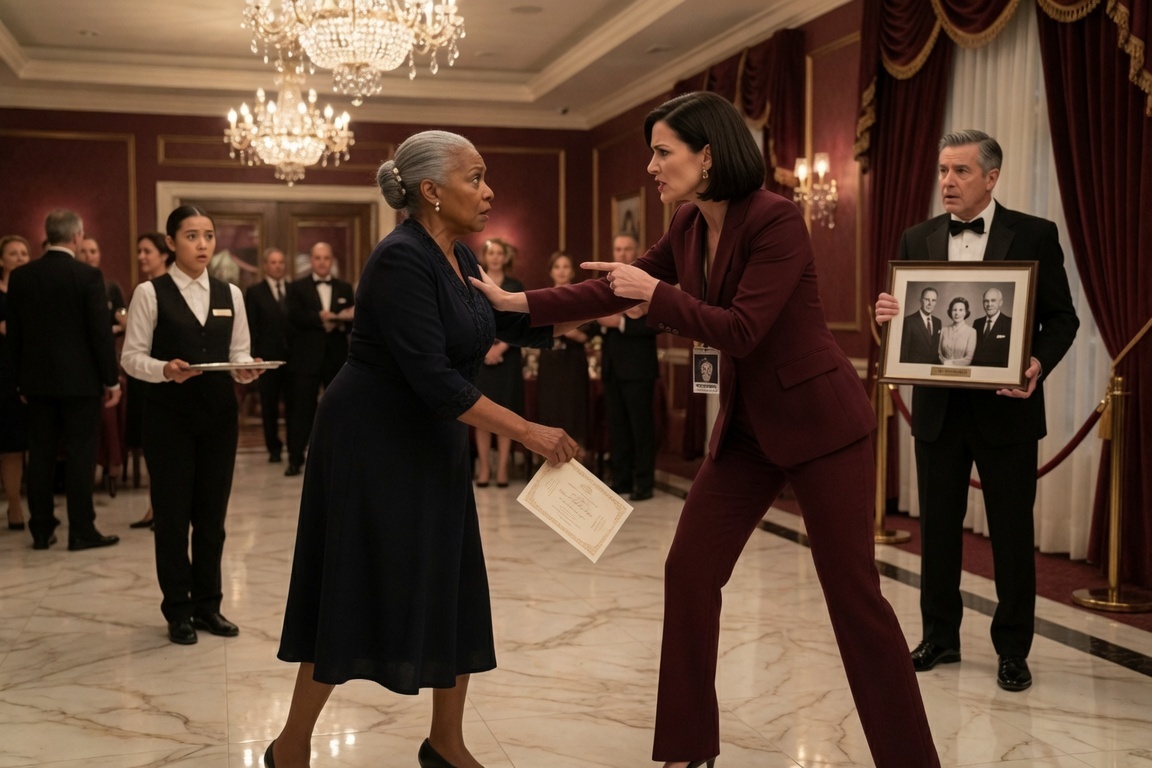
I knew the ballroom before it had chandeliers.
Back then, the ceiling leaked over the north staircase, the carpets smelled like rain, and the staff entrance stuck whenever the weather turned cold. I was nineteen when I first pushed a cleaning cart through those halls. I was sixty-eight when I returned wearing my best navy dress, carrying a cream invitation with my name printed in careful gold letters.
The invitation said the hotel would celebrate fifty years of service, sacrifice, and community.
I almost stayed home.
My knees were sore, my shoes were old, and I had not stepped inside the building since I retired twelve years earlier. Still, I polished my pearl pin, the same pin the first owner had given me after our hardest winter, and took the bus downtown.
The hotel looked brighter than I remembered. Marble replaced cracked tile. Crystal chandeliers floated above the lobby. Guests in evening clothes moved past with glasses in their hands. For a moment, I felt proud. I had scrubbed those floors before anyone believed the place could survive.
Then a woman in burgundy stepped in front of me.
Her gold badge identified her as the event chair. She looked at my dress, my simple shoes, and the folded invitation in my hand. Her eyes moved past my face as if I were part of the furniture. She pointed toward the service corridor.
I smiled and told her I was attending the celebration.
She did not ask my name. Instead, she took my arm and pushed me behind the velvet rope. The movement was sharp enough to make my invitation slip from my hand. It slid across the marble and stopped near the shoes of a young server holding a silver tray.
People noticed. That was the worst part.
Not the push. Not the sting in my arm. It was the way the room watched without knowing whether I was allowed to be hurt.
The event chair removed the gold badge I had been given at the front desk. She dropped it beside the invitation and told me the staff should not wander among donors. I looked at the young server. Her tray trembled. She wanted to help, but fear kept her still.
I understood that fear. For years, fear had kept all of us quiet.
When the hotel nearly closed in 1978, the owners could not meet payroll. The kitchen staff left first. Then several managers. Those of us who remained worked shorter shifts, shared meals, and waited for news. I had two small children at home, but I kept showing up. I cleaned rooms, helped in the laundry, and sometimes slept in a storage office because the late bus had already gone.
One winter night, a pipe burst above the ballroom. Water rushed across the floor toward the electrical room. I was the first person to see it. I called the night manager, shut the nearest valve, and helped move furniture until sunrise.
That photograph came from the morning after.
The owners stood beside me in soaked clothes. None of us looked elegant. We looked exhausted and stubborn. The owner later told people the hotel survived because ordinary employees treated it like a home.
I never thought the photograph mattered. I only knew the hotel stayed open, and hundreds of people kept their jobs.
Standing behind the rope fifty years later, I bent to pick up my invitation. My fingers shook, but I refused to let the woman see me cry. I heard music from the stage and the soft movement of chairs behind me.
Then the room became quiet.
A man in a black tuxedo was walking toward us. I recognized Daniel Reed, the current general manager. We had met once when he was a young trainee. He had carried my cleaning supplies upstairs after an elevator stopped working. Now he was holding the old photograph.
He looked from the image to me, then to the event chair’s hand still raised in dismissal. He did not shout. That made the moment stronger.
Daniel placed the frame beside me and offered his hand. I stood. My knees hurt, but my back straightened. He turned the photograph toward the ballroom.
The first person to stand was an older chef near the front table. Then a former receptionist rose beside him. A woman I did not recognize pressed a hand to her mouth. Chairs moved across the room, one after another, until the sound filled the ballroom.
The young server picked up my badge and returned it with both hands.
The event chair stepped backward. The rope she had used to separate me from the guests caught behind her legs. Her face changed from irritation to confusion, then to the realization that everyone in the room now understood what she had done.
Daniel guided me toward the stage.
On the screen behind the microphone, the same photograph appeared. Under it were three simple words: First Employee Honored.
I had not known. The invitation was real. The badge was real. The evening had been planned around people like me, workers whose names had disappeared from the building but whose effort remained inside it.
Daniel placed the microphone in front of me.
I could have embarrassed the woman who pushed me. I could have repeated every cruel word. I could have demanded an apology while the whole room watched. Instead, I looked at the young server. She was still holding the tray, but it no longer trembled.
“Buildings are remembered for beauty, but they survive because someone cares for them when nobody is watching. Dignity should never depend on clothing, title, age, or where a person enters the room.”
The event chair lowered her eyes. I did not need her humiliation. I needed the lesson to remain after the applause ended.
Later, Daniel showed me a new wall in the lobby. It displayed photographs of former employees, not just owners and famous guests. My picture was the first one. Beside it was a small brass plaque explaining the winter flood and the staff who kept the hotel alive.
I touched the glass and saw my younger face staring back.
For decades, I thought my work vanished as soon as each room was cleaned. I thought the world only remembered the people who signed papers, cut ribbons, and stood near cameras. That night proved something different.
Quiet work leaves fingerprints.
Sacrifice can disappear from conversation, but it does not disappear from the truth.
When I left the ballroom, the young server walked me to the lobby. She thanked me for what I had said. I told her to keep her head high, especially when someone tried to make her feel invisible.
Outside, the city lights reflected in the hotel windows. For the first time in years, I did not see a place where I had simply worked. I saw a place I had helped save.
A week later, Daniel mailed me a copy of the photograph. On the back, he had written the names of every worker pictured, including two I had almost forgotten. I placed it beside my children’s school photographs at home.
My grandchildren asked why I had never told them the story. I said I had not understood it was a story. To me, it had only been a difficult night when people did what needed to be done. That was when I realized how often older workers minimize their own history because survival felt ordinary while it was happening.
The hotel had not simply honored me. It had returned a missing piece of my life and allowed my family to see it clearly.


