 11
11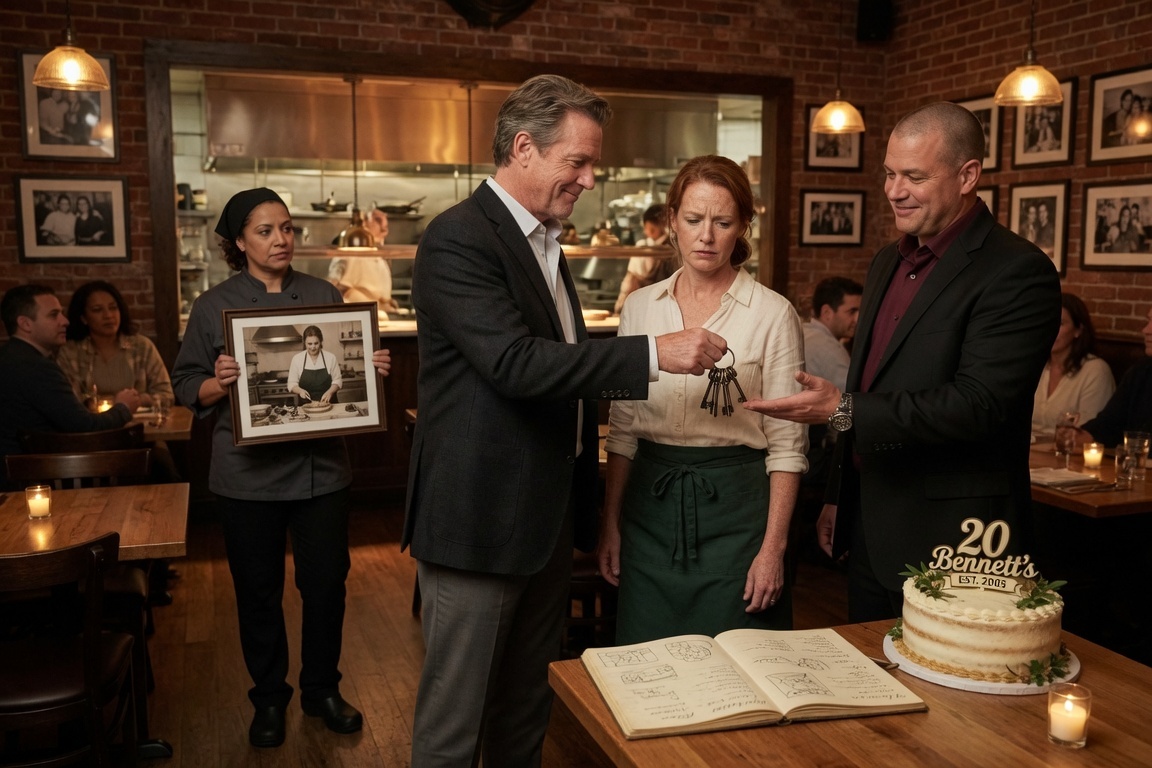
I baked the anniversary cake before sunrise.
Twenty years deserved something special, even if the restaurant had been too busy for me to think about celebration. I layered dark chocolate with orange cream, the first dessert we ever served, and wrote the date in icing with a hand that had become less steady over time.
The restaurant had started with six tables, one broken oven, and a handwritten menu. Richard welcomed customers. I cooked. That was our arrangement in the beginning.
Over the years, the story changed whenever Richard told it. He became the visionary. I became the wife who helped in the kitchen.
At first, I laughed. Then magazines repeated it. Guests thanked him for creating recipes I had developed. Investors shook his hand while I checked deliveries through the back door. He promised that everyone knew the truth inside the family.
I believed that mattered.
On the twentieth anniversary, the dining room filled with longtime customers, former employees, local reporters, and relatives. Richard wore a new blazer. I wore my dark green apron because two cooks had called in sick.
I planned to change before the cake presentation. I never got the chance.
Richard tapped a glass and called everyone toward the center counter. He thanked the staff, praised the community, and spoke about the next chapter.
Then he reached toward my waist.
Before I understood what he was doing, he removed the brass restaurant keys from my apron. He placed them in his younger brother Owen’s hand.
Owen had never worked a full week in the restaurant. He liked the title, the crowded dining room, and the idea of being in charge. He did not know how to repair the old oven, which suppliers delivered late, or why table nine needed extra space for a regular customer with a walker.
Richard announced that Owen would manage operations. Then he pushed me one step away from the anniversary cake and pointed toward the kitchen. He said I could focus on cooking where I was most useful.
The room became quiet.
I looked at my husband of twenty-eight years and realized he had planned the humiliation as entertainment.
He wanted the transfer to look confident. He wanted the guests to applaud.
My recipe notebook slipped from under my arm and fell open on the counter. The first page showed the original menu written in blue ink. The margins were crowded with changes from two decades of work.
Owen lifted the keys. No one applauded.
Rosa, my sous-chef, stepped through the kitchen doors holding a framed photograph. It had hung in the staff hallway for years.
The picture showed opening day. I was standing behind the old stove, hair tied back, flour on my cheek, stirring three pots at once. The front window reflected Richard outside speaking to a customer, but the image centered the kitchen.
Rosa placed the frame beside the open notebook. Then she looked at me.
Behind her, every employee stopped moving. Richard told them to return to work. Nobody moved.
One by one, the cooks and servers stepped out of the kitchen and formed a line behind me.
Some had worked with me for fifteen years. Others had joined only months earlier. Every person carried a story Richard had never noticed:
I had also made mistakes. I had yelled during impossible dinner rushes and expected too much from people when I was exhausted. But I had apologized, changed, and stayed beside them.
Owen tried to give an instruction. No one responded. His raised hand lowered.
Richard stepped toward the staff and reminded them who owned the restaurant.
That was when I reached for the old reservation ledger. I kept it beneath the counter because the first page contained our original agreement. The restaurant name, the first menu sketch, and my signature appeared in my handwriting.
The business had been registered jointly. The recipes belonged to me. The operating agreement required both founders to approve a permanent management transfer.
Richard knew that. He had assumed I would stay quiet rather than challenge him in public.
I opened the ledger and placed it beside the photograph. I did not shout. I asked Owen whether he understood what the keys opened. He looked confused. I explained.
“A key ring is not authority. It is responsibility.”
Owen looked at the staff behind me. Then he placed the keys on the counter.
Richard reached for them. Owen let go too soon, and the keys struck the wood between them.
Rosa picked them up. She did not hand them to me immediately. She placed them beside my notebook. That gesture meant more than possession. It meant the restaurant’s trust had returned to the work, not the performance.
Guests began to applaud.
I did not feel victorious. I felt tired.
This was still my marriage. This was still the father of my children. Public truth can be satisfying, but it also exposes how long private disrespect has been growing.
Richard asked to speak with me in the office. I told him we would speak after service. The dining room was full, and people had come to eat.
I turned toward the kitchen. The staff followed. We finished the evening together.
At closing time, the anniversary cake remained almost untouched. I cut slices for the employees and wrapped the rest for the shelter down the street.
Richard sat alone at table one. Owen had already left. I joined my husband after the last light in the kitchen was turned off.
He said he thought I would be relieved to focus only on cooking. I told him that was the problem.
He had reduced my life’s work to the part he found convenient. Cooking was not a small role. It was the heart of the restaurant. But I had also built schedules, negotiated rent, trained employees, created the menu, and carried the business through years when we nearly closed. He had not forgotten. He had rewritten the story because the rewritten version made him more important.
I removed the brass keys from the counter. I told him we would review the partnership, leadership, and our marriage with honesty. Nothing would continue simply because silence was easier.
The next morning, I arrived before sunrise again. Rosa was already there.
She had placed the opening-day photograph above the kitchen pass where guests could see it. Beneath it sat my recipe notebook. The keys rested on top.
I tied my apron, turned on the ovens, and opened the front door myself.
For twenty years, people had believed Richard gave the restaurant its face. That morning, the restaurant finally remembered who had given it its flavor, its discipline, and its reason to stay open.
We did not solve our marriage in one conversation. Richard attended meetings, listened while employees described years of being ignored, and faced how often he had used charm to avoid accountability. I separated my forgiveness from the future of the business. The restaurant needed clear leadership rules, written responsibilities, and no more family appointments made through surprise announcements.
Months later, Richard returned to the dining room in a smaller role he had earned rather than assumed. Whether our marriage would fully recover remained uncertain, but the restaurant became healthier because silence stopped being treated as loyalty.
The brass keys still hung beside my notebook. Each morning, whoever opened the building signed the ledger—a simple reminder that authority should always leave a visible record of responsibility.


