 11
11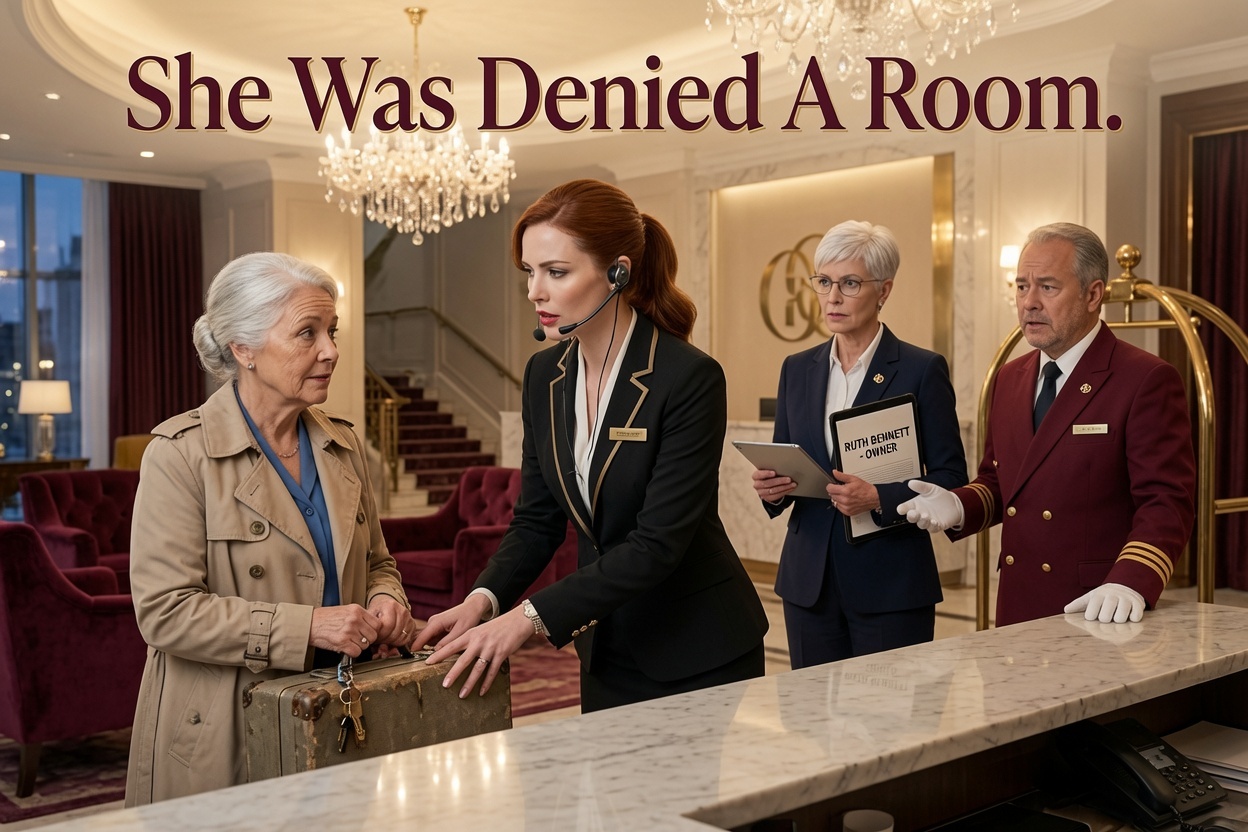
Ruth knew the room had changed before anyone said a word. It was the way the forks stopped moving, the way strangers leaned closer, and the way Chelsea smiled like humiliation was a dessert meant to be served cold.
The moment happened inside a luxury hotel front desk lobby, under warm crystal chandelier light with polished marble reflections, where everything looked expensive enough to make pain feel public. Ruth had come hoping for one normal day. Instead, the hotel staff judging a guest used the setting like a stage and turned her into the scene everyone was staring at.
It started with something small, the kind of cruelty people pretend is harmless. Chelsea looked at Ruth’s clothes, then looked around the room to make sure enough people were watching. The comment was dressed up as concern, but the meaning was clear.
“This hotel is not a shelter for people dragging old bags.”
A few people glanced down. One person covered a smile. Someone whispered. Ruth felt heat rise behind her eyes, but she did not answer. She had learned that some people do not want truth; they want a reaction they can use against you.
Chelsea had been waiting for this moment. The motive was simple: Chelsea wanted to protect the hotel’s luxury image and believed Ruth was too poor to matter. For weeks, Chelsea had told everyone that Ruth was weak, lucky, dependent, and easy to dismiss.
Every small kindness from Ruth had been twisted into evidence of need. Every quiet answer had been treated as guilt. Now, in a room filled with polished glass, bright tables, and judgmental eyes, Chelsea finally had an audience large enough to enjoy the performance.
Ruth tried to step away, but Chelsea blocked the emotional exit with another line, sharper than the first. The words did not just insult her, they invited everyone else to choose a side. The hotel staff judging a guest stood close enough to see her hands trembling.
That was the worst part. The betrayal did not come from strangers. It came from someone who knew exactly where to press and pressed anyway. Ruth swallowed hard. She looked at the floor for one second, then looked back up because she refused to disappear completely.
There is a special kind of loneliness that happens when a room is full and no one helps. Ruth felt it as people watched, waited, and measured the drama like it was entertainment.
One quiet witness near the edge of the room noticed everything. The smirk on Chelsea’s face. The pain in Ruth’s eyes. The way the lie was being repeated until it sounded almost official. But Ruth did not beg. She did not scream. She only asked one question, soft enough that everyone had to lean in to hear it:
“Why are you doing this to me here?”
Chelsea laughed because cruel people often mistake patience for defeat. That laugh made the room colder. A phone came out. Then another. The humiliation had become content for strangers, a tiny public trial with no judge and no evidence. Chelsea spoke louder, accusing Ruth of pretending, hiding, using people, or taking more than she deserved. It was not just an insult anymore. It was a story being forced onto her in real time.
Then something shifted. It was small at first, almost easy to miss. A tablet showing Ruth Bennett as majority owner and a vintage keychain from the hotel’s opening year appeared in the middle of the scene like a quiet match dropped in a dark room.
Ruth’s face changed, not into anger, but into a tired calm. That calm bothered Chelsea more than tears would have. The person being humiliated suddenly looked like someone who had been waiting, not someone who had been trapped.
The witness moved closer. The camera angle in the room seemed to turn by itself as every face followed the clue. Chelsea’s smile weakened. The proof was not loud. It did not need to be. It carried the kind of truth that makes a lie collapse without being pushed.
Someone read the name. Someone else recognized the signature. A third person whispered, no way. Ruth finally lifted her chin and said the line that changed the whole room:
“I did not come here to prove I matter. I came here to see who would forget I do.”
That was when the truth landed. Ruth was the majority owner of the hotel chain and had arrived quietly after reading complaints about rude service toward older guests.
The same people who had been watching Ruth like she was small now looked at Chelsea like the floor had opened under them. The room did not explode. It froze. The twist was too clean, too public, too impossible to talk around. Chelsea tried to interrupt, but the proof had already spoken louder than any excuse.
Ruth did not smile in a cruel way. That mattered. She did not need revenge because the truth had done the work. She looked hurt, but not broken. She looked exhausted, but finally seen.
Chelsea reached for a softer tone, suddenly full of apology, suddenly pretending the entire scene had been a misunderstanding. But everyone had heard the words. Everyone had seen the posture. Everyone knew the apology came only after the power changed hands.
The consequence came fast: Mr. Alvarez removed Chelsea from the front desk, ordered a service review, and thanked Ruth for exposing the behavior guests were afraid to report.
It was not dramatic because someone shouted. It was dramatic because no one could deny it. The public shame Chelsea tried to place on Ruth turned around and attached itself to the person who created it. That is the part cruel people never calculate. They imagine the spotlight only burns other people. They forget it can swing back.
The hotel staff judging a guest tried to repair the moment with a nervous laugh, but it was too late. The people in the room were no longer laughing with Chelsea. Some looked embarrassed for joining in. Some looked away because guilt is uncomfortable when it has witnesses.
Ruth took one steady breath. She did not ask for approval. She did not ask for permission. She simply stood in the truth while the room adjusted around her.
Before the public moment, there had been many private ones. Ruth had ignored the small comments because peace can feel cheaper than confrontation. She had smiled through dinners, meetings, errands, and family conversations where people spoke around her instead of to her. She had carried the weight quietly because she believed kindness would eventually be noticed.
But kindness is not always noticed by people who benefit from pretending it is weakness.
That is why the reveal felt bigger than a document, a video, or a signature. It proved that Ruth had not been confused about the cruelty. She had simply refused to become cruel in return. The people watching could see the difference between power and character in one clean moment. Chelsea had the loud voice, the pointed finger, and the audience. Ruth had the truth.
When both finally stood in the same room, the truth did not have to shout.
By the end, Ruth walked out of the luxury hotel front desk lobby differently than she had entered. Not louder, not colder, not crueler—just free. The final image was not about money, status, or winning an argument. It was about dignity returning to someone who had been treated like she had none. Chelsea stayed behind, frozen in the same room where the humiliation had begun, now surrounded by the silence they had earned.
The story spread because everyone understood the feeling. Being judged by clothing. Being blamed by people who know the truth. Being quiet because speaking up might make things worse. But the ending gave the audience what real life does not always give on time: proof, exposure, and a clean reversal.
The lesson was not that quiet people are secretly powerful. The lesson was sharper than that. Never confuse someone’s silence with weakness, because sometimes silence is just the last door before the truth walks in.
Ruth did not become important because of the reveal. She had always been important. The reveal only exposed the people who needed status before they could recognize dignity.


