 11
11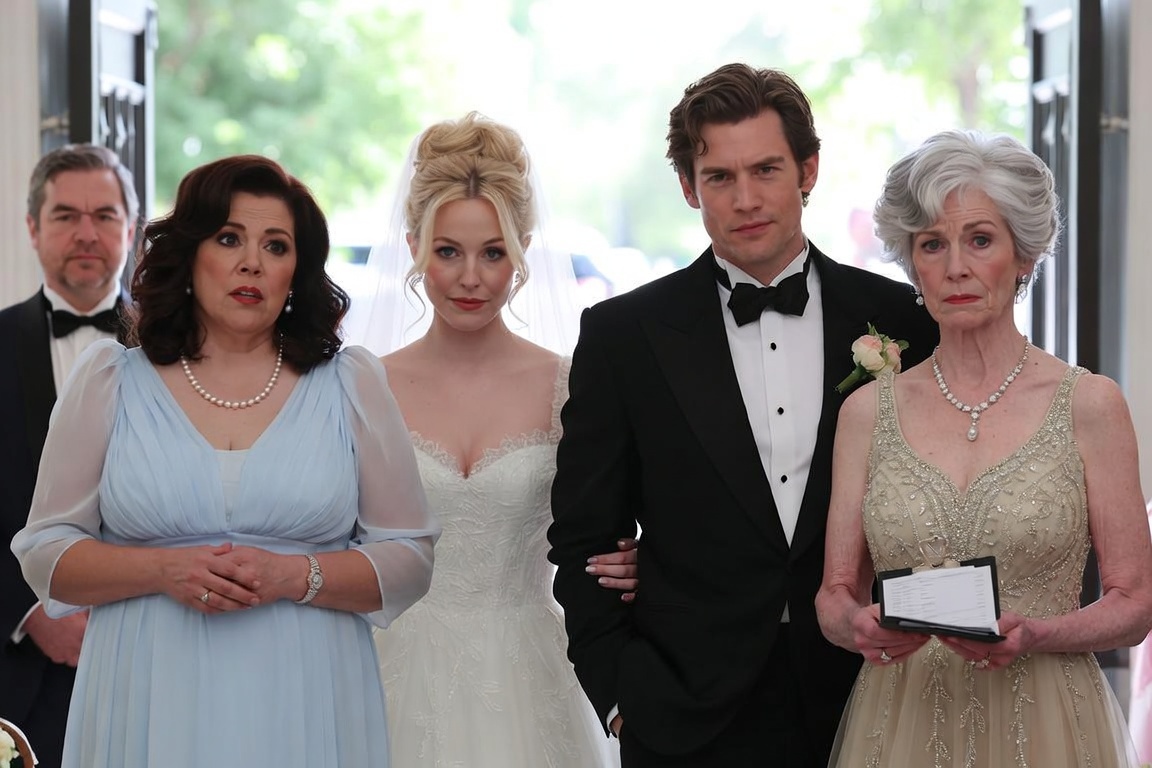
Diane arrived at the wedding hall before the florist finished adjusting the last ivory rose. She did not want to be late, did not want to create a problem, did not want anyone to say she made the day about herself. Mothers of brides are often expected to know how visible they should be without anyone explaining it. Diane had spent months learning that lesson in small ways.
Vanessa had been sweet on the phone when she needed addresses, dates, and childhood photos. In person, she had become careful. Careful about Diane’s pale blue dress, careful about the guest list, careful about which relatives looked “right” near the front. Diane understood more than Vanessa thought. She knew her daughter had entered a world that measured worth by polish, and she knew fear can make people unkind while still sounding organized.
The wedding hall was beautiful. Blush flowers climbed the arch. Champagne light warmed the aisle. A microphone stood near the front where vows would soon turn private feelings into public promises. Diane held a small bouquet and told herself beauty was still beauty, even when the people inside it were tense.
Marsha, the groom’s aunt, found her near the entrance with a clipboard hugged to her chest. She had the face of a woman who believed rules were more respectable when spoken sharply.
“You’re Diane?” Marsha asked.
“Yes.”
Marsha looked down the list, then at Diane’s dress, then toward the front rows. “Family photos are full.”
Diane blinked. “I’m the bride’s mother.”
“Of course,” Marsha said, as if that fact had been noted and dismissed. “But we need the arrangements clean. You can stand toward the back until we call you.”
Vanessa stood near the floral arch in her white gown, beautiful enough to make Diane’s heart ache. Her blonde updo looked perfect. The veil softened her face. For a moment, Diane remembered a six-year-old girl wrapping a towel around her head and pretending it was a wedding veil while Diane clapped from the hallway.
That little girl would have run to her.
This woman looked at her, then looked away.
Diane felt the bouquet stems press into her palm. She waited, giving Vanessa the chance to correct Marsha, to laugh nervously and say, “No, my mother stays with me.” The chance passed. Vanessa adjusted her bracelet instead.
Marsha touched Diane’s elbow, not roughly, but with the confidence of someone used to moving people like furniture. “Back row, please.”
Diane stepped away from the aisle. Every sound in the hall became clearer: the scrape of a chair, the whisper of silk, the florist’s clippers, the soft tapping of heels. She felt herself becoming smaller not because anyone pushed hard, but because no one who loved her stepped forward.
Evan, the groom, was speaking with a groomsman near the front. He had met Diane only briefly at a crowded engagement dinner. She remembered his smile as kind but distant. He had not known her story. Why would he? Vanessa had edited Diane into small mentions, never the full picture. My mom lives simply. My mom gets overwhelmed. My mom does not like big events. Diane had heard enough versions to recognize the pattern.
The photographer asked for the immediate family to gather. Diane remained near the back, holding her bouquet with both hands. Marsha kept checking the clipboard as though paper could make cruelty official. Vanessa smiled for a test shot, but the smile tightened whenever her eyes moved toward the rear of the hall.
Diane decided she would not cry before the ceremony. She had raised Vanessa through fevers, school projects, heartbreak, and long nights when money felt like a locked door. She could survive ten minutes near the back row. That was what she told herself.
Then a young flower girl tripped on the edge of the aisle runner. Diane moved before thinking, setting her bouquet on a chair and kneeling to steady the child. Her voice softened automatically, the same calm tone she had used for years with frightened students.
“It’s all right, sweetheart. Breathe first. Then stand.”
The words were simple. But Evan heard them.
He turned so sharply that the groomsman stopped speaking. His face changed, not with confusion exactly, but with recognition trying to rise through time. He looked past Marsha, past the flowers, past the clipboard, and saw Diane kneeling beside the little girl.
“That voice,” he said quietly.
Diane helped the child stand and brushed a petal from her dress. When she looked up, Evan was walking toward her.
Marsha stepped in. “Evan, we’re nearly ready.”
He did not stop.
Evan reached Diane near the back row. For the first time that day, someone looked at her as if she had not been misplaced.
“Mrs. Alvarez?” he asked.
Diane’s eyes widened. “Yes.”
He swallowed. “You were at Westfield High. You were the counselor.”
The hall seemed to loosen around the sentence. Vanessa’s face went still.
Diane searched his features and found the boy inside the man: tired eyes, quiet shoulders, the guarded expression of a teenager who had once believed asking for help would make him a burden. She remembered many students, but some stayed in the heart with unusual clarity. Evan had been one of them. He had sat in her office during a year when his family life felt unstable and his confidence had nearly disappeared. Diane had helped him apply for a mentorship program, helped him practice interviews, helped him speak about his future without apologizing for wanting one.
“Evan,” she whispered.
He smiled, and the smile was not distant now.
“You told me one rough year did not get to name the rest of my life.”
Diane pressed her fingers to her mouth.
Marsha looked between them, suddenly aware that the back row had become the center of the ceremony. Vanessa took one step forward, then stopped. Her mother’s life, the one she had minimized for the sake of clean arrangements, had walked into her wedding through the groom’s memory.
Evan turned to Marsha. “She is in every family photo.”
Marsha opened her mouth, then closed it.
The correction was gentle, but it rearranged the room. The photographer, sensing the truth faster than the people involved, lowered the camera and waited. Guests in the nearest rows stopped whispering. Diane stood with the small bouquet, her eyes wet, not because she wanted triumph, but because being recognized after being moved aside can feel almost unbearable.
Vanessa came toward her mother slowly. In the white dress, under the floral arch, she looked young again in a way she had tried to outgrow.
“Mom,” she said, and the word cracked.
Diane did not rescue her from the weight of it. Love does not always mean smoothing over the wound the moment someone notices they caused it.
Vanessa glanced at Marsha. “I should have said something.”
“Yes,” Diane said softly. “You should have.”
The honesty stung, but it also opened the door to something real. Vanessa took her mother’s hands. The bouquet was trapped between them, petals brushing against white satin.
“I was afraid they would judge you,” Vanessa admitted.
Diane looked at her daughter with both sorrow and firmness. “Then you let them.”
Evan stood beside them, not taking over the moment, only protecting its truth. “I would not be standing here the same way if she had not helped me when I was younger.”
Vanessa turned to him, startled by the size of what she had not known. Her mother had not been a footnote. She had been part of the hidden architecture of the man Vanessa loved.
The ceremony began late. Not long enough for guests to complain, but long enough for the wedding to become honest. Diane did not stand in the back. She walked Vanessa to the front for the photos, then sat in the first row with her bouquet in her lap. Marsha placed the clipboard on a side table and stopped directing people with it.
When the music started, Vanessa looked at her mother before looking down the aisle. Diane nodded once. It was not full forgiveness, not yet. It was permission to continue the day without pretending nothing had happened.
The vows sounded different after that. Evan’s voice carried warmth when he spoke about gratitude. Vanessa’s voice trembled on the word family. Guests may not have known every detail, but they felt the shift. The room had begun as an arrangement of appearances and became, at least for that hour, a place where hidden kindness received a seat.
At the reception, Evan asked Diane to dance. Not for display, not as a correction staged for cameras, but because memory deserved movement. He thanked her again for the office at Westfield High, for the sentence that stayed with him, for seeing a future in him when he could not see it himself.
Vanessa watched from the edge of the dance floor. Then she joined them, crying openly now, no longer concerned about which angle looked best. Diane let her daughter lean into her shoulder for a moment.
“You cannot love me privately and move me aside publicly,” Diane said.
Vanessa nodded. “I know.”
That was the beginning of the apology that mattered. Not the apology spoken under pressure, but the one that would have to be lived after the flowers wilted, after the photographs came back, after the wedding story was told and retold. Diane did not need the day to revolve around her. She had only needed her daughter to remember that a mother’s place is not determined by a clipboard.
The final photos were taken under the ivory arch. Diane stood beside Vanessa, Evan on the other side, Marsha at the edge looking smaller without her certainty. In the picture, Diane’s pale blue dress looked exactly right. Not expensive, not curated, not chosen for anyone’s approval. Right because the woman wearing it belonged there.


