 11
11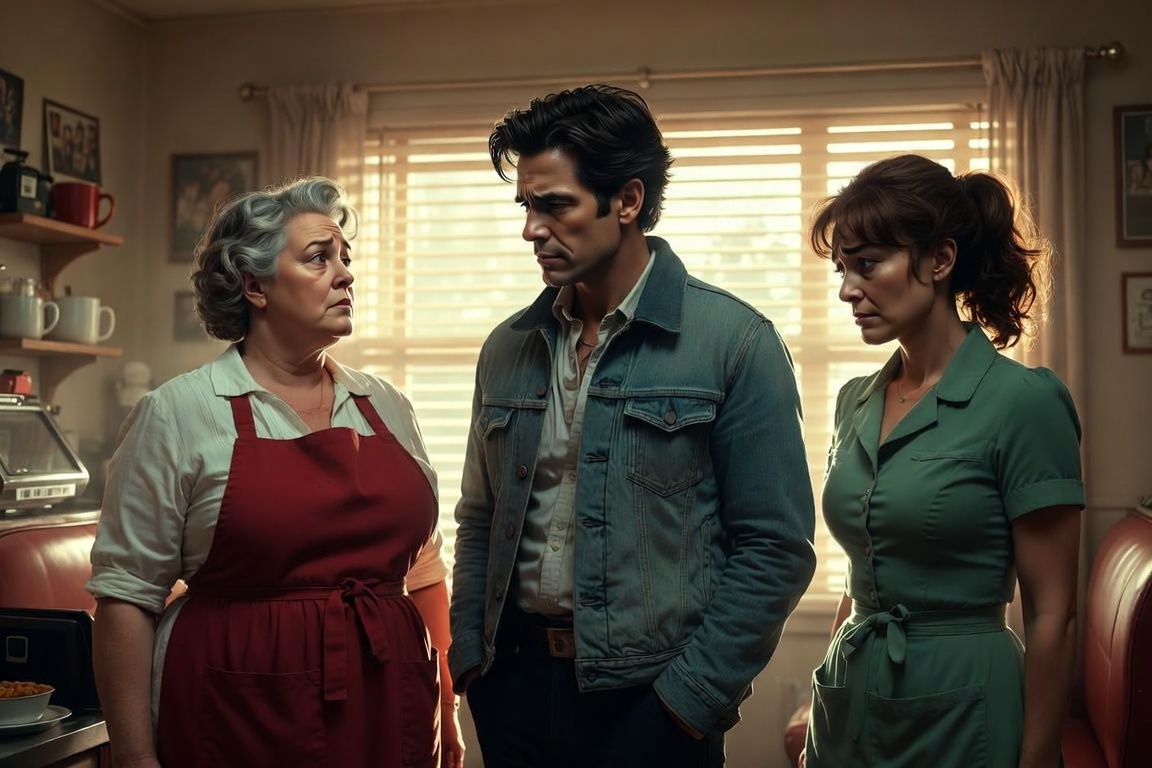
Anna knew the diner’s story by scent before she knew it by language. Coffee burning slightly in the pot. Pie crust cooling on the wire rack. Lemon cleaner on chrome. Rain on the red awning. Her father used to say every good place had a sound, and theirs was the bell above the door followed by somebody calling a name.
The diner had not become beloved because it was charming. It became beloved because it survived. Anna had held it through years when breakfast crowds thinned, suppliers changed, regulars moved away, and the old stove needed patience more than repairs. She learned to make the soup stretch without tasting thin. She learned which booth Mrs. Landry needed after her husband passed. She learned to smile at travelers and still count napkins with the discipline of someone who knew small waste mattered.
Ben remembered the diner differently. He remembered applause, not inventory. He remembered the local article from childhood when their father was praised for the pie. He remembered customers saying, “One day this place will be yours,” and he accepted the sentence as destiny even after Anna became the one opening before sunrise.
When the reporter called about a feature on the diner’s revival, Ben arrived from out of town in a denim jacket and confidence. He looked handsome under the morning light. He knew where to stand so the chrome counter shone behind him. He hugged Rose, kissed her cheek, and asked Anna if the coffee was fresh.
Anna poured him a cup without answering.
The reporter, a young woman in a beige coat, set her notepad on the counter and asked what made the diner special. Ben leaned forward as if the answer had been waiting in him for years.
“Family,” he said. “I kept my father’s vision alive.”
Rose, standing near the pie case in her red apron, looked up.
Anna was behind the counter holding the recipe notebook, the green waitress dress tied at the waist, her ponytail already loosening from work. She waited for Ben to correct himself, to say we, to say Anna, to mention even one morning she had carried. He did not.
He talked about “returning to tradition” though he had returned three weeks earlier. He spoke of updating the menu, though Anna had written every special in the notebook. He described “my father’s customers” as if Rose had not known every birthday, every allergy, every quiet grief that sat over coffee. He had a talent for making borrowed history sound personal.
The reporter wrote quickly. She did not yet know the shape of the room. Outsiders often believe the loudest person near the counter must be the center.
Anna turned a page in the notebook, not because she needed to, but because her hands needed somewhere to place the hurt.
Rose had been quiet for most of her life in the way mothers are quiet when everyone depends on them being steady. She could hear a fryer problem from the dining room. She could tell when a customer needed conversation and when they needed to be left alone. She could also tell when one of her children was dressing selfishness in family language.
Ben pointed toward the old framed photo wall. “Dad taught me everything right there.”
He pointed generally, not carefully. That was his mistake.
The wall was not decoration. It was a record. Photos layered across decades: Little League teams after games, Christmas pancake mornings, the first dollar framed near the register, Rose and her husband cutting a pie, Anna at fourteen wiping the counter, Anna at twenty-three beside her father at dawn, Anna at thirty-one repainting the menu board, Anna last year holding the diner key during the reopening breakfast.
Ben appeared in many photos too, usually smiling from the booth side of the counter.
Rose let him continue until he said, “When Dad was gone, I had to become the one everyone counted on.”
Anna closed the notebook.
The reporter’s pen paused. Maybe she heard the difference between memory and performance. Maybe the room did.
Rose walked to the wall with slow certainty.
“Then why,” Rose said, pointing to a photograph in a worn red frame, “is Anna in every picture?”
The diner changed in that old-fashioned way, not with spectacle, but with people turning their faces toward what had always been visible. The reporter followed Rose’s finger. Ben looked too, though he seemed annoyed before he seemed worried.
The first photo showed Anna as a teenager standing on a milk crate to reach the menu board. The next showed her beside their father, both dusted with flour. Another showed her holding a hand-lettered sign during a winter week when the old furnace failed and the diner served soup in coats. In the most recent photo, Rose sat at the counter while Anna stood behind her, one hand on her mother’s shoulder, the diner lights glowing again after months of uncertainty.
Rose took the recipe notebook from Anna’s hands and placed it open on the counter.
“This is your sister’s handwriting,” she said. “Every special. Every supplier note. Every change that kept the food tasting like home.”
Ben’s face tightened. “I helped.”
“You visited,” Rose said. “Those are different verbs.”
The reporter stopped writing. Then she turned to Anna. “May I ask you about the notebook?”
Anna looked at her mother first. Rose nodded.
Anna did not know how to tell her own story at first. She was better at service than performance. She could describe pie crust in exact detail, but not sacrifice without feeling dramatic. So she began with practical things. The stove. The menu. The regulars. The winter when she added soup flights because older customers wanted warmth without spending too much time choosing. The summer she opened an hour earlier because construction crews needed breakfast before sunrise.
As she spoke, the diner filled with the life Ben had flattened into a speech. The reporter listened differently now. She asked about Rose. She asked about their father. She asked why Anna never changed the wall photos.
“Because people like to see where they belong,” Anna said.
Ben sat in a booth with his coffee untouched. His confidence had not exploded. It had drained. That was harder to watch, and better. A loud collapse might have made him a victim of the moment. This quiet one left him with himself.
Rose joined him after the reporter stepped outside to take exterior photos. She sat across from her son and folded her hands.
“I love you,” she said. “But love is not permission to stand on your sister’s work.”
Ben looked toward Anna behind the counter. “I thought the story sounded better if it was simple.”
Rose’s eyes softened, but her voice stayed firm. “Simple stories often leave out the person doing the work.”
The published article did not turn Ben into a villain. Anna would not have wanted that. It told the fuller story: a family diner preserved by a daughter’s daily care, a mother’s memory, a brother learning the difference between pride and truth. The headline mentioned Anna by name. The lead photo showed her at the counter with Rose beside her and the wall behind them, every frame glowing under warm morning sun.
Customers came in holding the article. Some congratulated Anna. Some admitted they had assumed Ben had returned to “take over,” because that was what he had implied. Anna thanked them and refilled their coffee. She did not become louder after being recognized. She became lighter.
Ben stayed in town longer than planned. At first, he helped badly, reaching for praise after simple tasks. Rose corrected him. Anna corrected him. The diner corrected him most of all, because real work has a rhythm arrogance cannot fake. He learned the morning prep. He learned which regular wanted the corner booth. He learned that wiping the counter while someone is speaking is not the same as listening.
One afternoon, he brought Anna the recipe notebook and asked where she wanted the new page filed.
It was a small question, but it was the first one that did not assume he already knew the answer.
Anna looked at him, then pointed. “After the peach pie notes.”
He nodded and wrote carefully.
The diner bell rang. A regular walked in and called Rose’s name, then Anna’s, then Ben’s, in that order. Ben smiled without correcting it. The wall photos watched quietly from above the counter, doing what they had always done. Remembering.
That evening, after closing, Anna wiped the counter while Ben took down the chairs. Neither spoke for several minutes. Then Ben pointed to one of the older pictures and asked what year it had been taken. Anna told him the story. He listened without improving it, and that, more than any public apology, was where repair began.


