 11
11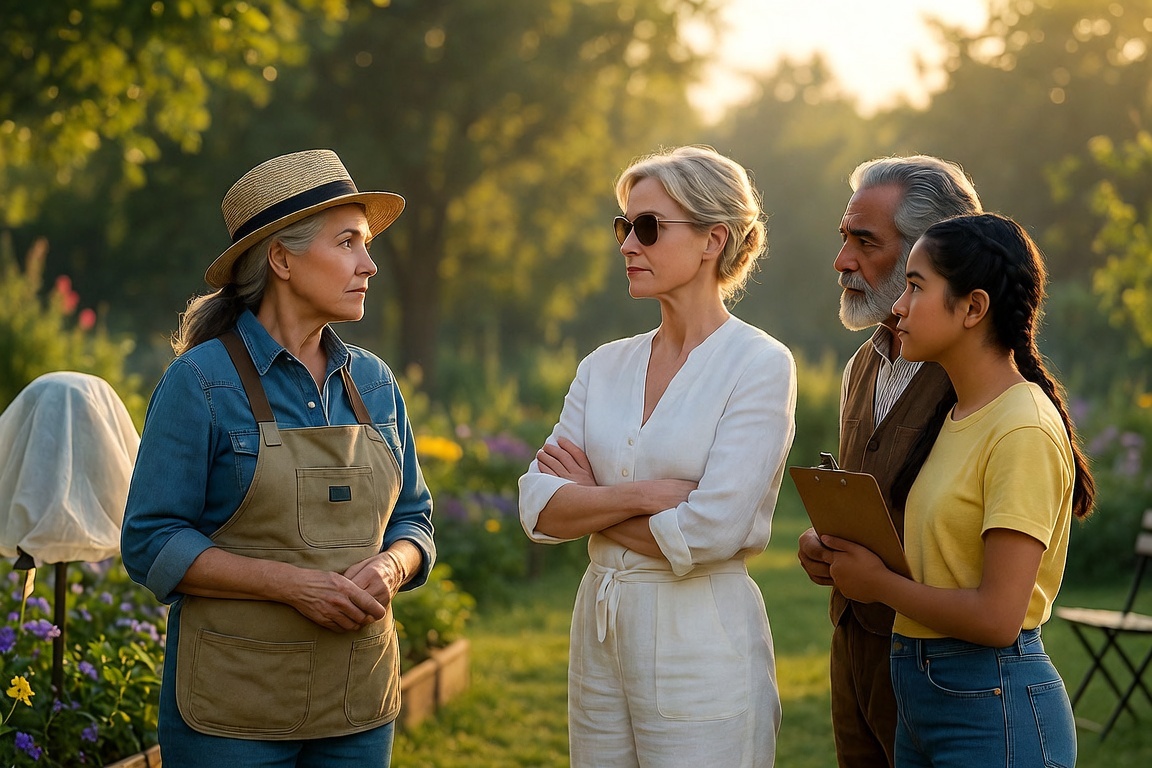
Gloria trusted gardens because they did not flatter anyone. A flower bed did not care how important a person sounded at a meeting. Tomatoes did not grow faster because someone owned a nicer car. Soil responded to patience, weather, and hands willing to return after the first attempt failed.
Every Tuesday and Thursday, Gloria came to the community center garden with a straw hat, a denim shirt, and a watering can that leaked if held at the wrong angle. She pulled weeds slowly because her knees did not forgive hurry anymore. She tied young plants to stakes. She taught the teen volunteers how to loosen roots before planting and how to speak kindly to older neighbors who wandered over pretending not to be lonely.
The garden sat behind the center, where chain-link fencing had once framed a tired patch of ground nobody claimed. Now sunflowers leaned over the path. Small vegetable beds lined the side wall. Folding chairs gathered under a shade cloth where seniors played cards and children ate orange slices after tutoring. It was not perfect. A few leaves had holes. One corner never drained properly after rain. But it lived.
Pamela lived across the street in a white linen life. White linen pants, white linen blouse, sunglasses large enough to hide most of her expressions. She called the garden “Gloria’s dirt project” when she thought the phrase sounded clever.
One late afternoon, as volunteers arranged chairs for a small center event, Pamela stopped near the fence and said, “It’s just dirt and weeds.”
Gloria heard her. So did the girl with black braids standing beside the flower bed.
The teen volunteer’s name was Tasha, and she had arrived at the garden months earlier with a yellow T-shirt, crossed arms, and no interest in being told cheerful things. Mr. Reed, the center director, had asked Gloria if she could use extra hands. Gloria said yes, but only if Tasha wanted to learn, not if adults were trying to make her useful for show.
The first week, Tasha watered too much. The second week, she forgot to water at all. By the third, Gloria taught her to test soil with two fingers.
“Plants do not need panic,” Gloria said. “They need attention.”
Tasha laughed at that, which felt like the first green shoot of trust.
The garden changed her in small visible ways. She began arriving on time. She corrected younger kids gently. She brought her grandmother to see the marigolds. Gloria never called it mentorship. She simply kept a second pair of gloves ready.
Pamela did not see that. She saw uneven mulch. She saw older hands moving slowly. She saw teenagers carrying trays of seedlings and decided the work had no sophistication because it did not look expensive. Her own yard, professionally trimmed every Friday, had perfect edges and no one lingering in it.
“Honestly,” Pamela continued, “the center should do something cleaner with the space.”
Tasha looked ready to speak. Gloria touched her arm lightly.
“Let the flowers answer,” she said.
What Pamela did not know was that the folding chairs were not for a routine volunteer meeting. Mr. Reed had spent weeks planning a small ceremony. He had ordered a wooden sign from a local carpenter and covered it with cloth until the right moment. The board rested on two stakes beside the main path, ribbon tied across the fabric.
Gloria had noticed it, of course. Gardeners notice everything placed in soil. But Mr. Reed told her it was a new donor marker, and Gloria accepted the explanation because she did not like fuss.
The late afternoon light turned soft orange. Neighbors drifted toward the garden. Seniors from the card table arrived. Parents came after tutoring pickup. A little boy carried a paper cup full of lemonade like it was an official duty. Pamela stayed near the fence, perhaps because crowds can make criticism feel more powerful.
Mr. Reed stepped forward with his clipboard. He was a steady man with a gray beard and the gift of speaking without making people feel trapped.
“Before we begin,” he said, “I want everyone to look around.”
People turned toward the flower beds, the vegetables, the chairs, the children, the older neighbors, the patch of earth that had become a place.
“This garden was not built by a budget line,” he continued. “It was built by someone who kept showing up.”
Gloria’s watering can lowered in her hand.
Tasha moved closer to Gloria. “He means you.”
Gloria shook her head slightly, but Mr. Reed was already untying the ribbon.
The cloth fell away.
The sign read: Gloria’s Garden.
For a moment, the only sound was the wind moving through sunflower leaves. Then applause began, not loud at first, but warm, spreading from the folding chairs to the fence. Gloria brought one hand to her mouth. She had not expected to cry in a denim shirt beside a leaking watering can, but gratitude often arrives without checking whether a person feels prepared.
Pamela’s sunglasses hid her eyes, but not the way her smile vanished.
Tasha spoke before Mr. Reed could continue. Her voice shook a little, yet carried.
“She helped all of us. Not just with plants. With showing up.”
That was the line that changed the event from a dedication to a testimony. Others began adding small pieces. Mrs. Landry said the garden gave her a reason to leave her apartment after her sister moved away. A father said his son learned patience there. A retired teacher said the herbs reminded her of her childhood kitchen. None of these stories sounded grand alone. Together, they became a whole season.
Gloria looked at Pamela then. Not with triumph. With invitation, almost. That made Pamela look away faster than anger would have.
After the ceremony, Mr. Reed handed Gloria a small envelope of handwritten notes from center families. She opened only one there, then stopped because the words blurred. Tasha took the envelope gently and said, “You can read them later.”
Pamela approached after most people had moved toward lemonade. She removed her sunglasses, perhaps because even she understood they were no longer useful.
“I did not realize the garden meant so much,” she said.
Gloria studied her. “Most things mean more when you ask before deciding.”
Pamela nodded, uncomfortable. “I suppose I judged it too quickly.”
“Yes,” Gloria said. “You did.”
There was no cruelty in the answer, but there was no empty politeness either. Gloria had spent too many years with soil to pretend shallow roots were deep. Pamela looked at the sign again.
“It looks nice,” she said.
“It is not here to look nice,” Gloria replied. “It is here to help people grow.”
That sentence found its way onto the community center bulletin board the next week.
Pamela did come back. Not immediately, and not with a sudden transformation that would have made the story too neat. The first time, she brought bottled water and stood awkwardly near the chairs. The second time, she asked which flowers handled heat best. The third time, she arrived without white linen and helped Tasha carry mulch. Gloria did not make a speech about forgiveness. She handed Pamela gloves.
Gardens are good at that. They do not erase what happened, but they give people something useful to do with their hands while they learn humility.
Gloria’s Garden became more than a sign:
Tasha eventually led her own small group of younger kids, repeating Gloria’s line in a voice that made it her own: “Plants do not need panic. They need attention.”
On the anniversary of the dedication, Pamela helped repaint the fence. She worked quietly beside Gloria until the sun began to lower.
“I used to think my yard was perfect,” Pamela said.
Gloria smiled without looking up. “Was it?”
“It was quiet.”
Gloria dipped her brush again. “That is not the same.”
Across the garden, Tasha laughed with two children over a crooked tomato cage. Mr. Reed adjusted the sign so the evening light hit the letters. Gloria wiped paint from her wrist and looked at the place that had once been dismissed as dirt.
The truth was simple and stubborn. Some things do not look valuable to people who only understand polish. But give a patch of ground patience, give lonely people a reason to gather, give young hands something living to protect, and suddenly the whole neighborhood can see what was growing all along.
Gloria never asked for her name to be painted larger. She asked for another bench, better hose storage, and a small shelf where children could leave painted stones. The center gave her all three. The sign mattered, but the next useful thing mattered too. That was how Gloria understood honor: not as a finish line, but as another reason to keep tending.


