 11
11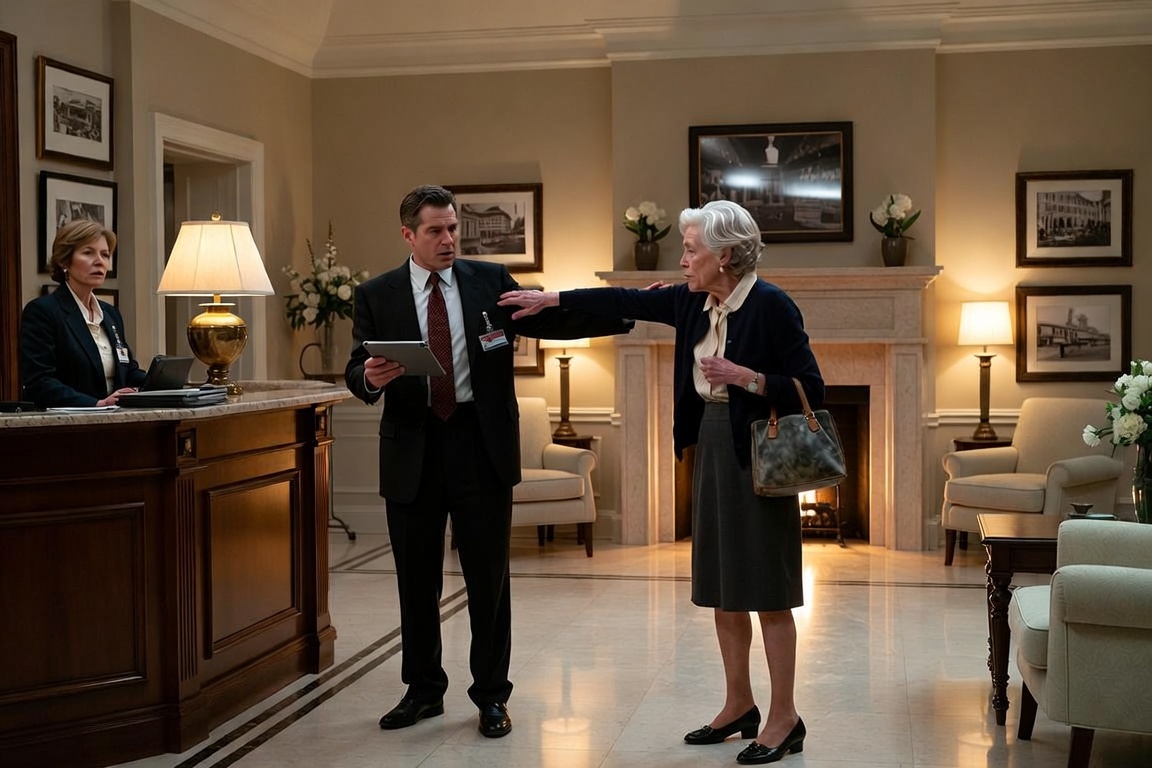
Margaret Wells arrived at the hotel with the careful steps of someone who remembered when the marble floor was not marble.
The lobby had changed since her hands first unlocked the front door. The walnut desk was new. The brass lamps were new. The velvet ropes near the check-in line were new. Even the scent in the air, white flowers and polished wood, felt expensive in a way the old lobby never had. But the fireplace was still in the same place, and beside it sat the cream armchair with the curved wooden arms.
Her chair.
Not because her name was embroidered on it. Not because she demanded it. Because for thirty-seven years, whenever Margaret entered the Wells Hotel, someone quietly kept that chair ready. It was where her late husband used to sit after the dinner rush. It was where she signed the first payroll checks. It was where she rested her feet after cleaning guest rooms because they could not afford enough staff during the first winter.
Now she stood beside it holding a faded brass room key tag.
Trent Lawson saw her from the front desk and decided what she was before she spoke. An older woman in a navy cardigan. A simple handbag. No driver waiting outside. No diamond watch. No assistant carrying luggage. In his mind, she did not match the lobby.
“Ma’am,” Trent said, stepping in front of the chair, “that seating area is reserved.”
Margaret looked at the small sign on the side table. “I know.”
His smile tightened. “Then you understand.”
“I was hoping to sit there for a moment.”
Trent glanced toward Mr. Harris, a VIP guest standing at the desk with a leather travel folder. The guest had been promised personal attention. Trent wanted the lobby to look flawless, controlled, expensive. Margaret looked like a question he did not want asked.
“The guest lounge is across the hall,” Trent said.
Margaret’s fingers tightened around the key tag. “This is where I usually wait.”
“Usually?” Trent repeated, and there was a small laugh inside the word.
Mr. Harris looked up.
Margaret did not raise her voice. She did not explain that the chair had been bought from an estate sale before the hotel had a real budget. She did not explain that the fireplace had once smoked badly enough to stain the ceiling, and that she had scrubbed the stains herself. She only stood there, trying to keep her face calm.
Trent reached down and removed the reserved sign from the side table. It was a tiny movement, but it felt like a door closing.
“You may wait in the public lounge,” he said.
The lobby did not stop. People still rolled suitcases past the elevators. A bell cart still moved near the entrance. But the air changed. Mr. Harris lowered his reading glasses and watched. A young receptionist behind the desk looked down quickly.
Margaret’s eyes moved to the old black-and-white photo on the wall. In it, a younger Margaret stood beside her husband in front of the hotel’s original wooden sign. She was smiling with the kind of exhausted pride that only comes from building something with your whole life.
Trent followed her gaze and frowned. “Please do not touch the display.”
Margaret’s hand dropped before it had fully lifted.
The elevator chimed.
Olivia Wells stepped into the lobby carrying her phone and a folder of morning reports. She was already thinking about room occupancy, staff schedules, and a private dinner reservation that had gone wrong the night before. Then she saw the fireplace.
She stopped.
Her grandmother was standing beside the founder’s chair. Trent was between her and the seat. The reserved sign was missing from the table. Margaret was holding the old brass key tag like a lifeline.
Olivia’s face went still.
Trent turned, relieved at first. “Ms. Wells, I was just assisting this guest.”
Olivia did not answer him. She walked straight past him.
“Grandma,” she said softly.
The word landed harder than a shout.
Mr. Harris straightened. The receptionist froze. Trent’s polished smile disappeared.
Margaret looked embarrassed, which hurt Olivia more than anything. “I did not want to interrupt your morning.”
Olivia took both of her hands. “Why are you standing?”
Margaret glanced at the chair. “There was some confusion.”
Olivia looked at the empty side table, then at Trent, then back at her grandmother. Her voice remained controlled, but the whole lobby could hear the disappointment inside it.
“This chair was never a decoration.”
Trent swallowed. “I did not realize who she was.”
Margaret looked at him gently. “Most people do not.”
There was no anger in her voice. That made the silence worse.
Olivia noticed the brass key tag in Margaret’s hand. The metal was worn smooth from years of touch. Room 101. The first rentable room. The room that kept the hotel alive during months when every other room sat empty.
“You brought it,” Olivia said.
Margaret nodded. “Your grandfather wanted it here today.”
Olivia knew what day it was. The hotel’s anniversary. Forty years since Margaret and her husband had opened the doors with six rooms ready and four still smelling like paint.
Olivia took the key tag carefully and walked to the glass display case near the old photo wall. She opened it and placed the tag beside the first guest ledger. The brass caught the warm light, small and plain and more important than anything polished in the lobby.
Then Olivia returned to the chair and pulled it back.
“Please sit.”
Margaret hesitated. “There are guests.”
Olivia smiled through the ache in her eyes. “They should know who welcomed the first one.”
Margaret sat down.
Not like a queen. Not like someone trying to win. She sat like a tired woman who had finally been allowed to belong in a room she had built.
Mr. Harris stepped forward slightly. “Mrs. Wells,” he said, “it is an honor.”
Margaret looked surprised, then gave a small smile. “That is kind of you.”
Trent stood near the desk with his tablet lowered. Every detail he had used to judge her now looked foolish. The cardigan. The old handbag. The quiet voice. He had mistaken humility for insignificance.
Olivia turned to him. She did not raise her voice. “Mr. Lawson, Mr. Harris will still receive excellent service. But first, you will restore the founder’s chair sign.”
Trent nodded quickly.
He placed the sign back on the side table with both hands.
The lobby resumed slowly, but not in the same way. People glanced at the photo, then at Margaret, then at the brass key in the display. A story had opened in front of them.
Margaret rested her hands on her handbag. Her shoulders loosened. She looked toward the fireplace, where the flames moved behind the glass, warm and steady.
Olivia sat on the arm of the chair beside her, just for a moment, just long enough to let the room see that leadership did not always mean standing above someone. Sometimes it meant kneeling beside the person who came before you.
Trent watched from the desk, face pale with regret.
Margaret did not demand an apology. She did not need one to prove who she was.
The hotel had already spoken for her.
Later, Olivia would tell the staff that the moment was not about one chair. It was about the habit of deciding value too quickly. Hotels teach employees to notice details, but details can be used badly when a person only looks for wealth, status, and polish. Margaret had entered with all the evidence of a life lived quietly. Trent had only searched for signs of importance he already understood.
Margaret stayed in the chair while Olivia asked for tea. Her hands no longer trembled. The key tag sat in the display case, simple and bright under a small light. A few guests slowed as they passed, reading the card Olivia had written by hand: Room 101, first guest room, first key returned to the founder.
Mr. Harris asked Margaret what the hotel looked like on the first night. She smiled and told him the lobby smelled like wet paint and coffee. She said the front desk bell had broken before the first guest arrived, so her husband stood by the door and greeted everyone himself. The story made the room feel less like a luxury hotel and more like a home with memory in the walls.
Trent listened from behind the desk. Every sentence made his earlier judgment smaller. The expensive lobby had not taught him grace. The woman he dismissed did.
Before the night ended, Olivia replaced the plain reserved sign with a small card that named Margaret and her husband as the original keepers of the house. Margaret protested gently, but Olivia only kissed her cheek. The hotel had hidden its heart long enough. The final image of the night was not a staff correction or a public apology. It was Margaret sitting by the fire while new guests passed the display and slowed down to read her name.


