 11
11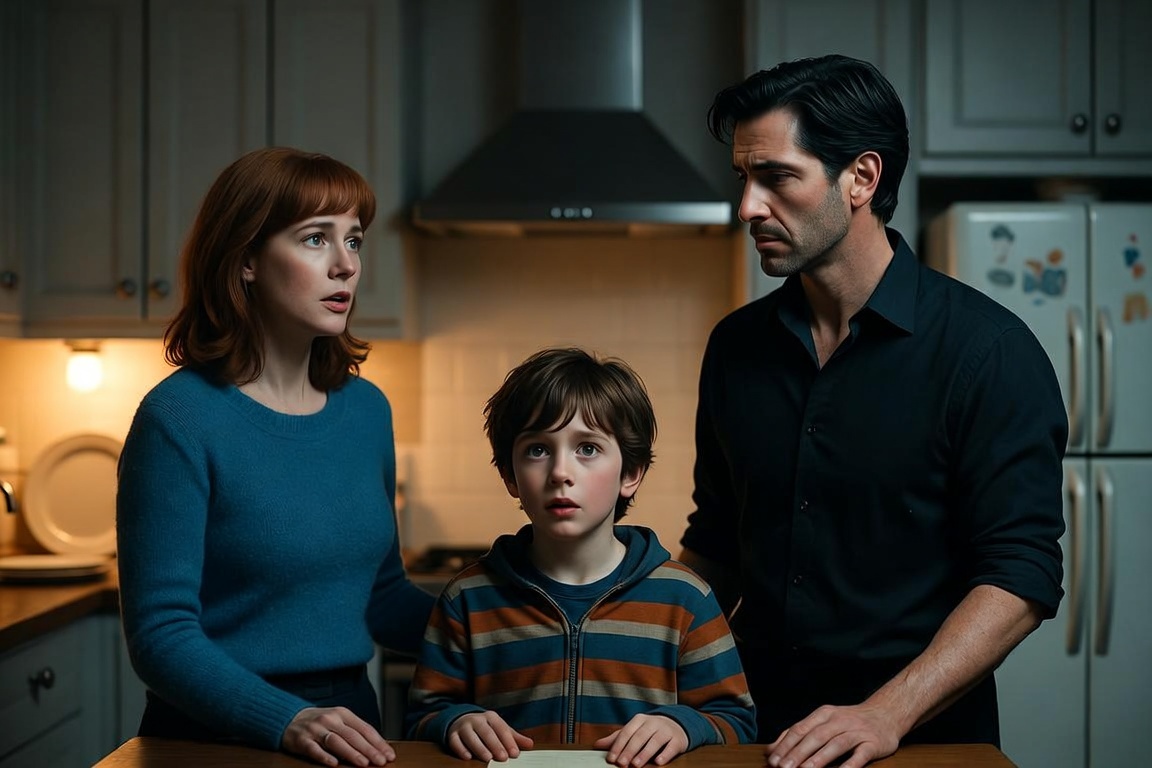
The kitchen sounded different when Oliver was afraid. Forks touched plates more softly. The refrigerator hummed too loudly. Rain tapped the window in small uneven rhythms, and the drawings on the fridge seemed brighter than the room deserved. Megan noticed these things because mothers learn the weather inside their children before they can name it.
Oliver sat with his shoulders rounded over his dinner plate, striped hoodie sleeves pulled halfway over his hands. He had once talked through meals until Megan laughed from exhaustion. Dinosaurs, spelling tests, the neighbor’s dog, the unfair rules of kickball, everything had entered the kitchen through his voice. Lately, he had become careful. Careful with his chair. Careful with his questions. Careful not to take the last roll unless Megan offered it twice.
Rick called it maturity.
Megan had tried to believe him.
Rick sat at the table in a black button-up shirt, eating as if the room were an obligation. He liked order. He liked a clean counter, shoes lined near the door, no toys in sight after seven. None of those things were wrong by themselves. The trouble was that order had become the word he used when he wanted Oliver to shrink.
“This house needs fewer problems,” Rick muttered, not quite under his breath.
Oliver’s fork stopped.
Megan looked up. “What does that mean?”
Rick leaned back. “It means we need peace.”
But peace, Megan was starting to understand, had become the name Rick gave to silence that favored him.
Oliver had not complained. That was part of what frightened Megan most. Children do not always announce when they are wounded. Sometimes they become convenient. They stop asking for rides. They laugh at jokes late. They keep drawings in backpacks instead of taping them to the fridge. They learn which adult footsteps mean the room should be cleaner.
Megan had married Rick because he seemed steady after years of doing everything alone. He remembered appointments. He fixed loose cabinet handles. He spoke confidently to repairmen and teachers. When he said Oliver needed “structure,” Megan heard support. When he said boys should learn not to be soft, she told herself he meant resilience. Love, or the desire for a safe life, can make a person translate warning signs into something easier to hold.
Her mother, June, had been less convinced. Before she passed, she had watched Rick from the porch during one family cookout, her eyes narrowed not with dislike, but with measurement. Later, she told Megan:
“A man can be helpful without being kind. Do not confuse the two.”
Megan had laughed it off then. She was tired of being cautious. She wanted a family picture that did not feel unfinished.
Now Oliver sat at the table like a guest in his own home.
Rick continued. “I am just saying we cannot build a stable home around every mood a child has.”
Megan felt heat rise in her face. “He is nine.”
“And old enough to learn he is not the center of every room.”
Oliver slid one hand under the table toward his lunchbox, which sat by his chair because he had forgotten to unpack it. His fingers searched the front pocket. Megan saw the movement but did not understand it. Rick saw it too and sighed.
“What now?”
Oliver pulled out a folded note, softened at the edges from being opened and closed many times. He held it with both hands. His voice was almost too quiet.
“Grandma said to give this to Mom if dinner felt bad.”
Megan went still.
Rick’s expression shifted from irritation to inconvenience. “That is dramatic.”
Oliver did not answer him. He stood, crossed the few steps to Megan, and placed the note in her hand.
The paper smelled faintly of the lavender lotion June used to keep near her bed. Megan recognized her mother’s handwriting before she unfolded it. Rounded letters. Firm pressure. A line that always tilted upward at the end, as if even difficult truths deserved a little lift.
Megan read the note once, then again.
My sweet girl, if you are reading this, maybe your heart already knows what your life is trying to explain away. A home is not safe because it is quiet. It is safe because a child can breathe in it. Protect his heart first. Any love that asks you to choose appearances over your child is not love you can build on.
The kitchen blurred.
June had not named Rick. She had not needed to. The note was not a command from the past. It was a mirror held steady by someone who knew Megan too well to flatter her fear. Protect his heart first. Megan looked at Oliver. His eyes were wide, not hopeful exactly, because hope had become risky. He was waiting to see whether his mother would translate the note into action or fold it away with all the other signs.
Rick pushed back his chair. “Are we seriously letting a note run this house?”
Megan folded the paper carefully and placed it beside her plate. When she stood, she moved between Rick and Oliver without thinking. Her body knew the answer before her mouth did.
“No,” she said. “We are letting the truth run it.”
Rick stared at her. He expected explanation, apology, a softer version of resistance. Megan had given him those before. She had asked him to be patient. She had asked Oliver to understand Rick was adjusting. She had asked herself to wait for the family to settle. But waiting had not made the kitchen warmer. It had only taught her son to lower his voice.
“I will not let you speak about him like he is extra weight in my life,” Megan said.
Rick’s jaw tightened. “So now I’m the problem?”
Megan looked at the drawings on the fridge. One showed three stick figures under a square yellow sun. Rick’s figure was drawn slightly apart from the other two. She had noticed it weeks ago and pretended it meant nothing.
“You are responsible for what you bring into this room,” she said. “And what you have been bringing is fear.”
The rain grew heavier against the window. Oliver stood behind her, clutching the hem of her sweater. Megan felt his small hand, and the feeling steadied her more than any argument could.
Rick said he needed air. He left the kitchen, then the house, the door closing harder than necessary. The sound made Oliver flinch. Megan knelt immediately.
“Look at me,” she said. “You did nothing wrong.”
Oliver’s face broke open then. Not loudly. Just enough for the tears to come.
Megan did not solve her life in one night. Real decisions have paperwork, conversations, rooms to rearrange, people asking questions, and moments when fear tries to sound practical. But the kitchen changed immediately because Oliver knew his mother had chosen him out loud.
She called her sister. She called a counselor recommended by the school. She moved Rick’s things out of the bedroom before he returned to talk the next day, not as punishment, but as clarity. If he wanted a place in their lives, it would have to begin with accountability, not control. He did not like that word. Megan no longer needed him to like it.
Oliver slept in her room that night on a pile of blankets, the old lunchbox beside him. The note from June rested on the nightstand. Megan read it once more after Oliver fell asleep. She cried then, quietly, not only for the pain of the evening, but for the months she had spent asking a child to endure what she should have named.
In the morning, Oliver taped a new drawing to the fridge. It showed two people at a kitchen table, a lamp above them, rain outside. The sun was missing, but both figures were smiling. Megan stood in front of it for a long time.
A week later, Rick asked to come over and “reset.” Megan agreed to a conversation at the community center, not the kitchen. Neutral walls. Clear boundaries. Oliver stayed with a neighbor he trusted. Rick apologized for some words but avoided others. Megan listened carefully. The old version of her would have accepted the partial apology because it sounded better than conflict. The new version heard what was missing.
“I hope you get help,” she told him. “But Oliver and I will not be the place where you practice power.”
The final note did not make Megan brave. She had always been brave. It simply reminded her where bravery belonged first. Not in keeping a marriage-looking picture intact. Not in hoping someone unkind would become gentle through patience alone. In standing in a rainy kitchen between a child and the voice that made him feel unwanted.
Months later, Oliver still kept the lunchbox. The note no longer lived inside it. Megan framed it and placed it in the hallway, not where visitors would immediately see it, but where she and Oliver passed every morning.
Protect his heart first.
Some family rules are written in marker on chore charts. Some are whispered by people who loved us before we knew how much we would need them. This one became the sentence that rebuilt the house.


