 11
11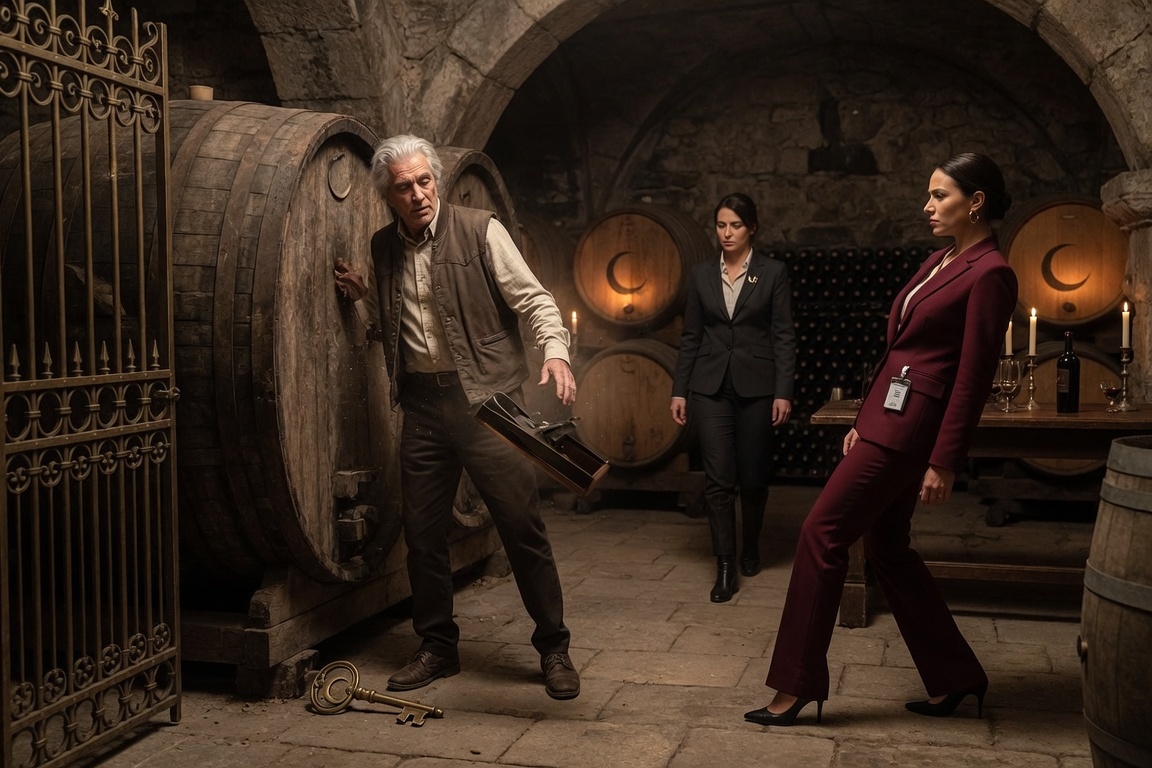
My uncle Luca did not speak after Celeste shoved him into the barrels.
He checked the wood first. That was Luca.
The rack had shifted less than an inch. He placed one palm against the nearest barrel, listening through the wood as though it were breathing. Celeste assumed the silence meant she had won.
The reopening event was built around a new story for our vineyard. Modern labels. International distribution. Clean photographs of stone arches and candlelight.
Luca’s faded vest did not fit the campaign. Neither did the tool in his hand. The curved plane had shaped barrel staves in our family workshop for more than fifty years. My grandfather owned the vineyard, but Luca built the cellar method that made it successful.
Our valley has hot days and cold nights. Wine aged too quickly near the outer walls and too slowly in the center. Luca altered the thickness and curvature of specific barrel staves, creating a subtle difference in air exchange. He marked each finished barrel with a burned crescent.
The method was never patented. Families like ours often confuse trust with documentation.
After my grandfather died, the business expanded. Consultants described the flavor as the result of unique cellar conditions. That was partly true. The barrels created those conditions.
Luca continued working after retirement because no machine matched his ear. He tapped wood and heard density. He smelled damp oak before moisture sensors reacted. He rejected staves that looked perfect.
I asked him to attend the relaunch and unlock the original cellar gate. Celeste Arden managed the event. She had transformed the brand successfully and believed every visual detail needed control.
She saw Luca adjusting a barrel before the tasting began.
“Maintenance later,” she told him.
He explained that the rack had shifted during installation. She looked at the press cameras. Luca reached for his plane to show the mark beneath the barrel. Celeste knocked the tool away and shoulder-shoved him backward.
The rack moved. One barrel rotated. The burned crescent appeared.
Luca’s old key landed beneath the same crescent engraved on the brass gate. I ended the presentation. Celeste tried to continue talking about heritage. That word sounded different while the man who created the method was standing against the barrels.
I turned Luca’s key. The bottle wall rotated.
Behind it was the original aging room, kept closed during renovation. Dozens of barrel ends faced the launch floor. Every one carried Luca’s crescent.
The room understood immediately. Celeste had been marketing an anonymous tradition while physically removing the person who developed it.
I returned the master key to Luca. He did not take the center of the photograph immediately. He inspected the shifted rack, secured the brace, and only then stepped forward. The launch continued without a tasting speech.
Luca demonstrated how the plane changed a stave’s edge. He explained that the difference was almost invisible and impossible to appreciate in a photograph. Several distributors listened longer than they had during the brand presentation.
The aftermath was not simple. Luca did not want to become a luxury mascot. He refused a portrait on every bottle. He wanted three things:
We created all three. The vineyard signed a licensing agreement for the crescent method. Luca received back compensation tied to the years the brand used his system without naming it. Young coopers entered a paid apprenticeship combining hand skills with moisture analysis and modern safety standards.
Celeste lost control of the heritage campaign but remained with the company after disciplinary review. Her apology became credible only when she stopped proposing ways to turn the confrontation into content. She spent months documenting the actual production chain:
The new campaign includes no heroic founder standing alone. It follows the bottle backward through every pair of hands. Luca appears for eleven seconds. He taps one barrel and rejects it. That is enough.
The barrel struck during the confrontation remained structurally sound. We left the scuff visible beneath the crescent. Visitors often ask whether the mark lowers its value. Luca answers, “Only if you value the photograph more than the barrel.”
The cellar relaunch eventually succeeded. Sales rose. Awards arrived. None of that is the ending I remember.
I remember my uncle checking the wood after being shoved. He had been treated as disposable. His first concern was whether the work was safe. That is why the cellar deserved his name.
The cellar audit moved from wood to contracts. We opened storage rooms that had not been inventoried since my grandfather’s time. Inside were cooper invoices, chalk diagrams, cork ledgers, and photographs of Luca standing beside barrels at different stages of construction.
The crescent appeared everywhere:
The company had treated the visible mark as decoration, not authorship.
Luca reviewed the records with a lawyer who specialized in craft knowledge. He disliked the meetings. He preferred speaking through wood. Still, he understood that apprentices would need more than family trust. The new agreement defines what belongs to the vineyard, what belongs to Luca’s method, and how future improvements will be credited.
The agreement changed the apprenticeship. Young coopers no longer copy the crescent automatically. They earn the right to use it after demonstrating the full process and documenting their own adjustments. The mark is not a brand stamp. It is a record of responsibility.
Celeste helped redesign the launch film after losing control of the original campaign. We replaced the opening of sunrise vineyards and timeless tradition.
The film begins inside the workshop. No music. A stave placed on the bench. Luca testing the grain. A younger cooper measuring moisture. A lab technician checking oxygen transfer. The story moves from tree to barrel to bottle.
Tradition becomes a process rather than a mood.
Distributors feared the detail would confuse customers. It did not. People understood why the method mattered.
Luca refused to attend award dinners, but he agreed to teach one public class each harvest season. He begins by handing participants two pieces of oak that look identical. One bends cleanly. The other splits.
“Luxury begins before the label,” he says.
The barrel rack from the confrontation was reinforced and left in place. The scuff sits near eye level. We added no explanation beside it. Workers know. Visitors sometimes notice. Luca never points it out unless somebody asks.
The vineyard’s biggest change happened in quieter rooms:
Our family had spent years praising heritage while allowing hierarchy to hide the people carrying it.
Heritage should be heavy. It should require names, wages, training, and responsibility. Otherwise, it is only a beautiful word printed over somebody else’s labor.
One season into the apprenticeship, Luca changed the crescent itself.
He added a tiny second cut beneath the curve for barrels completed by a team rather than one master. The change surprised us because the original mark had remained unchanged for decades.
“The old symbol recorded one hand,” he explained. “The new work should record many.”
Apprentices now sign the production ledger beside growers, cellar technicians, and lab staff. The barrel still carries one visible mark, but the record behind it shows the collaboration.
That is how tradition stays alive. Not by freezing one man’s method. By allowing the next group to understand it well enough to change it responsibly.


