 11
11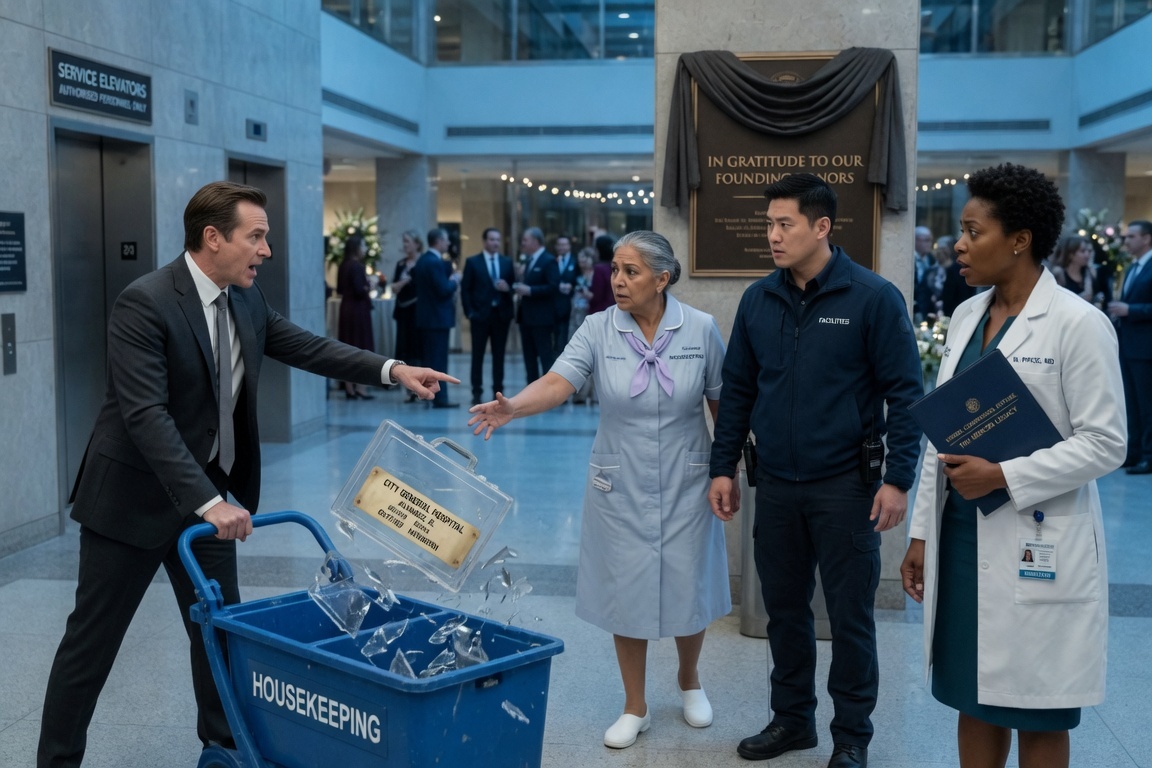
For twenty-two years, I entered the hospital through the service door.
I knew which floor tiles squeaked, which elevators hesitated, and which waiting-room lights frightened children after midnight. I cleaned rooms no family ever wanted to enter and hallways where people sometimes received the worst news of their lives.
Most nights, nobody remembered my name. That never bothered me.
My daughter Elena had taught me that care does not become smaller just because it happens quietly.
Elena spent part of her childhood in that hospital. She had a serious condition that required long stays, but she never let the building become only a place of fear. She drew pictures for other children, organized books in the family room, and made me promise that whenever I felt helpless, I would find one useful thing to do.
After she died, useful things became the way I survived.
I took the night cleaning position because I could not stay inside our empty apartment. At first, every corridor reminded me of her. Later, the work gave me a rhythm:
Years passed.
I saved every extra dollar I could. Elena’s father had left us a small workshop property on the edge of the city. It sat unused after he died. Developers offered to buy it more than once, but I could not decide what to do.
Then the hospital announced plans for a new family wing where parents could rest near children receiving long-term care.
I thought of the nights I had slept upright in a plastic chair beside Elena’s bed. I thought of other mothers arriving with no clean clothes, no food, and nobody to call.
So I gave the property to the hospital foundation.
I asked for one thing. Do not put my name in the fundraising campaign. Use the value to build something practical. The foundation agreed. Dr. Naomi Price knew the full story. Very few others did.
On the night of the dedication reception, Naomi sent me an invitation. She insisted I attend.
I finished half my shift before changing my mind. The atrium was busy, and a late delivery had left dust near the entrance. I cleaned it quickly before the guests arrived. I planned to park the cart, wash my hands, and stand quietly in the back.
Grant Mercer, the foundation director, saw the cart before he saw me.
He strode across the floor and shoved it out of the reception line. The wheels struck the base of a flower arrangement. He demanded to know why housekeeping was moving through the donor area.
I showed him my invitation.
He took it from my hand, glanced at my uniform, and decided there had been a mistake. I tried to explain that Dr. Price had asked me to come, but Grant pointed toward the service elevators.
Guests watched. Some looked uncomfortable. Others looked away.
Marcus, the facilities supervisor, stepped closer. He knew me. He knew how many nights I had covered shifts when people were sick. But Grant outranked him, and for a second fear held him still.
Grant grabbed the cart handle and rolled it farther from the reception. A small clear case slid off the top shelf.
It opened when it hit the floor.
Inside was Elena’s hospital bracelet.
I always carried it on important days. The plastic was faded, and the printed letters had almost disappeared, but her name remained visible.
Dr. Naomi arrived just as Grant raised his hand toward the service elevator again. She saw the bracelet. Then she saw me.
Naomi picked up the case and held it carefully. Her expression changed, not because she was surprised to see me, but because she understood exactly what the room had witnessed. She closed the elevator door before I could step inside.
Grant tried to explain that he was protecting the event. Naomi asked Marcus to bring my invitation. Then she walked me toward the covered bronze plaque at the entrance to the new wing.
I wanted to disappear. I had not donated the property for applause. I had not wanted guests to stare at me. I had not wanted Elena’s name used as a weapon against anyone.
But Naomi told me that silence would protect the wrong lesson.
She pulled the cover from the plaque.
The Alvarez Family Wing
Rest, dignity, and support for families who stay beside children through long nights.
Beside the plaque hung a photograph I had never seen. Elena and I were sitting on the floor of the old family room, surrounded by crayons and books. She was smiling at another child. I was in the background holding a mop.
The room became still. Grant’s pointing hand dropped.
The same guests who had watched me being directed toward the service elevator now turned toward the new wing. They looked at the plaque, the photograph, the cleaning cart, and finally at me.
Marcus returned my invitation with both hands. He parked the cart beside the wall as carefully as if it belonged in the ceremony.
Naomi placed the donor folder in my hands. It contained the final plans for the wing, including sleeping rooms, a small laundry area, a family kitchen, and a quiet room for parents who needed to cry without frightening their children. Those were not glamorous features. They were necessary ones.
Grant approached me later. He apologized. He said he had assumed the invitation was wrong because I was wearing a housekeeping uniform.
I told him the invitation had been correct. His assumption was the mistake. I did not say it cruelly. I said it clearly.
“Hospitals teach people to recognize important titles. Doctors, directors, donors, specialists. But the building also depends on people who clean rooms, carry meals, repair lights, change sheets, and sit with frightened families after everyone else has gone home.”
Respect cannot begin only after a plaque is uncovered. It has to begin before anyone knows the hidden story.
When the reception ended, I returned to work. Naomi asked whether I wanted someone else to finish my shift. I said no. The new wing would open the next morning, and I wanted the family rooms ready.
I placed Elena’s bracelet case on the cleaning cart, directly beside the fresh cloths. As I cleaned the first room, I imagined a tired parent entering, setting down a bag, and finding a clean bed close to their child.
That was enough. The plaque would carry our family name. The room would carry our purpose. And every person who crossed that threshold would receive the kind of quiet care Elena had taught me to give.
The first family entered the wing before sunrise. A father carried a sleeping child while the mother dragged a suitcase that had lost one wheel. They did not know my name. They did not stop at the plaque. Marcus guided them to a room, and I watched the mother’s shoulders lower when she saw the clean bed and small kitchen.
That reaction was the dedication I had wanted.
Buildings are easy to celebrate when ribbons are cut. Their real meaning appears later, when someone exhausted discovers that another person thought ahead about what they might need. Elena’s bracelet remained on my cart that morning, but for the first time it felt less like a reminder of what I lost and more like proof of what her kindness continued to create.


