 11
11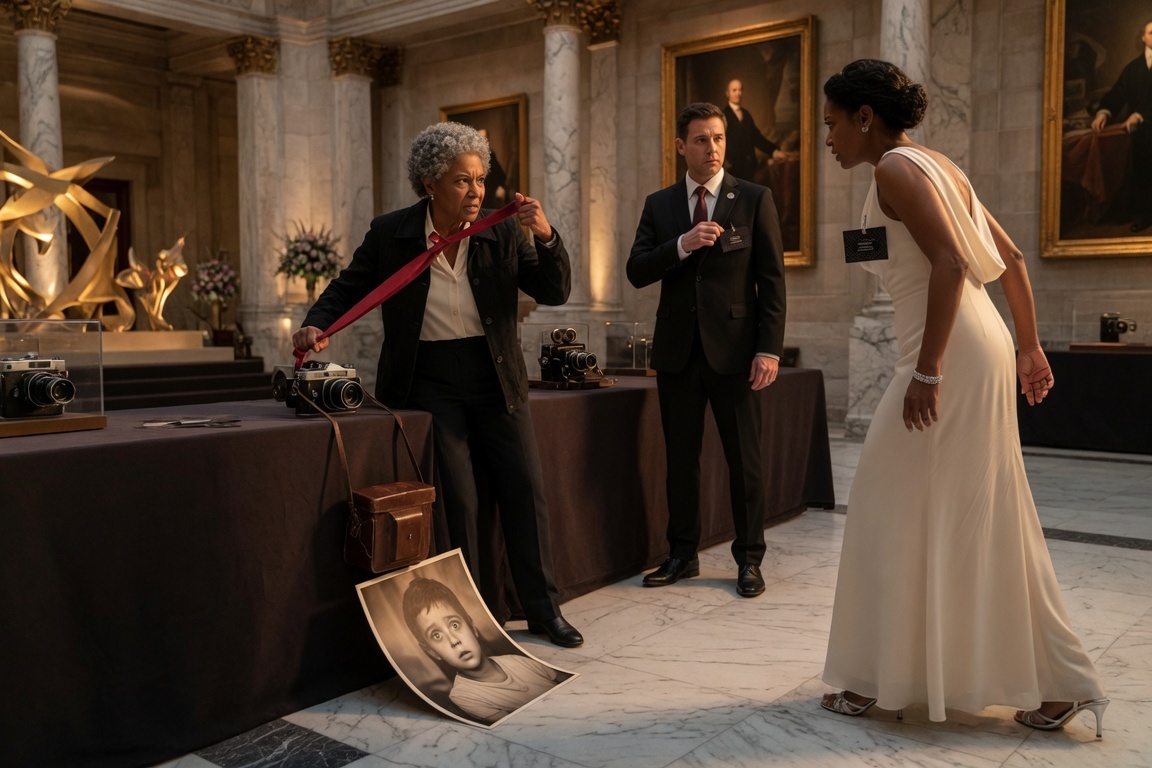
Daniel recognized the photograph before he recognized me. It had fallen face-up onto the marble floor.
A boy of eight stood beside a bus station bench, wearing a coat too large for him and holding a paper cup. The photograph was faded around the edges. A red ribbon had once been taped to the back.
Claudia had slapped my camera onto the display table seconds earlier.
She was the host of the charity gala, and the atrium had been arranged around perfect images of courage, recovery, and generosity. My old film camera looked out of place among the polished digital equipment.
So did I.
I had spent most of my career photographing streets rather than studios. I took pictures of shopkeepers opening before dawn, families waiting outside hospitals, workers on night buses, children playing beside temporary shelters, and people whose names rarely appeared beneath their own images.
Forty-three years ago, I photographed the boy at the bus station.
He had been sitting alone for nearly an hour. Adults passed him because he looked calm. I noticed he was holding the paper cup without drinking. His eyes followed every bus but never settled on a face.
I asked whether someone was meeting him. He gave me the wrong name. Fear had taught him not to trust strangers.
I took one photograph from a distance, then called a transit officer. The boy had been missing for six days after being separated from his family during an emergency evacuation.
The photograph appeared on local television that evening. His aunt recognized the oversized coat. The child returned home.
His name was Daniel Foster.
We met once after the reunion. He gave me a red ribbon from the welcome banner and asked me to tie it to my camera so I would remember him. I kept it there for decades.
Daniel later created a foundation helping families separated during disasters. The gala was raising money for emergency reunification systems. He had invited the photographer who took the image that brought him home.
Claudia did not know that.
She saw an older woman entering the stage area while donors waited for portraits. She told me personal cameras were not allowed near the display. I explained that Daniel had requested the original film camera and photograph.
She looked at the scratched body, the worn strap, and the red ribbon. Then she struck the camera down.
The strap pulled against my shoulder before slipping free. The faded photograph fell from the case.
Daniel crossed the atrium so quickly that the photographer lights swung behind him. He picked up the image with both hands. For a moment, he was not a foundation director in a formal suit. He was the child on the station bench, searching every passing face.
He opened his jacket and removed the reunion badge his aunt had saved. The same red ribbon crossed the center.
Claudia stepped back.
Daniel placed the camera strap over my shoulder and asked the lighting team to illuminate the original photograph on the portrait wall.
My image filled the atrium. It was not technically perfect. The station light was uneven. The frame leaned slightly. The boy looked away from the camera.
It had done what it needed to do.
The gala changed after that. The polished portraits remained, but Daniel added a section for images that had served as evidence, memory, or a path home. Street photographers, shelter volunteers, transit workers, and family advocates were invited to speak about the work behind reunification.
Claudia apologized without asking me to comfort her. She admitted she had been protecting the visual order of the event and had treated an unfamiliar older guest as a threat to that order.
The camera suffered a dent near the rewind knob. It still works. Daniel offered to replace it. I declined.
The dent now sits beside the red ribbon. One remembers the boy who came home. The other remembers how easily a room celebrating compassion can forget to practice it.
Photographs do not save people alone. Someone has to notice, someone has to ask, someone has to share the image, and someone has to recognize the face.
That night, Daniel recognized more than his childhood. He recognized the difference between displaying a story and honoring the person who carried it.
Daniel and I spent the next morning inside the foundation archive. He had assumed the bus-station photograph was the only image I took that day. I showed him the contact sheet.
Twelve frames.
That detail shaped the foundation’s next project. Families searching for missing relatives often receive hundreds of images, alerts, and unverified posts. The foundation began training volunteers to choose photographs for identification rather than emotional impact. Clear clothing, location, time, and physical context could matter more than a close-up face.
Claudia joined the project after completing a review of the gala incident. She worked behind the scenes, labeling archive images and learning why consent, accuracy, and dignity matter when photographs involve trauma. She never became part of the public success story. That was appropriate.
Daniel also asked whether I wanted the original photograph returned to my private collection. I said no. It belonged in the archive, but not enlarged endlessly as a symbol of suffering. The foundation displays it only within the context of the reunion and the systems that failed before one person noticed.
I kept the contact sheet. It reminds me that recognition often depends on selection.
The camera can witness. It can also simplify. The responsibility belongs to the person holding it and the institution deciding what the public will see.
Ruth later returned to the bus station. The bench had been replaced, and the ticket hall carried different signs, but the angle of the afternoon light was almost unchanged.
Daniel stood where the child had stood. This time, nobody photographed him.
They simply walked through the station together and thanked the transit staff who had preserved the old incident report.
The foundation began adding transit workers to emergency-reunion planning. Drivers, cleaners, ticket agents, and security staff often notice a person long before a formal search reaches them. The gala had centered donors because money funded the system. The bus station reminded everyone where recognition actually begins.
Usually with someone paying attention during an ordinary shift.
The foundation also created a rule for anniversary events: No historical object enters the room without the person connected to it being identified and briefed.
The rule sounds administrative. It protects memory from becoming decoration. Ruth’s camera was not a prop, and Daniel’s childhood was not content waiting for a sponsor backdrop.
Daniel later asked Ruth whether she had known the photograph would become important.
She said no. She had only known that the child looked alone and that nobody else had stopped.
That answer became the foundation’s closing principle:
Do not wait for certainty before offering attention. Verification comes next. Attention comes first.
The gala’s future exhibitions now include contact sheets and decision notes, showing that useful images are often selected through careful context rather than dramatic instinct.


