 11
11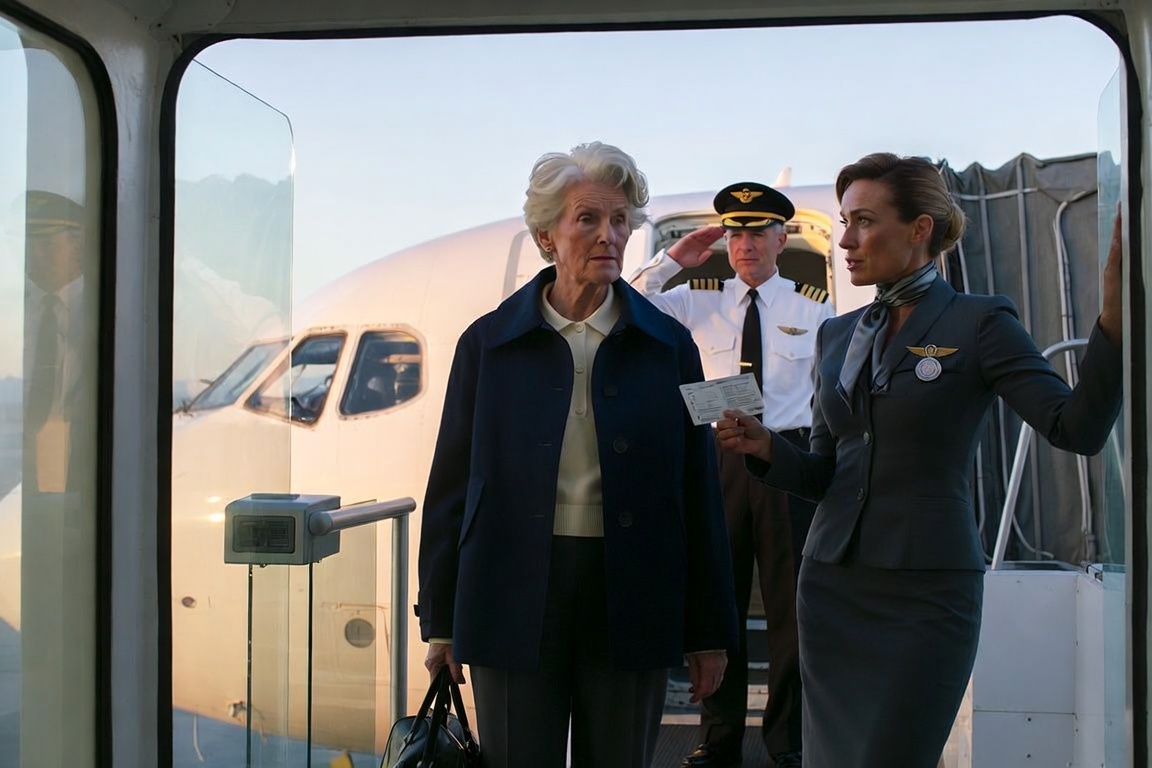
The gate supervisor took my boarding pass before I could explain why I had stopped beside the jet bridge. Her fingers closed around the paper, and her other arm rose across the entrance. Behind her, morning light reflected from the aircraft windows. She looked at my silver hair, my practical shoes, and the small leather bag in my hand. Then she pointed toward the seating area as if I had wandered somewhere I did not belong. I had crossed that kind of threshold thousands of times, but never as a passenger being treated like a problem.
For thirty-seven years, airports had been the center of my life. I began flying when women in the cockpit were still treated as a curiosity. Passengers sometimes asked when the real pilot would arrive. Colleagues questioned whether I could manage long routes, difficult weather, or a crew under pressure. I answered the only way that mattered: by preparing harder, flying safely, and returning every person on board to the ground with confidence. Over time, doubt became respect, and respect became responsibility.
I eventually became a training captain. My favorite part of the job was not sitting in the left seat. It was watching a nervous first officer develop judgment. Technical skill could be measured in a simulator, but leadership appeared in quieter moments: how someone spoke to a tired cabin crew member, whether they admitted uncertainty, and how they protected people when a schedule began to collapse. I taught hundreds of pilots that authority should make a room calmer, not smaller.
James Cole had been one of those pilots. On his first training flight, he knew every procedure but gripped the controls too tightly. A storm line forced us to change course, and his confidence began to disappear. I told him that good captains do not prove bravery by pretending fear is absent. They identify the risk, communicate clearly, and make the safest decision before pride gets involved. He diverted the flight, landed smoothly, and never forgot the lesson.
Years later, James became a captain himself. We stayed in touch through brief messages and holiday cards. He sent photographs from new routes and once wrote that every difficult decision still began with my voice in his head telling him to slow down and see the whole picture. I retired quietly, without a final public ceremony. The airline gave me a set of vintage wings, and I pinned them inside a drawer for years.
That morning was my first flight after my husband passed away. We had planned the trip together, but illness turned the reservation into something I could not face. Months later, I decided to go alone. I wore the old wing pin under the collar of my navy coat because it reminded me that I had handled uncertainty before. I did not expect recognition. I wanted only a calm seat by the window and the courage to continue the journey.
Monica, the gate supervisor, saw me pause near the jet bridge and assumed confusion. When I tried to explain that I was checking the aircraft number, she interrupted. Boarding was nearly complete, she said, and she did not have time to repeat instructions. My assigned group had already been called, but the scanner had briefly failed. Instead of checking, she took the pass and directed me away from the entrance.
The embarrassment was sharper because other travelers were watching. I could have named my former title or asked for a manager. I could have described the routes I had flown before Monica began working at an airport. None of that should have been required. An elderly passenger deserved patience even if she had never touched an aircraft control.
Respect that appears only after a résumé is revealed is not respect. It is fear of consequences.
As I lowered my eyes, the collar of my coat shifted. The old wing pin caught the terminal light. At that exact moment, the aircraft door opened and James stepped into the jet bridge. He was checking the final boarding status when he saw the pin. His face changed before he recognized mine completely. Then he stopped, and the years between training flights disappeared from his expression.
James walked toward me with the same deliberate pace I had taught him to use in a tense cockpit. He gave a formal salute in front of the gate, then reached carefully toward the wing pin and straightened it on my lapel. Monica looked from his four-stripe epaulets to my face. The boarding pass remained in her hand, suddenly useless as proof of who belonged near the aircraft.
He offered me his arm and escorted me down the jet bridge. I did not feel victorious. I felt seen at a moment when grief had already made the trip difficult. James asked the cabin crew to welcome me as his former instructor, but I requested no announcement. The passengers did not need my history. The gate supervisor needed only to understand that the woman she dismissed had been worthy of courtesy before the captain saluted.
After landing, Monica sent an apology through the airline. She admitted that pressure from a delayed boarding process had made her impatient. I accepted the apology, but I asked the airline to review how staff supported older travelers. A stressful schedule can explain a short tone. It cannot justify treating uncertainty as incompetence or age as an inconvenience. The airline added scenario training focused on dignity, not merely speed.
James later mailed me a photograph taken from the gate camera. In it, he was saluting while I stood beneath the terminal light with my old wings visible. I placed the photograph beside my husband’s picture. The journey had begun with loss, but it reminded me that a life of teaching continues in the people who carry its lessons forward. The captain at the door had once needed guidance. Now he used his authority exactly as I had hoped: to make another person feel safe.
I still travel wearing the navy coat. Sometimes nobody notices the pin, and that is perfectly fine. Its purpose is not to demand special treatment. It reminds me who I was and what I taught.
The real measure of a gate, a cockpit, or any place with authority is simple: how do people behave before they recognize the person in front of them?
Monica failed that test for a moment. James showed how quickly dignity can be restored when someone chooses to use power with care.
During the flight, James invited me to visit the cockpit after landing. The instruments were newer than the ones I had used, but the rhythm of the space felt familiar. He showed me a small card tucked beside the checklist. On it, he had written three reminders from our training years: slow down, communicate, protect the people. I had forgotten saying the words so often. He had turned them into part of his routine.
That moment changed how I remembered retirement. I had assumed leaving the cockpit meant my influence ended when the final uniform was packed away. James reminded me that teaching continues through habits, decisions, and the way former students treat people under pressure. A career is not only the flights recorded in a logbook. It is also the judgment carried forward by people who learned beside you.


