 11
11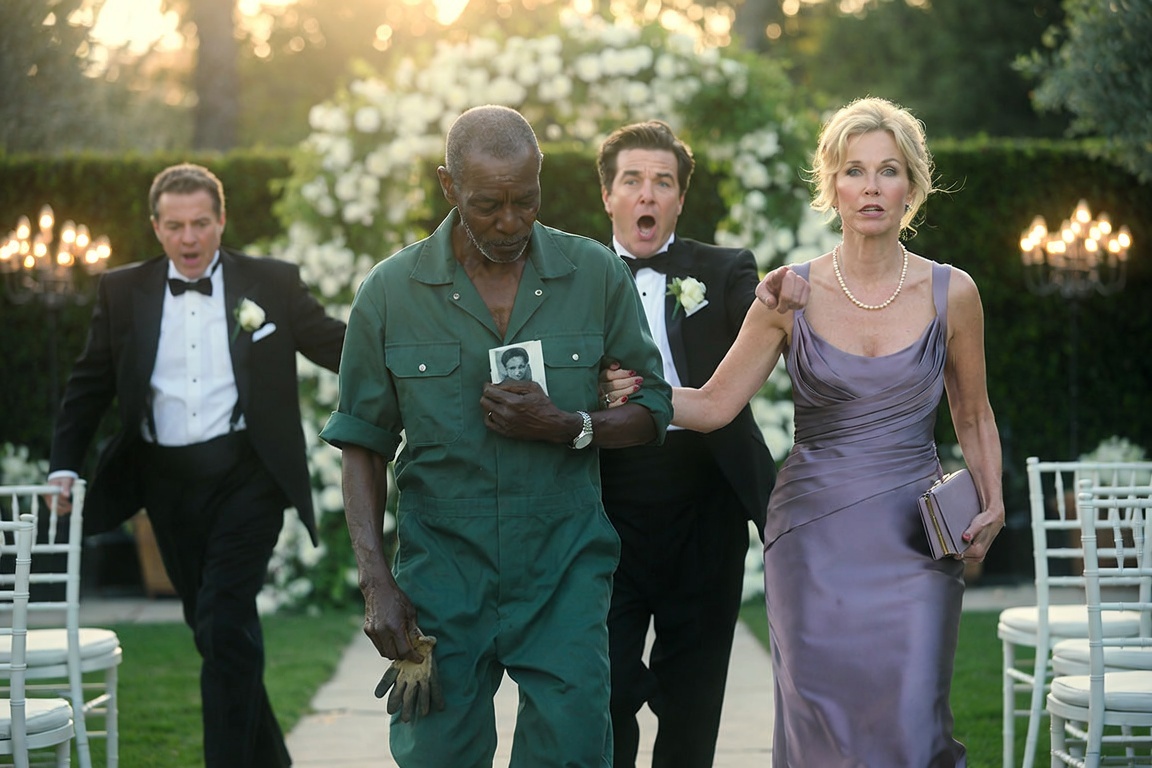
I saw Patricia’s hand on Samuel’s arm before I heard the music begin. From the far end of the stone walkway, the scene looked small: a woman in lavender redirecting a gardener away from the front row. Then I saw the photograph pressed against his chest. I knew that photograph. It showed me at seven years old, missing two front teeth, sitting on Samuel’s shoulders beside a garden he had planted behind our apartment.
Samuel had worked with flowers most of his life. To strangers, the green uniform explained him completely. To me, it explained almost nothing. He was the man who packed my school lunch after my father died. He attended parent meetings, fixed my bicycle, and sat awake beside my bed when fever made the walls move. He never asked me to call him Dad. He simply did the work of one until the word became unnecessary.
When I became engaged, I told my future family that Samuel would sit in the groom’s front row. Patricia smiled politely at the time. She cared deeply about appearances, but I believed she understood the difference between a job and a person’s place in a family. On the wedding day, Samuel arrived early because he could not resist checking the flower beds. He helped the staff straighten the aisle arrangements, then changed into the cleanest version of the uniform he owned.
I had offered to buy him a suit. He refused, not from pride but from honesty. He said the uniform represented the work that had supported us. Every hour in those boots had paid for groceries, school books, and the first semester of my college tuition. I agreed. The green fabric belonged in every family photograph because it told the truth about how I reached that day.
Patricia saw only a gardener near the seats reserved for relatives. Guests were beginning to arrive, and she feared they would misunderstand. Instead of asking him who he was, she gripped his arm and told him the service staff belonged behind the hedges. Samuel tried to show her the childhood photograph and the place card with his name, but she took the empty chair as proof that someone had made a mistake.
For a second, Samuel began to step away. That was the moment I entered the garden. I watched him lower his head with the same quiet patience he had used through years of people overlooking him. Something in me hardened. The ceremony, the photographs, and the carefully timed entrance stopped mattering. I walked past the wedding coordinator and went directly to him.
Patricia turned when she saw me running. Her expression changed from irritation to confusion. I took the old photograph from Samuel’s hand and held it between us. The image was worn at the corners because he had carried it for decades. Then I wrapped my arms around him. Samuel resisted for half a second, worried about wrinkling my tuxedo. That tiny hesitation nearly broke me.
I guided him back to the front row and sat him in the chair marked for the groom’s family. I placed one hand on his shoulder and looked toward Patricia. I did not need to create a public argument. The seating arrangement, the photograph, and the way Samuel held my hand told every guest the truth.
The gardener she tried to hide was the person who had made the groom possible.
The ceremony began a few minutes late. Samuel sat beside me before I took my place under the floral arch. When I looked toward the front row, he was wiping his eyes with a folded handkerchief. Patricia stood farther back than she had planned. Her embarrassment no longer came from his uniform. It came from realizing how confidently she had judged a man whose story she had never bothered to learn.
After the vows, she approached Samuel with an apology. He listened without making her suffer. That was his nature. He accepted the apology, but I made one boundary clear. He would not be treated as staff at family events again. Respect offered only after a public reveal is fragile. It has to become a habit, or it is nothing more than damage control.
The wedding photographs became more honest because of what happened. In the largest family portrait, Samuel stood beside me in green while everyone else wore formal clothes. His work boots were visible. So was the old silver watch he had worn while repairing my bicycle and waiting through hospital nights. Nobody looking at that image could mistake him for someone outside the family.
Years from now, people may forget the flowers, the menu, or the exact color of the sunset. I will remember Patricia’s hand releasing Samuel’s arm and his face when I led him to the front row. A title did not make him family. A suit would not have made him worthy. He had earned that place through thousands of ordinary acts of love, long before anyone arranged the chairs.
Patricia’s apology became more meaningful when she asked Samuel about his life rather than explaining her own embarrassment. He told her about the years he worked two jobs, the nights he studied school forms he barely understood, and the pride he felt when my college acceptance letter arrived. She listened without interrupting. For the first time, she saw a history instead of a uniform.
My wife stood beside Samuel during the family photographs and asked him to remain near us throughout the reception. Her response mattered because the conflict involved her family as well as mine. She made clear that future gatherings would not rank relatives by income, job title, or clothing. A marriage joins families, but it should not require one person to erase the people who helped them survive.
Samuel later framed the childhood photograph and placed it beside the formal wedding portrait. In one image, I sat on his shoulders wearing muddy shoes. In the other, I stood beside him in a tuxedo while he wore green work clothes. The photographs looked completely different, yet they told the same story.
He had been carrying me long before I learned how much that support cost.
The wedding coordinator later told me Samuel had tried to leave before I arrived because he feared causing conflict on my wedding day. That detail stayed with me. Even while being humiliated, he was protecting me from discomfort. It was the same instinct he had shown throughout my childhood, absorbing hardship so I could move forward without carrying all of it.
I asked the venue to give every worker a seat during the staff meal and invited the gardening team to join the final dance. The gesture did not make them family in the way Samuel was family, but it corrected the assumption that service meant invisibility. A celebration built by many hands should not pretend only the formally dressed people matter.
Samuel and I later visited the garden after the decorations were removed. Without guests or music, we sat in the same front row and talked about the years behind us. He admitted he had sometimes worried that my new life would outgrow him. I told him success had not carried me away from our past. It had given me the chance to honor it openly. The empty garden felt more sacred than the ceremony because nothing remained to impress anyone.


