 11
11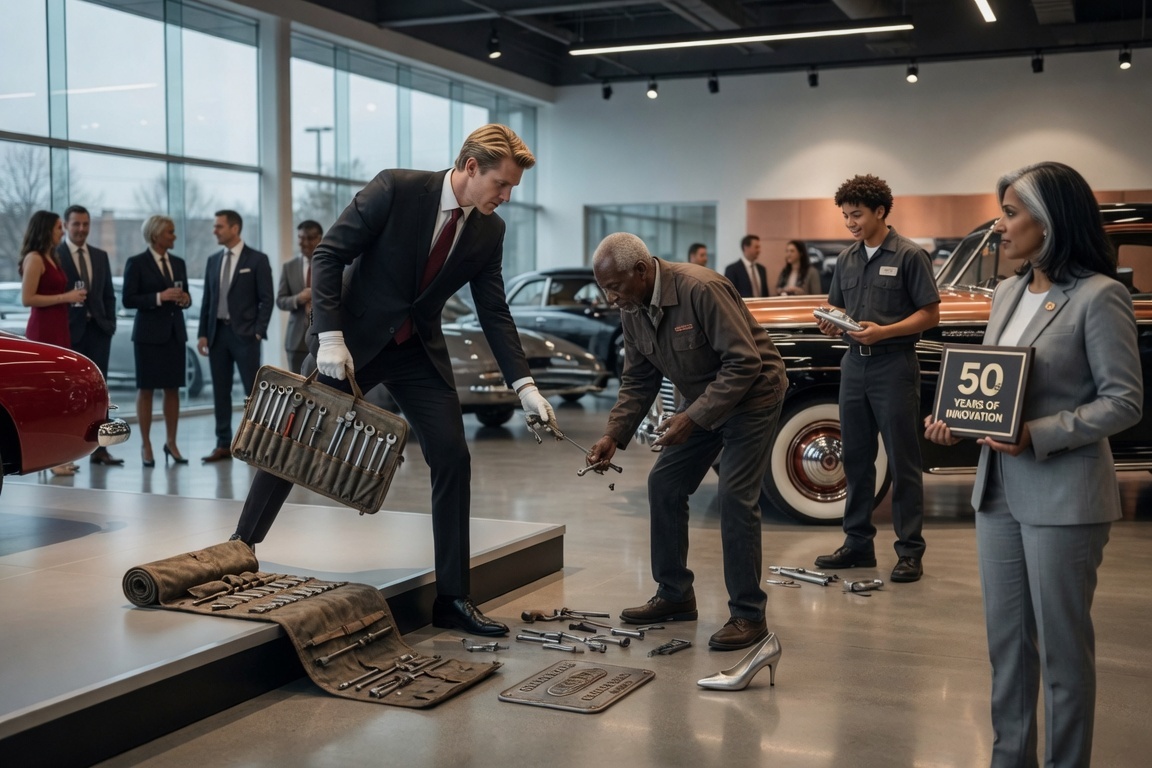
The first car I helped build never reached a showroom.
It was a rough prototype assembled in a warehouse that leaked when it rained. The doors did not close correctly, the dashboard shook at high speed, and half the team believed the company would run out of money before production began.
I was twenty-three. My official title was mechanical technician. In reality, everyone did whatever needed to be done.
I machined brackets, tested hinges, repaired wiring, and slept on a folding chair when we worked through the night. The engineers designed on paper. I helped make those designs survive metal, heat, vibration, and human hands.
The company grew. The warehouse became a factory. The factory became a brand. My name became smaller in the story each year.
That did not bother me as much as people might expect. I had a family, steady work, and pride in seeing cars on the road. I retired after forty-two years with an old metal badge, a canvas tool roll, and enough memories to fill a garage.
On the company’s anniversary, I received an invitation to the luxury showroom downtown. The restored first production car would be displayed. I had not seen it in decades.
I arrived early wearing my clean brown work jacket. I brought the tool roll because one of the original fasteners in the engine bay required a custom wrench I had made by hand. A young technician named Jordan had contacted me through a former colleague. He was restoring the car and could not remove the final component without damaging it.
I entered through the showroom doors.
A sales director named Derek stepped in front of me.
He looked at the work jacket and tool roll. He assumed I had ignored the service entrance. I told him Jordan was expecting me near the vintage car. Derek said the display platform was restricted. I showed him the anniversary invitation, but he barely glanced at it.
Then he took the tool roll from the platform and shoved it onto the polished floor.
The canvas opened. Tools scattered under the showroom lights. Guests turned. Derek blocked my path with one arm and pointed toward the service entrance.
I had worked around machines louder than his voice and managers more impatient than his face. Still, humiliation does not become painless simply because you are old. Age changes the way people dismiss you.
When I was young, they assumed I did not know enough.
When I became old, they assumed anything I knew no longer mattered.
I bent to gather the tools. The metal company badge slid across the floor. Derek pushed it away with the edge of his shoe.
Jordan stood beside the open hood of the vintage car holding a small prototype component. He recognized the custom wrench among my tools. He looked at the component. Then he looked at me.
Before he could speak, the showroom doors opened again.
Nina Patel, the current chief executive, entered carrying the anniversary plaque. I had met Nina when she was a graduate engineer assigned to the factory floor. On her first week, a test assembly failed. Several managers blamed her design. I showed her that the failure came from a worn fixture, not her calculations.
She never forgot.
The old badge reached her shoe. Nina picked it up. She looked across the showroom and said my name.
Everything changed.
Derek tried to explain that he thought I was an outside mechanic. Nina walked around him without answering. She pinned the badge onto my jacket. The metal was scratched, and the company logo had changed twice since it was made, but it still belonged there.
Nina offered me the white presentation gloves Derek had been wearing. I declined. Some work needs bare hands.
Jordan handed me the prototype component. The anniversary team had recreated a small part from the original vehicle, but the modern machining process left it slightly misaligned. The custom wrench in my kit was designed for the unusual fastener we used in the first production run.
I placed the tool against the metal. My fingers remembered the movement.
One turn. A pause. A second turn at a lower angle.
The component locked into place. The restored car’s dashboard lights came on.
Jordan laughed with relief. Guests moved closer.
Nina turned the anniversary plaque toward the room. It showed a photograph of the original engineering team outside the leaking warehouse. I stood in the second row, thin, tired, and holding the same canvas tool roll.
The plaque named every person in the photograph. For years, company history had reduced the early days to founders, investors, and lead engineers. The new display told a fuller story: Technicians. Machinists. Assemblers. Test drivers. People who solved physical problems after the plans left the desk.
Nina invited me onto the platform. Derek stepped backward. His reflection remained visible in the glass wall behind the car, separated from the crowd gathering around me.
I did not enjoy his embarrassment. I understood how the mistake happened. He worked in a showroom where appearances controlled the first conversation. Expensive suit meant authority. Work jacket meant service. Gray hair meant visitor, not creator.
Understanding the pattern did not excuse it.
After the presentation, Derek apologized. He said he should have checked the invitation. I told him that was true. Then I told him something more important.
He should not need a famous name, a plaque, or a chief executive to treat an older worker with respect. The lesson was not that I happened to be connected to company history. The lesson was that any person carrying tools through that door deserved to be addressed before being pushed away.
Jordan asked whether I would help the restoration team for a few weeks. I agreed.
The work was slower than it had been when I was twenty-three. My back stiffened sooner. My hands needed more rest. But experience has its own speed. I could hear when a bearing was wrong before the instruments confirmed it. I knew which vibration mattered and which one disappeared after warm-up. I remembered solutions stored nowhere except the habits of people who had built the first machines.
The company began recording interviews with retired workers. Not polished speeches, but practical memories. Why a bracket changed shape. How a factory line recovered after a flood. Which mistakes were never written in official reports. Younger technicians listened. Older workers returned to rooms where they once felt forgotten.
The restored car now stands at the center of the showroom. My custom wrench sits in a glass case beside it, though I asked them to leave the scratches visible. The old badge rests underneath.
Whenever I visit, I watch people read the names on the plaque. Most do not know mine. That is fine. The point is not that everyone remembers one mechanic.
The point is that a company should remember the hands behind its history before those hands are gone.
On the anniversary night, Derek saw an old man with a tool roll and tried to move him out of sight. Ten seconds later, the lights inside the first car came on. The machine remembered what the room had forgotten.
The company later invited retired workers to the factory floor for one day each month. We were not placed behind a display table. We worked beside younger teams, answering practical questions and learning new systems in return. Jordan taught me digital diagnostics. I taught him how to feel a misalignment through the tool before the reading changed.
That exchange mattered. Respecting experience does not mean treating the past as perfect. It means allowing old knowledge and new methods to challenge each other.
Derek eventually joined one session without his showroom gloves. He listened more than he spoke. I did not become his mentor, and we did not pretend the humiliation never happened. But I saw evidence that the lesson had moved beyond an apology and into the way he treated the next person who entered carrying tools.


