 11
11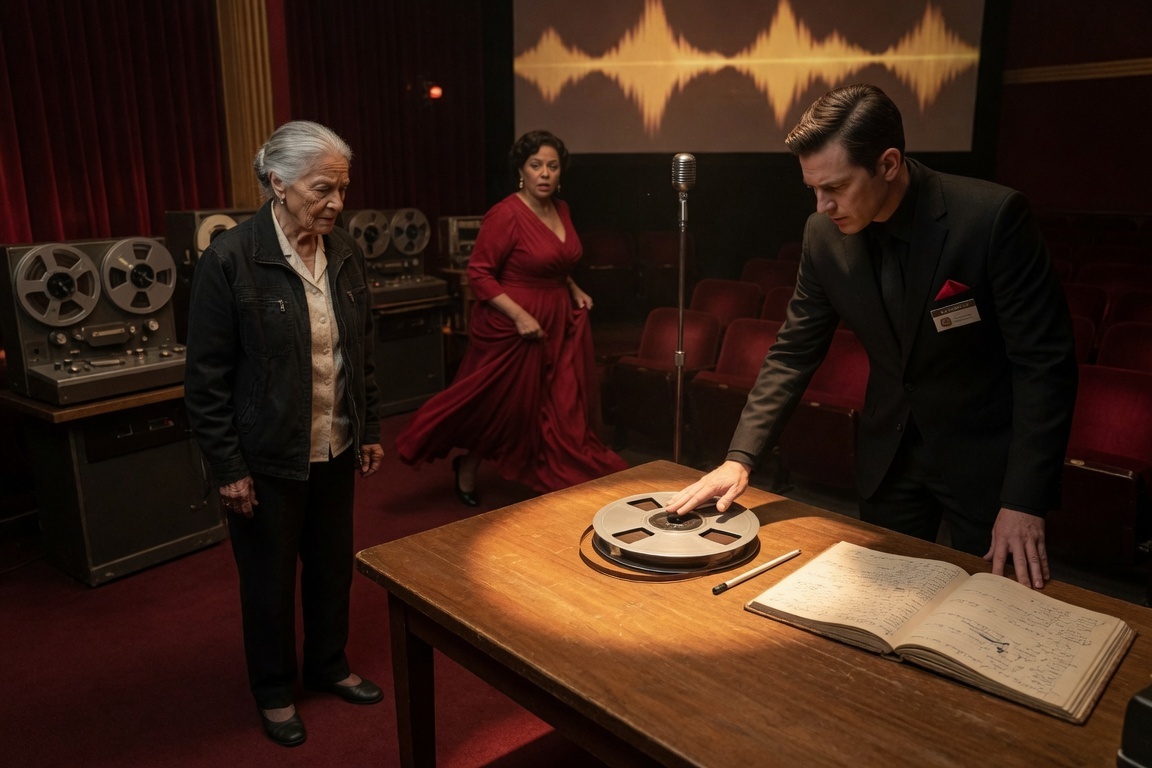
The reel hits the table. Metal edge against wood. One sharp impact.
The tape loosens. Grace Holloway reaches for it before it folds. Victor Crane pushes her away from the booth.
The theater is preparing to premiere a restored radio drama believed incomplete for sixty years. The lead performer is Lena Brooks. The archive contains one missing voice: Evelyn Brooks, Lena’s mother, who performed in the original broadcast before dying when Lena was a child.
Grace found the voice.
Not in the labeled master reel. In a box marked test tone.
For most of her career, Grace restored sound nobody believed worth saving. Local interviews. Community theater recordings. Public-service announcements. Family tapes donated after estates were cleared. Restoration required patience more than glamour. Tape stretches. Adhesive fails. Mold eats the surface. Playback can destroy the only copy. Grace learned to repair a reel just enough to hear what it carried.
The lost radio drama arrived in twelve damaged boxes. Victor’s production company wanted a clean anniversary release. Grace warned that one reel contained overlapping material requiring months of separation. The production schedule allowed six weeks. She worked four months.
Beneath the background hiss, Grace heard a woman repeat a line after the official take.
“Lena, this one is for you.”
The voice belonged to Evelyn Brooks. She had recorded a private message inside the rehearsal reel. Grace isolated the phrase, then recovered an entire alternate scene. She contacted Lena privately. Lena asked that the discovery remain secret until opening night.
Victor knew only that Grace insisted on bringing an old tape reel into the premiere booth. He wanted the final audio loaded from a digital server. The reel looked unstable, and the sound table had been arranged for cameras.
Grace entered carrying the original. Victor told her the archive demonstration had been cancelled. She opened the log to show the cue point. He slapped the reel down and pushed her from the doorway.
The tape began unwinding. A white cue mark passed the edge.
Lena saw her mother’s name in the log. She stopped halfway across the stage. The audience thought the pause was part of the performance. Lena left the microphone and ran toward the booth.
Lena positions herself between Grace and Victor. She presses the archive switch.
Hiss. Low room tone. A chair moving. Then Evelyn’s voice.
Not the polished performance. The private line.
“Lena, this one is for you.”
Lena closes her eyes. The theater becomes completely still. Grace holds the reel so the loose tape does not crease. Victor lowers his hands.
The sound continues into the restored scene. Evelyn plays a mother telling a frightened child that voices can cross distances even when people cannot. The line was fiction in 1964. For Lena, it became a message arriving sixty years late.
The premiere stops being a product launch.
Lena brings Grace onto the stage and places the main microphone in her hands. Grace does not make a speech. She explains how the rehearsal reel survived because somebody mislabeled it instead of throwing it away. The audience laughs softly. Then she names the assistants who cleaned, scanned, and cataloged the archive.
Victor apologizes after the performance. The company board opens a review into the physical confrontation and the pressure placed on the restoration team.
The release date moves. Credits expand. Every technician receives authorship for the restoration work. The original reel is preserved under controlled conditions. The digital release includes a short explanation of what was recovered and what remains uncertain.
Grace refuses to market the private message separately.
“It belonged to Lena before it belonged to an audience,” she says.
That decision changes the archive policy. Personal material discovered inside donated recordings now requires family review before public use. The theater builds a small restoration lab behind the sound booth. Visitors can see damaged media, but no private audio plays without context.
Victor remains a producer after suspension and training. His future contracts include independent preservation authority, preventing launch schedules from overruling archive safety.
Lena sits inside the booth with Grace. They listen to room tone from the reel. No dialogue. Just the small sounds around Evelyn before she spoke. A page turning. Breath. Someone adjusting a chair.
Lena says those sounds make her mother feel more present than the finished performance. Grace understands.
Restoration is not making the past perfect. It is allowing the surviving pieces to remain themselves.
The dent from Victor’s hand stays on the reel case. The loose tape is repaired. The white cue mark remains. At every future screening, the waveform appears first. Then the voice crosses the theater again.
The lab receives a new donation. Twenty-three cassettes. No labels.
Grace asks what the family hopes to find. Not what can be released. Not what attracts an audience. What they hope to find.
That question became standard. Archives often treated donations as immediate cultural property. Grace argued custody and permission were different. A family could donate a box without understanding every private message inside it.
The new policy uses strict stages:
Victor initially resisted because the process slowed production. After his suspension, he spent time inside the lab watching technicians clean mold from a tape that could not be played safely. He learned that delay was not inefficiency. It was preservation.
Lena joined the archive board but recused herself from decisions involving her mother’s recordings. She wanted the policy to protect families without allowing her personal story to dominate every case.
Grace trained three younger restorers. Her lessons sounded different from formal audio courses:
One trainee asked whether the goal was perfect sound. Grace shook her head. Perfect sound often means somebody has erased the room.
The room matters. Chairs. Breath. Distance from the microphone. A train outside. The material tells us where the voice existed.
The original reel from Evelyn Brooks is played rarely now. Digital copies serve the theater. The physical tape remains in cold storage, protected from repeated handling. The dented case is displayed only during restoration tours.
Visitors often focus on the famous private message. Grace directs them toward the repair log. Seventeen pages. Every cleaning pass. Every failed transfer. Every section too damaged to recover. The missing parts remain listed.
An honest archive does not hide absence. Lena says the silence between recovered scenes no longer feels empty. It feels respected.
Grace eventually allowed the private rehearsal scene to be studied by restoration students under strict access rules. They did not begin with the emotional message. They began with the damaged splice before it. The tape had been repaired once using an adhesive that later hardened. Removing it risked taking the recorded surface with it. Students tested methods on blank material before touching the original.
The exercise taught a principle larger than audio:
Importance does not justify haste.
The more emotionally valuable an object becomes, the easier it is for institutions to rush toward display. Preservation sometimes means keeping the audience waiting.


