 11
11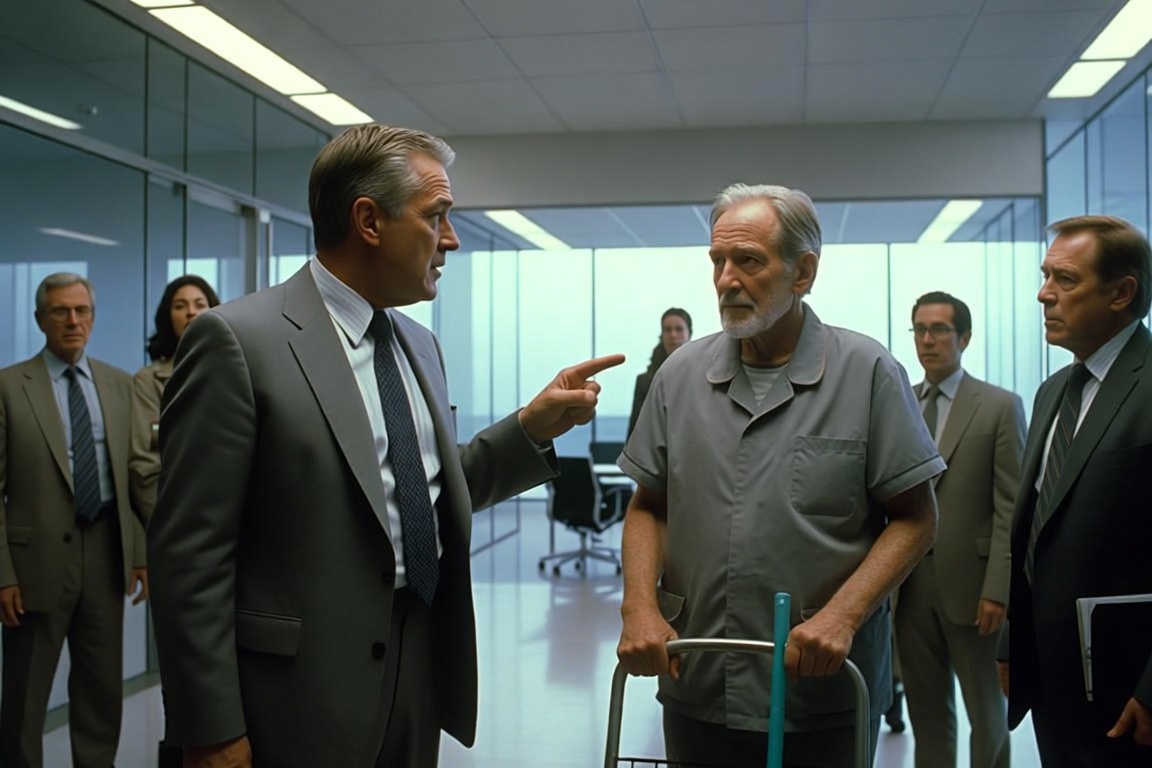
The office lobby was built to impress people. Glass walls reflected the morning light. Marble floors shined under polished shoes. A large screen near the elevators displayed company numbers, investor updates, and a countdown to a major announcement.
Most employees walked through the lobby without looking down. That was why almost no one noticed the janitor.
He moved quietly near the entrance, pushing a cleaning cart and mopping a small spill by the coffee station. He was older, with silver hair and a calm face. His uniform was plain. His shoes were practical. He looked like someone most people passed without remembering.
But he noticed everything.
He noticed how employees treated the receptionist. He noticed who held the elevator for others and who let the door close. He noticed who said thank you and who acted like kindness was beneath them.
Most of all, he noticed the manager.
The manager entered the lobby like he owned the building. His suit was sharp, his watch was expensive, and his voice was loud enough to make people move before he reached them.
He stopped near the wet floor sign and frowned at the janitor. “Are you serious?” he snapped. “This looks terrible. We have board members coming in today.”
The janitor looked up calmly. “I am almost finished,” he said.
The manager stepped closer, lowering his voice only enough to sound more cruel. “Almost finished is not good enough. People like you need to understand timing.”
Several employees slowed down. The receptionist looked uncomfortable. An assistant standing near the conference room froze with a folder in her hands.
The janitor did not argue.
The manager pointed toward the service hallway. “Get out of sight before the important people arrive.”
Then he kicked the edge of the mop bucket with his shoe. Water sloshed across the floor.
The lobby went silent.
The janitor looked down at the spilled water. Then he looked back at the manager. “You should be careful how you speak to people,” he said.
The manager laughed. “That is rich coming from the janitor.”
A few employees looked away. No one wanted to be part of the moment. No one wanted to challenge a manager known for punishing people quietly.
The assistant by the conference room took one step forward, then stopped. She recognized the janitor, but she seemed unsure whether she should speak.
The manager noticed her hesitation. “What?” he asked. “Do you need him too?”
She held the folder tighter. “The board is ready.”
“Good,” he said. “Then let’s not keep them waiting.”
He adjusted his jacket, gave the janitor one last dismissive look, and walked toward the conference room.
The janitor picked up the mop slowly. Not because he was afraid. Because he had already seen enough.
Inside the conference room, the board members stood near a long table. The screen at the front displayed three words: Welcome New Owner.
The manager smiled when he saw it. He had heard rumors of an acquisition. He had spent the week preparing speeches, flattering executives, and positioning himself as someone essential. He believed the new owner would see him as leadership material.
He did not know the new owner had already met him in the lobby.
The executive assistant stepped to the front of the room. “Thank you all for coming,” she said. “Today marks the official closing of the acquisition.”
The manager nodded seriously, performing respect. Then the conference room doors opened.
The janitor walked in.
He had removed his gloves. His posture was straight. His face was calm. The room shifted instantly. The board members stood taller. The assistant smiled.
“Please welcome Mr. Harris, the new owner of the company.”
The manager’s smile disappeared. At first, he looked confused. Then he looked afraid. Then he looked like a man replaying every word he had said ten minutes earlier.
The janitor walked past him without rushing. “Good morning,” Mr. Harris said.
No one called him janitor now. He took the seat at the head of the table. The employees outside the glass wall stared through the conference room windows, slowly understanding what had happened.
The manager tried to speak. “Sir, I didn’t realize…”
Mr. Harris raised one hand, not angry, just firm. “That is the point,” he said.
The room went quiet.
“You did not need to know my title to treat me with respect.”
— Mr. Harris
Mr. Harris opened the folder in front of him. “I spent one week visiting this office quietly,” he said. “I wanted to see the culture before I changed it.”
He looked around the table. “I saw hardworking employees. I saw people helping each other. I saw people staying late without being noticed.”
Then he turned to the manager. “And I saw how some people behave when they think no one important is watching.”
The manager lowered his eyes.
The lesson was not complicated. It never is. Character is easiest to see when a person believes there will be no consequences. The manager had treated the janitor badly because he thought the janitor had no power. That was the truth he could not hide from.
Mr. Harris looked at the assistant. “Please prepare a full review of employee complaints and management conduct,” he said.
The assistant nodded. The manager’s face tightened. “Sir, I can explain.”
Mr. Harris looked at him. “You already did.”
There was no shouting. No dramatic firing in front of the room. That would have been too easy. Instead, the manager had to sit in the silence created by his own behavior.
The people he wanted to impress had seen him clearly. The people he looked down on had seen justice arrive quietly. And the man with the mop had become the man with the final say.
Later that afternoon, employees walked through the lobby differently. Some smiled at the cleaning staff. Some held doors. Some looked people in the eye who had always been invisible to them.
The manager’s office door stayed closed.
Mr. Harris returned to the lobby before leaving. The floor was clean again. The wet floor sign was gone. The receptionist thanked him for coming.
He smiled. “Thank you for the work you do,” he said.
That line traveled through the office faster than any memo.
This story hits because the setup is painfully familiar. Many people have seen someone in a uniform treated like they are less important. Many people know what it feels like to be ignored because of a job title, an outfit, or a quiet role.
The twist is satisfying because it reveals the truth instantly.
That is the moral at the center of the story: how you treat people when you think they cannot help or hurt you says everything about who you are.
Next EP : Click


