 11
11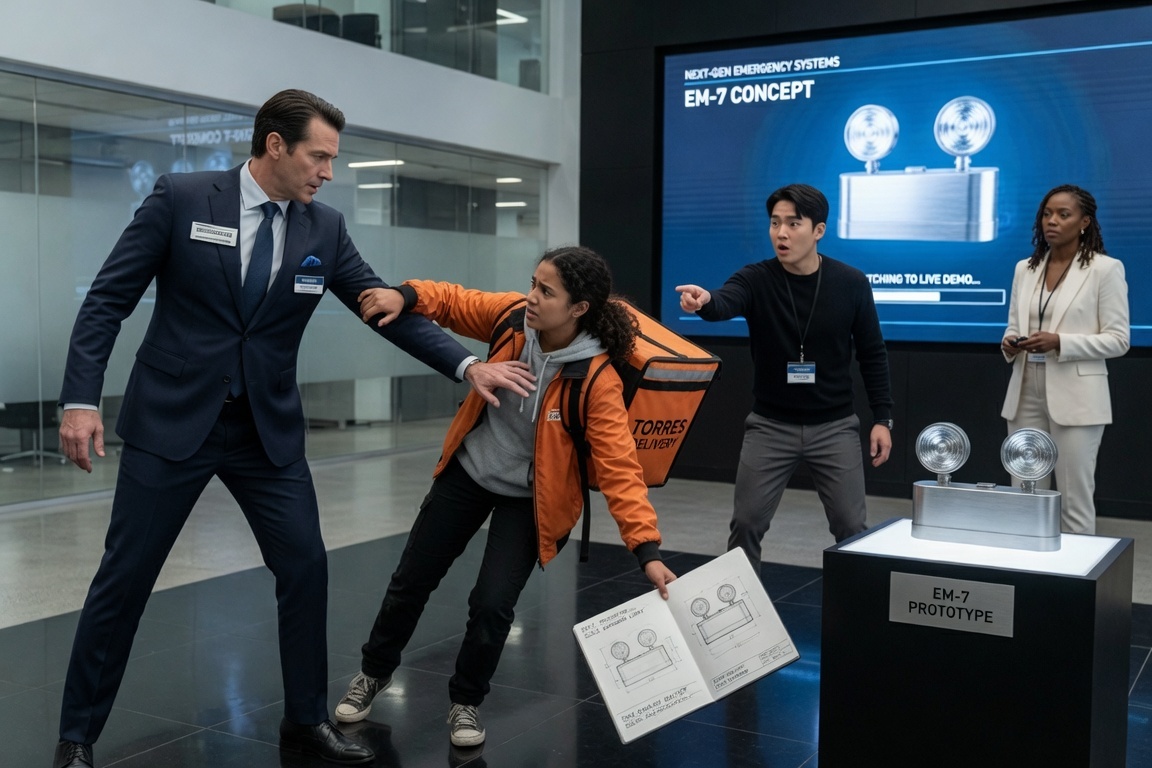
I delivered lunch to offices that had elevators faster than the bus I took home.
Most people barely looked at me. They watched the app, opened the glass door, took the bag, and returned to meetings where words like innovation and future covered entire walls. I did not mind.
Every delivery gave me ten or fifteen seconds inside buildings filled with things I wanted to understand.
I had always been curious about how objects worked. When I was twelve, a storm knocked out the electricity in our apartment. The emergency lights in the stairwell failed. My younger brother panicked because the hallway became completely dark.
I held his hand and guided him downstairs using the weak light from an old phone.
After that night, I started drawing a small emergency lamp that could charge from movement, remain visible in smoke, and attach to a wall without complicated wiring. At first, the drawings were childish. By seventeen, they were not.
I learned from public library books, repair videos, discarded electronics, and a retired science teacher who let me use a workbench in his garage. I built six versions. Five failed.
The sixth worked.
A city innovation program announced an open design challenge. Applicants did not need a degree or company sponsor. They only needed a prototype and a clear explanation. I submitted mine under the name M. Torres.
Weeks passed. Then I received a message inviting me to the final showcase.
The event happened on a day I could not afford to stop working. Rent was due, and my mother had already taken two extra shifts. I scheduled my last delivery at the same office atrium where the showcase was being held.
My plan was simple: Deliver the food. Change my visitor status at the desk. Walk to the prototype section before the presentation began.
I arrived wearing my orange delivery jacket because there was no time to go home.
A senior executive named Preston Cole saw me at the check-in desk. He assumed I was trying to enter the showcase through the guest line. I explained that my name should be on the finalist list.
He looked at the delivery bag, then at my worn sneakers. He did not check the list.
Preston used his forearm to push the bag away from the desk. He removed the visitor badge the receptionist had handed me and dropped it into the open delivery bag. He pointed toward the loading entrance.
People nearby watched. I felt heat rise into my face.
I had spent months imagining the moment my prototype would stand under professional lighting. I never imagined I would be pushed away from it because of the jacket I wore to pay my bills.
When I reached for my badge, my sketchbook slipped from under my arm. It opened on the black floor. The page showed the internal design of my emergency light.
A young engineer standing near the prototype pedestal noticed the drawing. His name was Leo. I had seen him in online workshop videos connected to the program. He looked at the page. Then he looked at the metal prototype displayed twenty feet away.
They matched.
Preston noticed Leo’s reaction and nudged my sketchbook aside with his shoe. That hurt more than the push.
The sketchbook contained years of work, including mistakes nobody else had seen. Every failed circuit, every change, every note written during bus rides, every version built from parts other people had thrown away.
I bent to pick it up. At that exact moment, the large digital screen behind the stage changed.
My drawing appeared across the wall.
The event program director, Aisha Grant, had entered holding the presentation remote. She saw me on the floor. She saw Preston standing over the sketchbook. Then she saw the orange delivery jacket.
Aisha walked toward us quickly. She asked my name.
I said Maya Torres.
The room shifted. Aisha reached into the delivery bag, found the badge, and clipped it back onto my jacket.
It did not say delivery visitor. It said Grand Prize Finalist.
She lifted the metal prototype from the pedestal and placed it in my hands. I recognized every scratch. The program had used my submitted model for the display. Leo opened my sketchbook beside it so the audience could see the original drawings.
Preston stared at the screen. He tried to explain that he thought I was entering the wrong area. Aisha told him he had been standing beside the finalist list the entire time. He had chosen not to read it.
“People often claim they made a mistake because they did not know the truth. Sometimes the truth was available. They simply trusted their judgment more than the evidence in front of them.”
Aisha guided me to the center presentation mark.
My hands shook as I activated the prototype. A bright circular light spread across the dark floor. The design automatically adjusted its beam and projected a visible path toward the nearest exit.
The audience moved closer. I explained how the device stored small amounts of energy from ordinary vibration and could remain active during extended power failure. I explained that the casing used common recycled materials so older buildings could install it without expensive renovation.
For the first time that day, nobody looked at my delivery bag. They looked at the work.
The judges announced that my design had won the city challenge. The prize included a paid apprenticeship, testing support, and funding for safety certification.
My mother cried when I called her. My brother laughed and said the hallway light I promised him years ago was finally real.
Preston approached me after the event. He apologized in front of Aisha and Leo. I appreciated the words, but I did not pretend they erased the moment.
I told him the hardest part was not being pushed away. It was knowing how quickly he believed someone dressed like me could carry food into the room but could not carry an idea worth hearing. He did not answer.
A week later, I began the apprenticeship. I still completed delivery shifts in the evenings for several months. Sometimes I entered the same office wearing the orange jacket, then changed into a lab coat upstairs. People were confused when they saw me in both roles. I was not.
Work is not a costume that reveals intelligence. Poverty is not proof of limited imagination. A person can carry a delivery bag in one hand and the beginning of an invention in the other.
The prototype now sits in a testing room under brighter lights than I ever imagined. My old sketchbook remains beside it. I kept the page Preston pushed with his shoe exactly as it was. Not because I wanted to hold onto the humiliation, but because I wanted to remember the distance between being dismissed at the door and standing beneath my own design ten seconds later.
Months later, the first pilot installation happened in an aging apartment building similar to ours. My brother joined the safety test.
When the stairwell lights shut off, my device activated and painted a clear route downward. He looked at me through the blue glow and smiled. That moment mattered more than the award. The invention had begun with his frightened hand inside mine, and now it could guide families I would never meet.
I kept delivering food until the apprenticeship paid enough for me to stop.
On my final shift, I delivered lunch to the same check-in desk. This time, the receptionist knew my name. I still wore the orange jacket. Nothing about the jacket had changed. Only the room had learned to see more than one story inside it.


