 11
11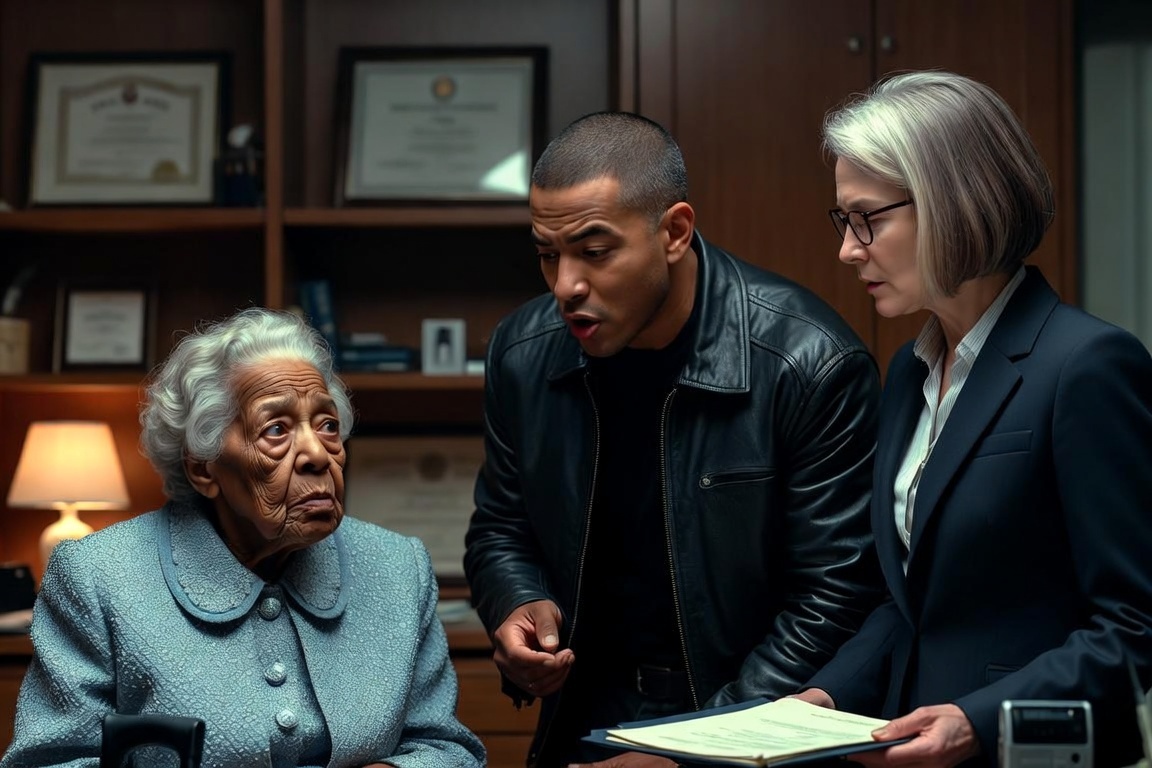
The deed transfer sat in the center of the elder law office, and Brent pushed it forward as if Alma’s home were already his. The setting was a small elder law office with wood shelves and framed certificates, bright enough for every expression to be seen and quiet enough for one cruel sentence to travel farther than it should.
Brent slides a deed transfer across the desk and tells Alma she is too old to manage her own house. Nobody needed the moment explained. The body language said it all: the stiff shoulders, the sideways glances, the small pause from people who knew something was wrong but were afraid to be the first to name it.
Alma did not answer right away. That silence gave Brent more confidence, which is usually how public cruelty works. A bully mistakes restraint for weakness. A selfish relative mistakes age for confusion. A person chasing status mistakes humility for failure. Then Brent said:
“We are doing you a favor before you make another confused decision.”
The words were not just rude. They were designed to shrink someone in front of witnesses.
The deed transfer sat in the center of the elder law office, and Brent pushed it forward as if Alma’s home were already his. The setting was a small elder law office with wood shelves and framed certificates, bright enough for every expression to be seen and quiet enough for one cruel sentence to travel farther than it should.
Brent slides a deed transfer across the desk and tells Alma she is too old to manage her own house. Nobody needed the moment explained. The body language said it all: the stiff shoulders, the sideways glances, the small pause from people who knew something was wrong but were afraid to be the first to name it.
Alma did not answer right away. That silence gave Brent more confidence, which is usually how public cruelty works. A bully mistakes restraint for weakness. A selfish relative mistakes age for confusion. A person chasing status mistakes humility for failure. Then Brent said:
“We are doing you a favor before you make another confused decision.”
The words were not just rude. They were designed to shrink someone in front of witnesses.
The worst part was how normal everyone tried to make it look. Someone adjusted a chair. Someone stared at the floor. Someone gave a nervous half-smile, hoping the scene would pass without requiring courage. But humiliation does not become harmless just because people stay polite. It only becomes easier for the person causing it.
Brent arrived with a soft voice and hard paperwork. He called it protection, but Nina had already heard him brag about selling the house and moving Alma into the cheapest place he could find. That was the truth sitting underneath the scene, quiet and heavy.
Brent could not see it because arrogance only looks for evidence that proves itself right. They saw old clothes, quiet behavior, tired eyes, a simple folder, or a person who did not fight loudly. They did not see history. They did not see sacrifice. They did not see proof waiting one step away.
Then Nina and Attorney Howard noticed what had been overlooked: a small audio recorder and deed folder on the attorney’s desk.
It was not flashy at first. It did not need to be. The strongest proof in a moral drama is often the thing everyone ignored because they were too busy judging the person holding it. The clue changed the energy in the space before anyone fully understood why.
Brent kept talking like the outcome was already settled. That made the reveal hit harder. The victim looked hurt, yes, but not helpless. Their face carried the pain of being underestimated in public, yet their posture carried something better: the patience of someone who knows the truth is about to enter the room.
Then it happened. Nina revealed she recorded Brent admitting he planned to sell the house and move Alma out.
The reaction was instant. Faces shifted. Shoulders dropped. People who had been comfortable watching suddenly realized they had chosen the wrong side of silence. The villain tried to recover, but there are moments when a person cannot dress cruelty up as concern anymore. The truth pulls the mask off too cleanly.
Attorney Howard pulled the deed away from Brent, and Alma signed nothing except a new instruction to protect herself.
That was the real consequence. Not shouting, not revenge, not chaos. Just exposure. The person who had been humiliated did not need to become cruel to win. They only needed the facts to be seen by everyone who had judged too fast.
By the end, the place felt different. The same chairs, same lights, same walls, but the power had moved. The victim walked away with dignity, the witness finally stepped closer, and the villain was left standing inside the embarrassment they had created.
Some lessons arrive softly. This one arrived in front of everyone.


