 11
11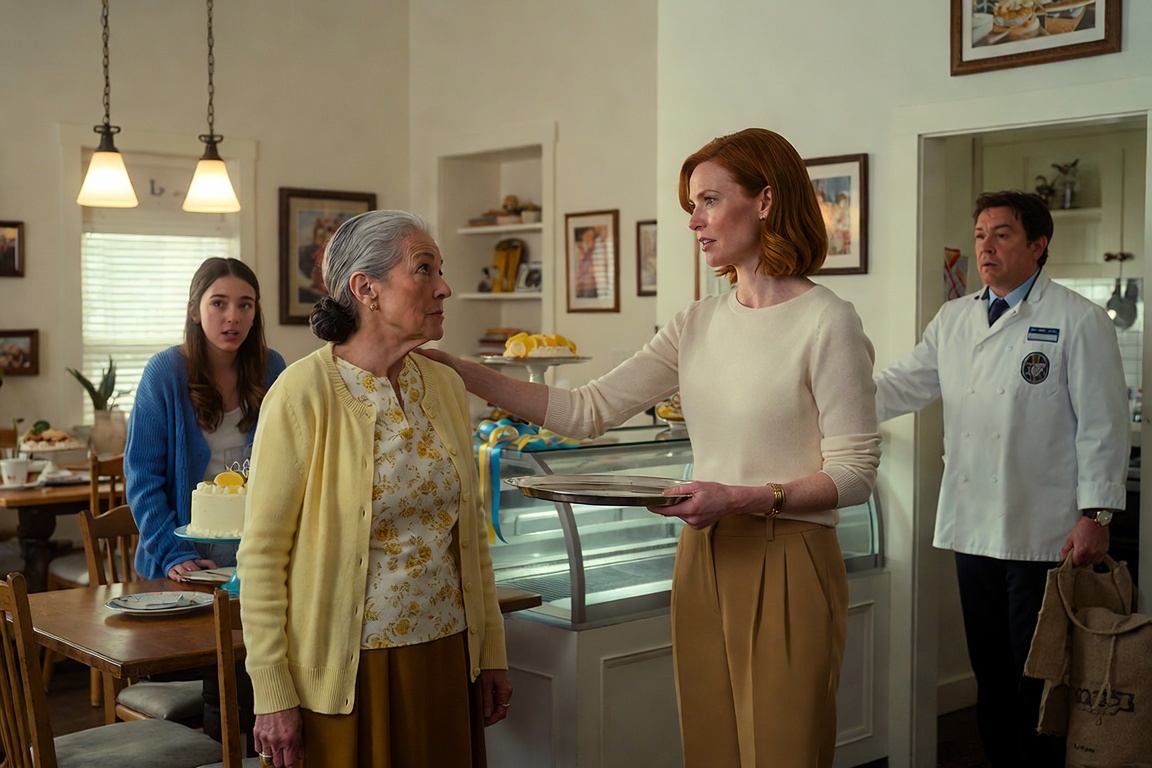
Rose Miller knew the smell of the bakery better than she knew the smell of her own house.
Butter warming in metal bowls. Lemon zest pressed under fingernails. Sugar dust in the air after a long day. Yeast from the bread ovens drifting into the dining room long after the front door had been locked. The place had changed over the years, of course. The sign outside was brighter. The pastry counter was wider. The birthday cakes now came with printed toppers and online pickup codes.
But the lemon cake was the same.
Rose had carried the old recipe notebook under her arm when she arrived for Sophie’s birthday. She had not brought it to show off. She brought it because Sophie had asked once why the cake tasted like summer, and Rose wanted to write a fresh copy of the recipe for her granddaughter.
Inside the bakery dining room, the family had gathered around the main table. Balloons floated near the counter. A blue birthday ribbon hung from a chair. Sophie stood near the cake, smiling shyly while everyone took pictures.
Rose walked toward the empty seat beside Sophie.
Denise moved first. She lifted Rose’s plate from the table and carried it toward a smaller side counter near the kitchen doorway.
Rose stopped. “Oh. Did I sit in the wrong place?”
Denise smiled without warmth. “Not wrong. Just easier this way.”
Sophie turned. “Mom?”
Denise kept her voice light. “Grandma Rose will be more comfortable near the kitchen. It is less crowded.”
There was room at the table. Everyone could see it. That was why the silence became heavy so quickly.
Rose looked down at the notebook in her hands. “I do not want to make anything difficult.”
Denise’s smile tightened. “Then you understand.”
Sophie’s face changed. The birthday ribbon on her cardigan suddenly looked too bright for the moment.
Rose nodded once. She had learned long ago that some people used politeness like a closed door. She stepped back from the main table, holding the notebook against her blouse. Her pale yellow cardigan looked soft under the pendant lights, but her shoulders had folded inward.
Denise returned to the table and lifted the cake knife.
The lemon cake sat on a glass stand, beautiful and golden, with white icing rippled across the top. The bakery sold hundreds of them every month. Customers drove across town for it. Reviewers called it the heart of Miller Bakery.
Denise loved that sentence. She had put it on the website.
Rose loved it for a different reason.
Sophie watched her grandmother standing alone near the kitchen door. She looked at the empty space beside her, then at her mother.
Before she could speak, the kitchen door swung open.
Paul Miller stepped into the dining room wearing his white baker’s coat, sleeves rolled to the forearm, flour near one cuff. He had been finishing a batch of rolls for the morning. His face held the tired warmth of a man who had been awake since four.
Then he saw his mother. Not seated. Not smiling. Standing near the doorway like a guest who had arrived without an invitation.
Paul’s expression changed. “Mom, why are you over there?”
Denise turned quickly. “We were just making space.”
Paul looked at the main table. Then at the empty chair beside Sophie. Then at the plate on the side counter. He said nothing for a moment. Silence in a family business can be louder than any argument.
Rose tried to help him. “It is fine, sweetheart.”
But Paul’s eyes had moved to the notebook in her hands. He knew that notebook. The corners were soft. The cover was stained with oil and flour. As a boy, he had seen it open on the kitchen counter every Sunday night while his mother tested recipes after working a full shift. When his father almost lost the bakery, it was Rose who stayed late trying to create something people would come back for.
The lemon cake had saved them.
Paul walked to her. “You brought the book.”
Rose gave a tiny smile. “For Sophie.”
Sophie stepped closer. “What book?”
Denise lowered the cake knife slowly.
Paul took the notebook with care, as though it were made of thin glass. He opened to a page marked by a faded yellow ribbon. The handwriting was Rose’s, neat but hurried. Lemon cake, third try. More zest. Less sugar. Do not rush the icing.
He placed the open notebook beside the cake.
Sophie leaned over and read the page. Her eyes widened. “Grandma wrote this?”
Paul nodded. “Your grandmother created the cake.”
The room went still.
Rose looked embarrassed. “Your father helped.”
Paul shook his head gently. “Dad sold it. I baked it later. But you created it. When the bakery was almost gone, this recipe brought people back.”
Denise’s face had gone pale. The tray in her hand dipped slightly.
Sophie looked from the cake to Rose. “Why did nobody tell me?”
Rose touched her wedding ring. “It was never about telling.”
That was exactly why the room hurt. Denise had treated Rose like a background piece at a celebration built on Rose’s work. The cake at the center of the table was not just dessert. It was proof.
Paul reached into his coat pocket and pulled out a folded anniversary card from the bakery’s early years. He had found it that morning while sorting old records for the bakery’s upcoming display. On the card, his father had written: Rose’s lemon cake kept the lights on.
He placed it beside the notebook.
Nobody needed a speech after that.
Sophie walked to Rose and took her hand. “You are sitting with me.”
Rose shook her head softly. “Honey, it is your birthday.”
“That is why,” Sophie said.
The girl led her grandmother back to the table. Paul pulled out the chair beside Sophie, the chair Denise had tried to make disappear. Rose sat slowly, her eyes shining.
Denise stood beside the counter, still holding the serving tray. Her perfect dinner plan had not been ruined by Rose. It had been ruined by the truth Denise failed to respect.
“I did not know,” Denise said.
Rose looked at her with sadness, not cruelty. “You did not ask.”
The words were quiet. They landed hard.
Paul cut the first slice of lemon cake and placed it in front of Rose. “For the person who made this family possible,” he said.
Sophie wiped her eyes and smiled. Around the table, people began to clap softly. It was not loud. It was not a performance. It sounded like a family realizing too late that gratitude should have arrived sooner.
Rose looked at the cake, then at the open notebook, then at Sophie. She did not look powerful in the way Denise understood power. She did not command attention. She did not dress to impress. But everything meaningful in that room seemed to lead back to her hands.
The bakery lights glowed warmly over the table. The glass counter reflected the birthday candles. Outside, the Miller Bakery sign shone against the evening street. For years, customers had asked what made the lemon cake taste different.
Now Sophie knew.
It tasted like sacrifice. Like late nights. Like a mother who gave without keeping score.
And when Rose took the first bite, the room did not feel perfect. It felt honest.
After the candles were lit again, Sophie asked Rose to tell the whole story. At first Rose resisted. She did not want the birthday to become a lecture about old struggle. But Paul nodded, and the room waited with a softness that had not been there before.
Rose explained that the first version of the lemon cake had collapsed in the middle. The second tasted too sharp. The third was the one she wrote down because her husband took one bite, leaned against the counter, and said people would remember it. She laughed while telling that part, and the laugh broke something open. The family began asking questions they should have asked years earlier.
Denise sat quietly at the end of the table. Her shame was visible, but Rose did not turn the room against her. That restraint made everyone understand Rose more deeply. She had given the family a recipe, but she had also given them a standard for grace.
When Sophie copied the recipe onto a fresh card, she wrote Rose’s name at the top. Rose tried to protest, but Sophie covered the page with her hand and smiled. Some truths, once seen, should never be hidden again.
When the last slice was served, Sophie placed the old notebook beside the birthday candles instead of hiding it back in Rose’s bag. The table looked different then. Not fancier, not more perfect, but warmer, because the family finally knew whose hands had sweetened their life. Paul later photographed the notebook page for the bakery wall, not as marketing, but as memory. Rose watched him do it and finally understood that being quiet did not mean being forgotten.


