 11
11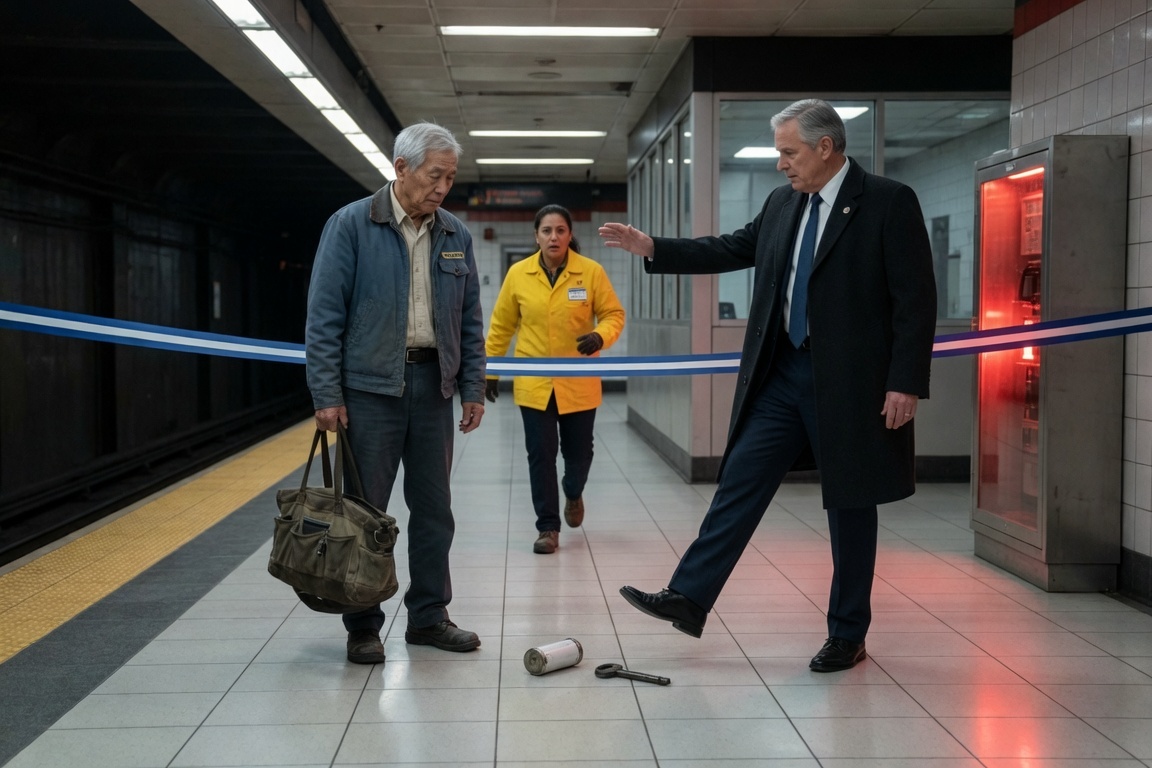
There are three switches inside the emergency cabinet.
In that order.
I wrote the sequence on the first wiring diagram twenty-eight years ago. The new station was built around a tunnel section older than the city map showed. During excavation, engineers found a maintenance corridor with its own electrical feed. Most plans called for sealing it.
I argued to keep it. Independent circuits are inconvenient until the main system fails. The corridor became the station’s emergency backbone.
On opening day, nobody wanted to discuss old corridors. The platform was polished. Architectural lights ran beneath the stairs. The mayor stood behind a blue ribbon speaking about a modern transit future.
I had been invited by Maya Torres, the current chief engineer. She wanted me to inspect the emergency cabinet before the first public train. My badge remained at security. I arrived in the work jacket I had worn during the original tunnel conversion.
Mayor Daniel Reed saw me near the ribbon and assumed I was a retired employee trying to enter the photograph. He told me the maintenance demonstration would happen later.
I told him the emergency indicator showed a weak transfer signal.
He looked toward the cameras. I opened my canvas bag to show the ceramic fuse used by the independent circuit. He kicked the bag. Tools crossed the platform. The three-notch key slid toward the cabinet.
Then the station went dark.
Not gradually. Every architectural light disappeared at once. The main control room switched to red emergency power, but the platform remained mostly black. The modern backup system had transferred power to the wrong bus because an installation setting had not been updated after the final test.
Maya saw the key. She knew the three notches represented the three isolated sections. She moved the mayor away from the cabinet and placed the key in my hand.
Light returned in sections, exactly as the original diagram showed.
The station did not need an elderly electrician to perform magic. It needed access to the backup system that had been preserved for this purpose. Maya could have completed the sequence herself if the key and diagram had not been kicked across the platform.
That point mattered. The story was not that only I understood the station. The story was that institutional memory had been treated as an obstacle during a ceremony celebrating infrastructure.
The opening was postponed. Engineers traced the failure to a software configuration tied to the final construction bus. The independent circuit performed correctly once activated manually.
The mayor apologized publicly and underwent an ethics review for physical misconduct. But the transit authority changed more than his behavior:
The mayor asked whether I wanted my name placed on the emergency cabinet. I declined. Names fade. Sequences must remain clear.
Infrastructure should not demand attention when it works. The people maintaining it still deserve respect before a blackout proves why they are there.
The original wiring diagram created another problem. It used symbols common among tunnel electricians in the 1990s but unfamiliar to younger engineers. Digitizing the page without translating the notation would preserve the image but lose the knowledge.
Maya organized a series of diagram sessions. Retired electricians sat beside current staff and explained the hidden language of the blueprints:
Those details rarely entered formal plans. They lived in the margins. Now, the transit authority built a knowledge layer into the digital system. Engineers can tap a circuit and see both the current schematic and historical field notes, complete with the name and date of the person who explained it.
Maya later asked me—Frank—to review the station’s accessibility backup.
During the blackout, the manual power sequence restored light, but one visual-information screen returned before the audio beacon used by blind passengers. The authority changed the order. Emergency restoration now prioritizes platform edge, accessible guidance, stairs, then commercial lighting.
The sequence remained three steps, but what each step protected became more inclusive. That was the point of passing knowledge forward.
The next engineer should not preserve every old decision. They should understand it well enough to improve who the system serves.
During an overnight blackout drill, a younger electrician noticed a flaw: the key could open the cabinet, but emergency lighting made the printed labels difficult to read. Maya replaced them with raised, tactile shapes.
I approved immediately.
Good inheritance is not preserving the old key exactly. It is making sure the next person can use the system under worse conditions than the designer imagined.


