 11
11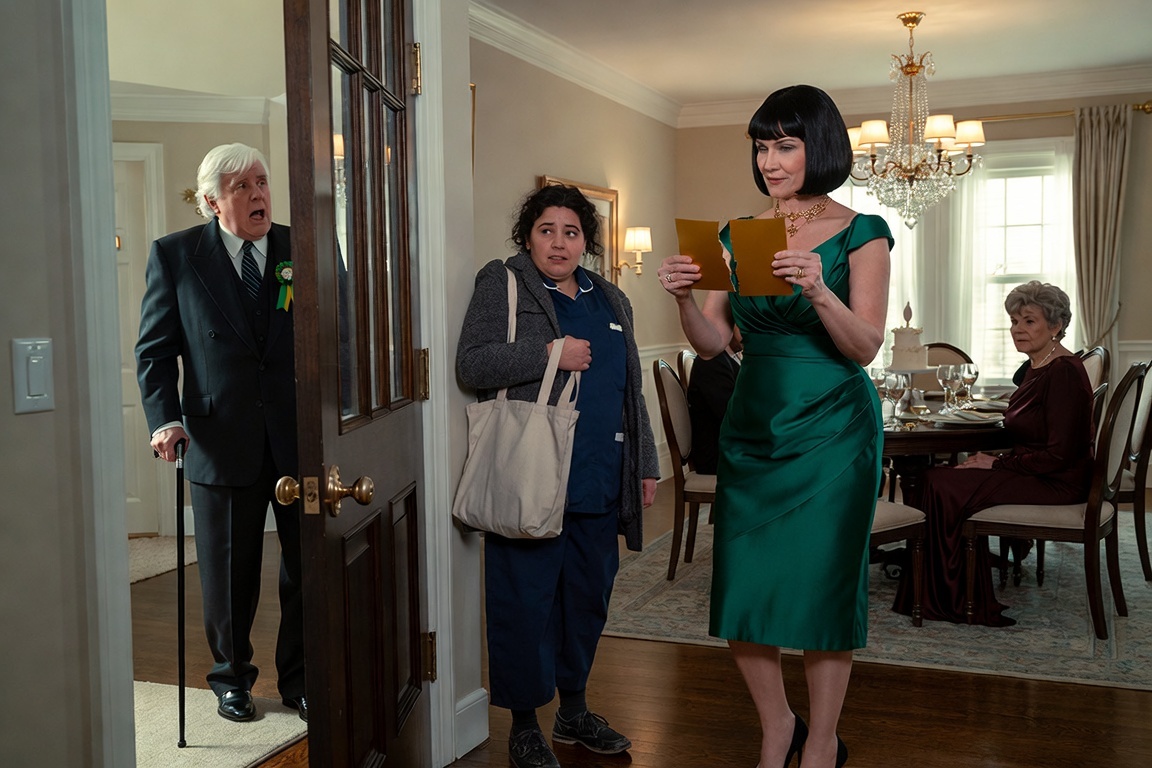
My sister tore the invitation before I could explain why I had come. The gold paper split between her hands, one half falling against my gray coat and the other remaining in her grip. Behind Monica, the dining room glowed beneath a crystal chandelier. The table was set with our mother’s best dishes, and an anniversary cake waited at the head seat. I had learned about the celebration from a family friend only an hour earlier.
Monica said the dinner was small and carefully planned. Her eyes moved over my grocery-store uniform, worn shoes, and canvas bag. She did not say that my appearance embarrassed her, but she did not need to. She positioned herself across the doorway and turned exclusion into a matter of organization. Our mother, Rose, sat inside the room and looked down at her hands.
Being left out was not new. Monica had always been skilled at making rejection sound practical. She hosted gatherings near her neighborhood, then said transportation would be difficult for me. She planned expensive gifts and explained that participating might strain my budget. Each decision arrived wrapped in concern, but the result was the same. My absence made the family photographs cleaner and the conversations easier.
What she rarely mentioned was the period when our family had almost lost the house. I worked double shifts, postponed my own plans, and gave our mother most of what I earned. Monica was building her career in another state and sent advice more often than money. I never kept a record. Families are not supposed to need receipts for love. Years later, the struggle disappeared from the story, and so did the person who stayed through it.
Mr. Bennett remembered. He had been our father’s closest friend and had helped us understand the bills after Dad died. During that difficult year, he suffered a fall and could not drive. I brought groceries to his home after work, organized his appointments, and sat with him during long afternoons when loneliness felt heavier than the injury. He later became successful in his own business, but our relationship had formed before any of that mattered.
The dinner was meant to honor him as well as celebrate my mother’s anniversary. Monica wanted the room to look impressive. She invited people who knew his public reputation and quietly excluded the sister who knew him when he needed help. I stood outside the doorway holding my canvas bag, trying to decide whether preserving peace required me to leave again.
Then the sound of a silver cane touched the floor behind me. Mr. Bennett entered the hallway and stopped when he saw the torn invitation. His eyes moved from Monica to my face. The warmth in his expression changed into disbelief. He asked what I was doing outside, but before I could answer, he saw the way Monica blocked the door.
He removed the guest-of-honor ribbon from his own jacket. Monica’s confident posture began to weaken. Mr. Bennett placed the ribbon around my shoulders with careful hands. The gesture was not about transferring attention from himself. It was his way of showing the room who had mattered to him when there had been no audience, no chandelier, and no formal table.
He offered me his arm and guided me inside. The head seat beside the anniversary cake had been prepared for him. He pulled it out for me instead and stood beside the chair until I sat. Monica remained near the doorway holding the torn invitation. Our mother finally looked up. Tears filled her eyes, not because the reveal was confusing, but because it made her silence impossible to defend.
Mr. Bennett told the family that kindness shown in private should never be hidden in public. He spoke about the groceries, appointments, and evenings I had spent helping him. I wanted to disappear under the attention, but he kept one hand on the back of my chair. For years, Monica had treated my financial struggle as evidence that I contributed less. He revealed a different measure of value.
After dinner, my mother apologized for allowing Monica to decide who belonged. Her apology did not erase the years of quiet exclusion, but it named the problem honestly. Monica tried to explain that she wanted the evening to feel elegant.
I told her elegance built on someone’s humiliation was only decoration.
The torn invitation remained on the side table where she had dropped it. I kept the ribbon. Not because I needed the place of honor at every gathering, but because it marked the moment my absence stopped being convenient. Mr. Bennett had not rescued me by revealing hidden wealth or status. He remembered ordinary kindness. That mattered more. I returned home in the same gray coat and worn shoes, but the family’s story had changed. The sister they tried to hide had been the person their honored guest came looking for.
The dinner changed the family’s future gatherings in small but visible ways. Invitations came directly to me instead of through Monica. Plans included realistic costs, and nobody used concern about my budget as a reason to exclude me. I was free to accept or decline for myself. That freedom felt simple, yet it had been missing for years.
Mother Rose later admitted she had stayed silent because Monica organized everything and threatened to cancel when challenged. Dependence had made her cautious. I understood her fear, but I also told her that silence still chooses a side. Our relationship improved only after she began speaking before the damage was done, not apologizing after someone else exposed it.
Mr. Bennett refused to let the evening become a story about rescuing a poor woman. He reminded everyone that I had helped him when neither of us had anything to gain. His recognition did not change my bank account or uniform. It restored context. Poverty had become the only fact my sister allowed people to see, while years of loyalty, labor, and courage disappeared behind it.
Monica eventually invited me to lunch alone. Without the chandelier and family audience, she admitted that my presence reminded her of the years she had been absent. Judging my clothes had been easier than facing the guilt attached to her own success. Her honesty did not excuse the exclusion, but it explained why she worked so hard to control the family story.
I agreed to rebuild the relationship slowly. That meant no more surprise gatherings, no decisions made on my behalf, and no using money as a measure of who contributed most. The guest-of-honor ribbon remained folded in my drawer. I did not need to wear it again. Its purpose had been fulfilled the moment someone crossed the room to recognize what others had chosen not to see.
At the next anniversary, I arrived directly from work again. Nobody looked at the uniform as a problem. Mother Rose placed my name beside hers before anyone else arrived, and Monica asked me to choose the photographs for the family table. The gestures were small, but they showed a changed pattern.
Belonging no longer depended on appearing successful enough for the room. It depended on being family and being treated like it before a guest forced everyone to remember.


