 11
11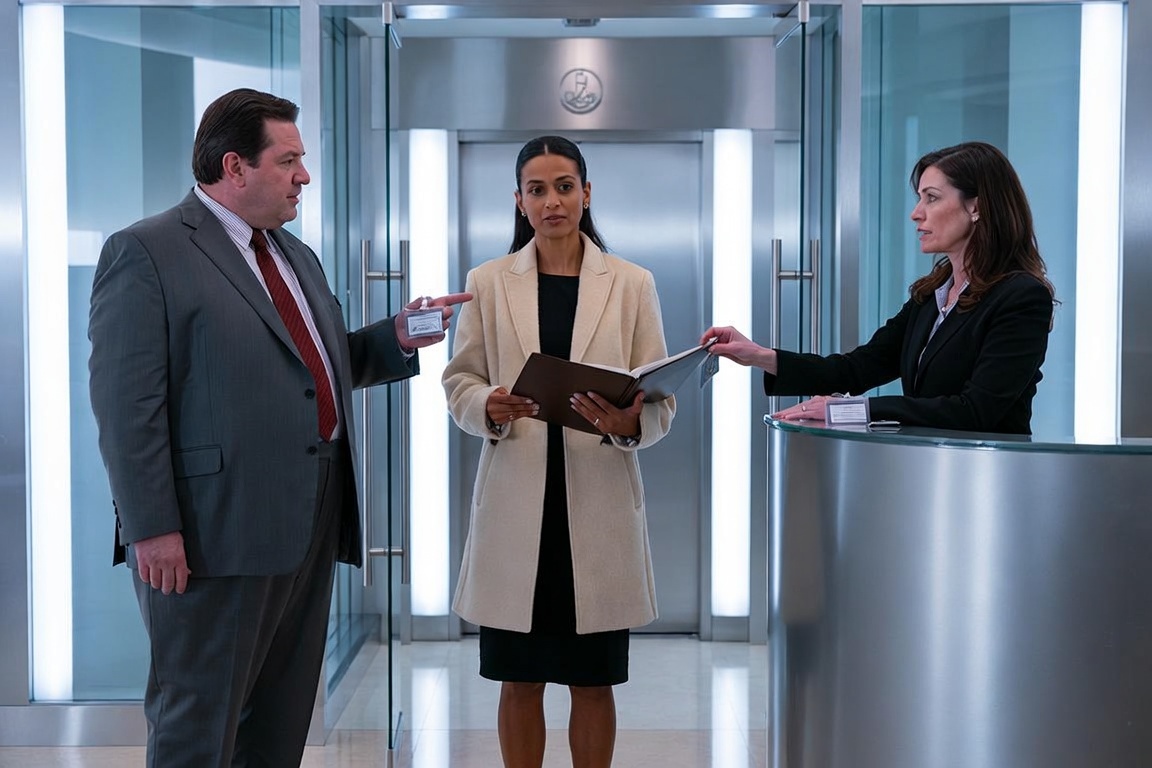
The first thing Richard removed from me was not my dignity. It was a paper visitor badge clipped to my beige coat. He pinched it between two fingers, pulled it free, and pointed toward the glass doors as if the lobby itself had rejected me. Morning light covered the polished floor. Employees crossed behind us with coffee and laptops, pretending not to stare. I held my leather folder against my chest and waited for him to ask my name. He never did.
My mother had cleaned that building for eleven years. When I was a child, I sometimes sat in the service hallway after school while she finished the evening shift. I learned the difference between the front entrance and the staff entrance before I learned long division. I knew which executives thanked her and which ones left coffee cups beside the trash because bending down felt beneath them. She never complained. She only told me to notice how people behaved when they believed nobody important was watching.
I carried that lesson through university, through entry-level jobs, and through years of building teams in companies where I was often the youngest person at the table. I did not advance because someone rescued me. I advanced because I understood operations, listened closely, and made difficult decisions without turning people into numbers. When the board recruited me to lead this company, I accepted for one reason beyond the role itself. I wanted the building my mother had cleaned to become a place where respect did not depend on a title.
The board had planned a formal welcome later that morning. I arrived early because I wanted to see the office before the presentation, without photographers, speeches, or staged applause. The receptionist gave me a temporary badge because my permanent executive credential was still inside the folder with the board documents. I appreciated the normal process. For ten quiet minutes, I was simply another person entering the building. That was enough time for Richard to decide what he believed I deserved.
He looked at my simple coat, my low heels, and the temporary badge. He did not see the experience listed in the board packet. He saw someone he could remove without consequence. His tone became sharper when I did not leave immediately. He stepped into my path and used his body to make the instruction visible. The receptionist’s expression tightened, but she was clearly afraid to challenge a regional manager in the middle of the lobby.
I could have introduced myself. I could have watched his face change at the sound of my title. Instead, I asked one calm question: whether he treated every visitor that way. He answered with another gesture toward the door. In that moment, I understood that the board had given me more than a leadership position. They had given me a clear view of the culture before anyone had time to perform for the new CEO.
When I adjusted the folder, the clasp opened. The executive badge slid out with the board welcome card and landed on the stone floor between us. The receptionist recognized the card first. Her eyes widened, and she moved quickly around the desk. Richard looked down slowly. The temporary badge was still trapped in his hand. His posture changed before his expression did. The shoulders that had filled the space suddenly pulled inward.
The receptionist picked up the executive credential and placed it around my neck with both hands. Then she gestured toward the private elevator reserved for senior leadership. No announcement was needed. The silver badge, the board seal, and the open elevator said everything. Employees who had been pretending not to watch were now completely still. Richard tried to speak, but the confidence that had guided every movement seconds earlier had vanished.
I took the paper visitor badge back from him. I did not do it to humiliate him. I did it because that badge mattered. It represented every contractor, applicant, courier, cleaner, intern, and nervous visitor who entered a building without visible power.
A company reveals its values at reception desks, loading docks, and service corridors long before those values appear in a presentation.
Inside the elevator, I did not feel victorious. I felt disappointed. My mother had spent years cleaning fingerprints from those glass walls, and the culture behind them had not become as polished as the lobby. When the doors opened on the executive floor, the board was waiting with smiles and prepared remarks. I asked them to postpone the celebration. My first meeting would be with human resources, facilities, reception, and employee representatives.
Richard was included in that meeting. I did not fire him in the lobby or turn the moment into entertainment. Accountability should be clear, not theatrical. We reviewed his behavior, prior complaints, and the power structure that had made the receptionist hesitate. He was removed from visitor-facing authority while a formal review began. More importantly, we changed the systems that allowed disrespect to hide behind seniority.
The investigation found that Richard had behaved similarly with job applicants, delivery workers, and temporary staff. Most incidents had never reached senior leadership because the people affected did not know where to report them, and junior employees feared retaliation. The lobby scene was not an isolated mistake caused by a stressful morning. It was a pattern protected by hierarchy and silence.
We created a direct reporting channel that bypassed local managers, reviewed visitor protocols, and trained leaders to intervene without waiting for permission. I also asked the receptionist what support she needed. She admitted that she recognized the behavior as wrong but believed challenging Richard could cost her job. A healthy culture cannot depend on individual courage while leaving the risk entirely on the least powerful employee.
Richard completed the review process away from his leadership role. Whether he would return depended on more than an apology to me. He needed to understand the harm done to people whose badges would never reveal an executive title. My identity made the incident visible, but their experiences made the reform necessary. That became the message of my first company-wide meeting.
Months later, my mother visited the office as my guest. She entered through the front doors. The receptionist greeted her by name, and every person we passed understood why the moment mattered. I showed her the executive floor, then took her back to the service hallway where I used to wait after school. She touched the wall and smiled. I told her that everything I knew about leadership had started there, watching her treat every space with care even when the people in charge failed to do the same.
On my first official day, I placed the temporary visitor badge in a frame beside my desk. Executives who entered the room often asked why I displayed a cheap piece of paper next to board awards. I told them it was the most useful credential I had received.
The permanent badge showed what authority I possessed. The paper badge showed how the organization behaved when that authority was invisible.
My mother attended the next leadership meeting and spoke for less than five minutes. She did not accuse anyone. She described what it felt like to work in a building where some people greeted her warmly and others looked through her. The room became quieter than it had during any presentation. Her experience gave the culture review a human measure no dashboard could provide.


