11
11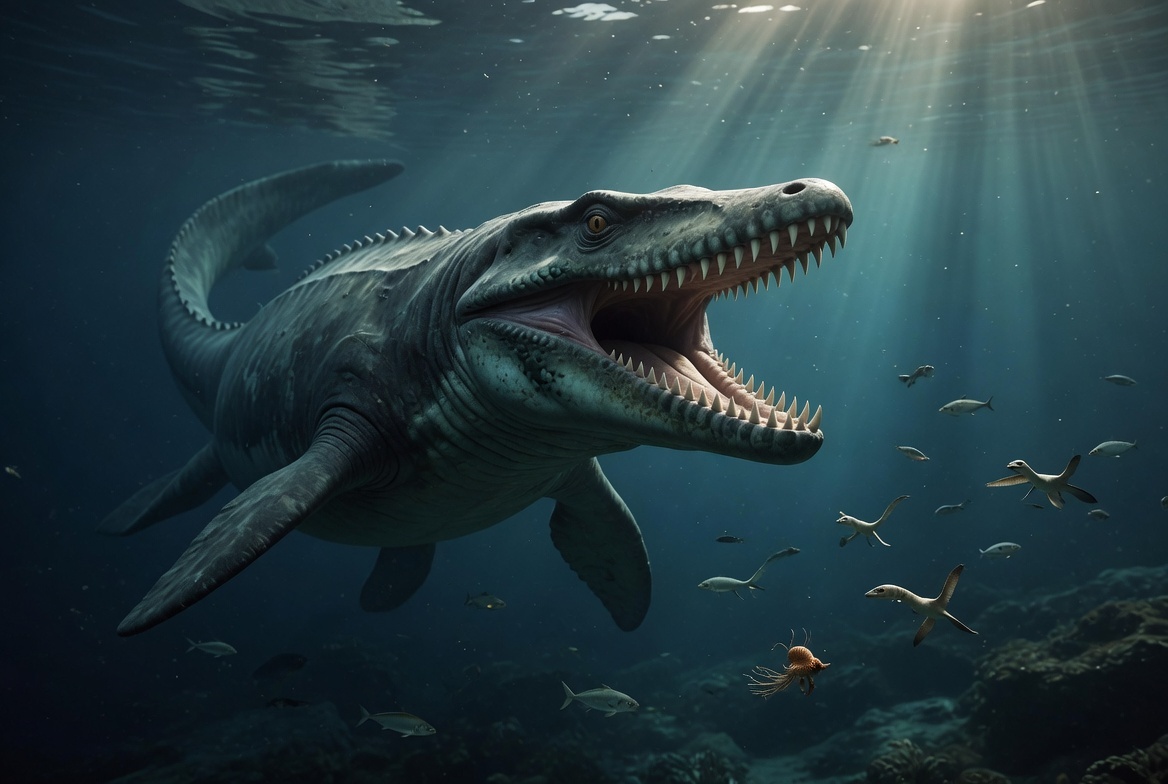
Mosasaurus is one of the most famous prehistoric ocean predators, but there is one important correction.
It was not a dinosaur.
That misunderstanding is everywhere because Mosasaurus lived during the age of dinosaurs and looks like something that belongs beside them in any prehistoric monster lineup. But mosasaurs were marine reptiles, specifically squamates, meaning they were related to the broader group that includes lizards and snakes.
That fact makes the creature even more interesting. The ocean’s nightmare predator was not a shark, not a dinosaur, and not a whale. It was a giant marine reptile.
Mosasaurs evolved from land-dwelling ancestors and became fully adapted to marine life. Their bodies changed dramatically for swimming:
Mosasaurus itself was among the most iconic members of the group, and popular media has turned it into a symbol of prehistoric ocean terror.
As always, some media portrayals exaggerate size and behavior. But the real animal does not need fake upgrades. It was already a powerful marine predator in Late Cretaceous seas.
Mosasaurus and other mosasaurs likely fed on a wide variety of marine animals, including:
Fossil evidence from mosasaurs shows a group highly adapted for predation. Their teeth were built for seizing and tearing, not chewing like mammals. Their jaws and bodies suggest active hunting in a marine world filled with competition.
But exact behavior depends on species, size, environment, and fossil evidence. So the safest framing is this: Mosasaurus was a top marine predator, but the full details of its hunting style are reconstructed from anatomy and fossil clues.
Mosasaurus has a perfect creature-content profile because it hits several primal triggers at once:
And it is close enough to modern reptiles that people instantly understand the fear. A giant marine lizard is a stronger hook than another generic “sea monster.” It is specific, visual, and scientifically grounded.
The fact that it was not a dinosaur gives the story an extra twist. People click for the monster, then stay because the science changes what they thought they knew.
Another great angle is that mosasaurs remind readers the Mesozoic ocean was not ruled by dinosaurs.
Dinosaurs dominated many land ecosystems, but the seas were controlled by different kinds of reptiles across different time periods:
Mosasaurus belongs near the end of that story, rising during the Late Cretaceous. That makes it feel like the final boss of a marine reptile era before the asteroid changed everything.
Mosasaurus was a real marine reptile, not a dinosaur, and it became one of the most iconic predators of the Late Cretaceous oceans.
While popular portrayals can exaggerate it, the fossil-based reality is still terrifying: a huge lizard-like predator with powerful jaws, sharp teeth, and a body built for hunting in ancient seas. Its story works because it corrects a common misconception while keeping all the fear.