11
11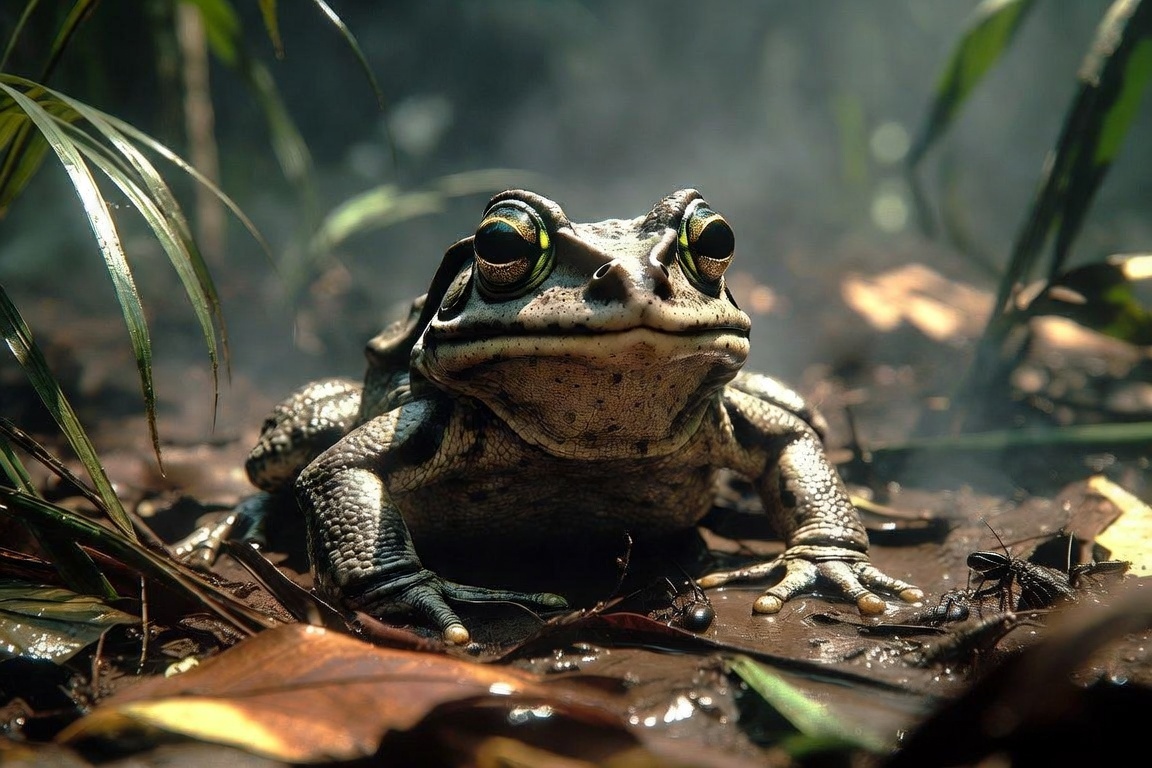
Some prehistoric animals feel frightening because they are huge. Others feel frightening because they take something harmless and twist it into a shape nobody expects. Beelzebufo belongs to the second group.
Its full scientific name is Beelzebufo ampinga, but it is often called the “devil frog” in popular coverage. The nickname is dramatic, but the fossil behind it is real. Beelzebufo lived in Madagascar during the Late Cretaceous, around the final age of non-avian dinosaurs. It was not a dinosaur, not a reptile, and not a monster from folklore. It was a frog.
That is exactly why it works.
Beelzebufo lived in a version of Madagascar that was not like the island today. During the Late Cretaceous, Madagascar had already followed an isolated evolutionary path, filled with unusual animals. Fossils from the Maevarano Formation have revealed a strange ecosystem with dinosaurs, crocodyliforms, mammals, birds, lizards, snakes, and amphibians.
That isolation matters. Islands often produce strange evolutionary results, allowing animals to become larger, more specialized, or simply different. While Madagascar is famous today for lemurs, its ancient fossil record shows that weirdness has deep roots.
Modern horned frogs are famous for being sit-and-wait predators. They stay still, blend into the ground, and strike when something gets close enough. Their huge mouths let them swallow animals that seem too large for a frog.
Beelzebufo is often interpreted through that lens. Its skull and body suggest an ambush lifestyle, and while we don’t have video evidence, the anatomy points to a powerful mouth capable of swallowing animals that wandered too close. A predator does not need to be fast when its whole body is built like a trap.
Confirmed facts are important here. Beelzebufo ampinga was large for a frog, with a broad skull and robust skeletal elements. Scientific interpretation, however, includes its exact maximum size, bite force, and specific prey list.
Claims about eating baby dinosaurs are plausible as a visual scenario, but they aren’t directly confirmed by a fossil stomach or bite mark. EdgeCase content should make Beelzebufo feel dangerous without pretending we know every hunt it made; the fossil evidence is already striking enough.
The nickname works because it flips expectations. A giant crocodile or a saber-toothed predator feels dangerous immediately—but a frog does not.
Then Beelzebufo appears with a skull like a machine, living in a Cretaceous ecosystem filled with small vertebrates. Suddenly, the forest floor becomes a threat. Every leaf pile looks suspicious. The danger is not movement; the danger is waiting.
Beelzebufo is not just “big frog content.” It is a story about how familiar animal groups can become strange under deep-time conditions. It reminds us that the dinosaur age was not only about massive reptiles; the forest floor had its own predators and its own quiet dangers.
The final image is simple and nasty in the best evidence-based way: a giant frog crouched in wet leaves, eyes barely visible, waiting for something small enough to make one mistake.
The strength of this topic is that the audience already knows what a frog is supposed to feel like. Beelzebufo takes that everyday image and pushes it into a Cretaceous ecosystem where the familiar becomes unsafe.
A giant frog is scarier in a quiet way because the threat comes from stillness. In the best visual version, it barely moves at all. The camera sees wet leaves, a low patch of mud, and then the eyes. By the time the viewer recognizes the body, the scene already feels too close.
Beelzebufo also carries a deeper scientific question. Its suggested relationship to South American horned frogs forced researchers to think about ancient continental connections. When a fossil frog from Madagascar appears to show ties to a South American group, the discovery becomes bigger than one animal.
This is why Beelzebufo should not be treated only as a “giant frog” headline. It is a predator story, an island story, and an evolution story at the same time. The monster-like image brings the click; the science keeps the reader.
In the end, Beelzebufo remains fascinating because it is both familiar and deeply wrong. Its fossil record does not need to prove every dramatic feeding scene people imagine to be compelling—it is an animal strange enough to carry the story on its own.
Deep time did not only make giants out of reptiles and mammals. It also made a frog that turned the forest floor into a hunting blind. That alone is enough to make the animal memorable.
References: