11
11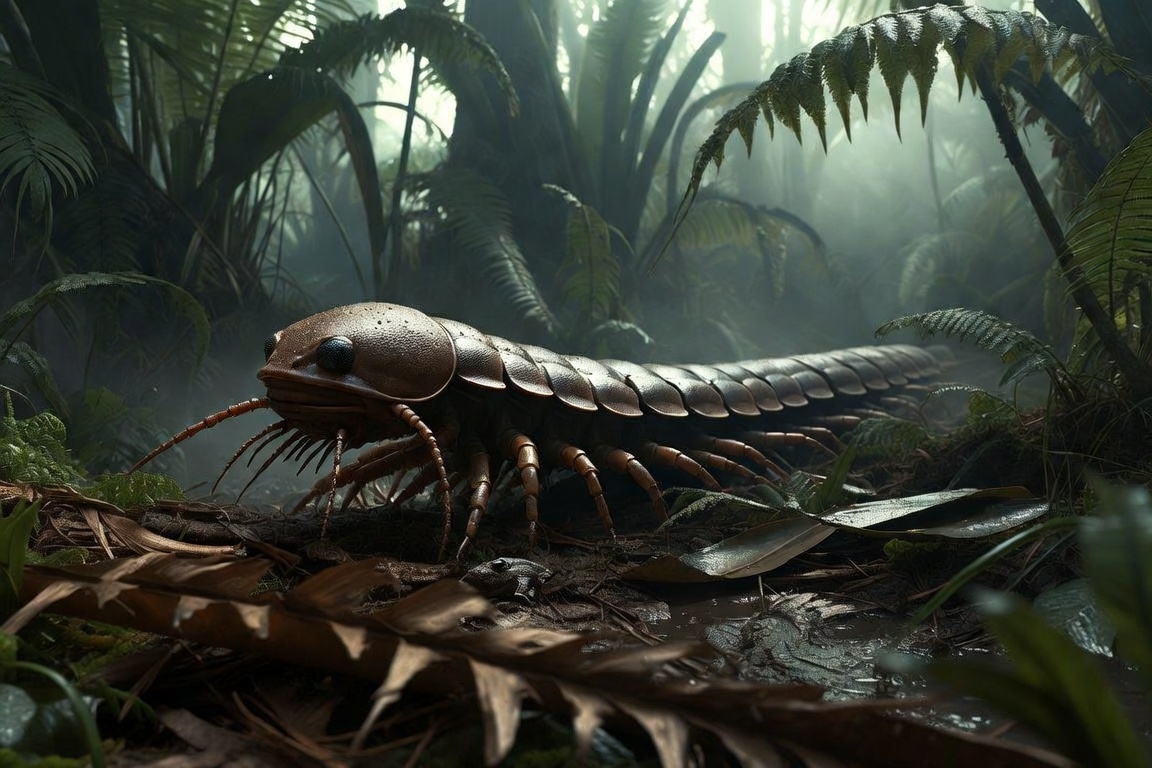
Some prehistoric animals are terrifying because they had teeth. Arthropleura is unsettling for a different reason: size.
It lived during the Carboniferous Period, a time when swampy forests spread across parts of the ancient world. These forests were dense with giant plants, wet ground, fallen organic matter, and oxygen-rich air. In that environment, arthropods reached sizes that feel almost impossible today.
Arthropleura was the largest known arthropod of all time. It is often described as millipede-like, with a long segmented body and many legs. Some individuals may have reached lengths of more than two meters, making the animal longer than many humans are tall.
The image is instantly cinematic: a massive armored body sliding across a damp forest floor, not roaring, not chasing, just existing at a scale no modern millipede can touch.
Because Arthropleura was huge, it is tempting to imagine it as a giant killer centipede. That version is clickable, but it is probably wrong.
Recent fossil research has helped clarify its anatomy, especially with rare head material. The animal appears to have been more millipede-like than centipede-like, and scientists generally interpret it as a detritivore or herbivore rather than an active predator. In plain terms, it likely fed on plant material or decaying organic matter.
That makes the story more interesting, not less. Arthropleura was not scary because it hunted large animals. It was scary because it shows how strange Earth can become under different environmental conditions. A harmless or mostly plant-eating animal can still feel shocking when it is the size of a living floor mat crawling through a swamp.
The Carboniferous Period is famous for its giant arthropods, coal-forming forests, and unusual atmospheric conditions. Oxygen levels were likely higher than today during parts of this period, which may have helped some arthropods grow larger. But oxygen alone is not the whole story. Food availability, climate, predators, and ecological space also mattered.
Arthropleura lived in a world before dinosaurs. The land ecosystems were still developing, with amphibians, early reptiles, insects, arachnids, and giant plants shaping the environment. Forest floors would have been full of moisture, plant debris, and hidden movement.
In that setting, Arthropleura may have played a role more like a giant recycler, breaking down plant matter and moving through the ecosystem like a slow armored machine.
The key correction is important: Arthropleura should not be sold as a giant venomous predator. Its real story is stranger because it shows that prehistoric gigantism was not limited to carnivores.
Arthropleura feels unsettling because it takes something familiar and scales it beyond comfort. A small millipede is easy to ignore. A multi-meter segmented animal moving through a dark forest floor is impossible to ignore.
It also challenges the way people think about prehistoric fear. Not every powerful visual needs a bite scene. Sometimes the most memorable image is a creature that should be small, but is not. Arthropleura was a giant from a vanished world, a reminder that Earth’s past contained ecosystems with different rules, different air, different forests, and animals that make modern instincts glitch.
References: