11
11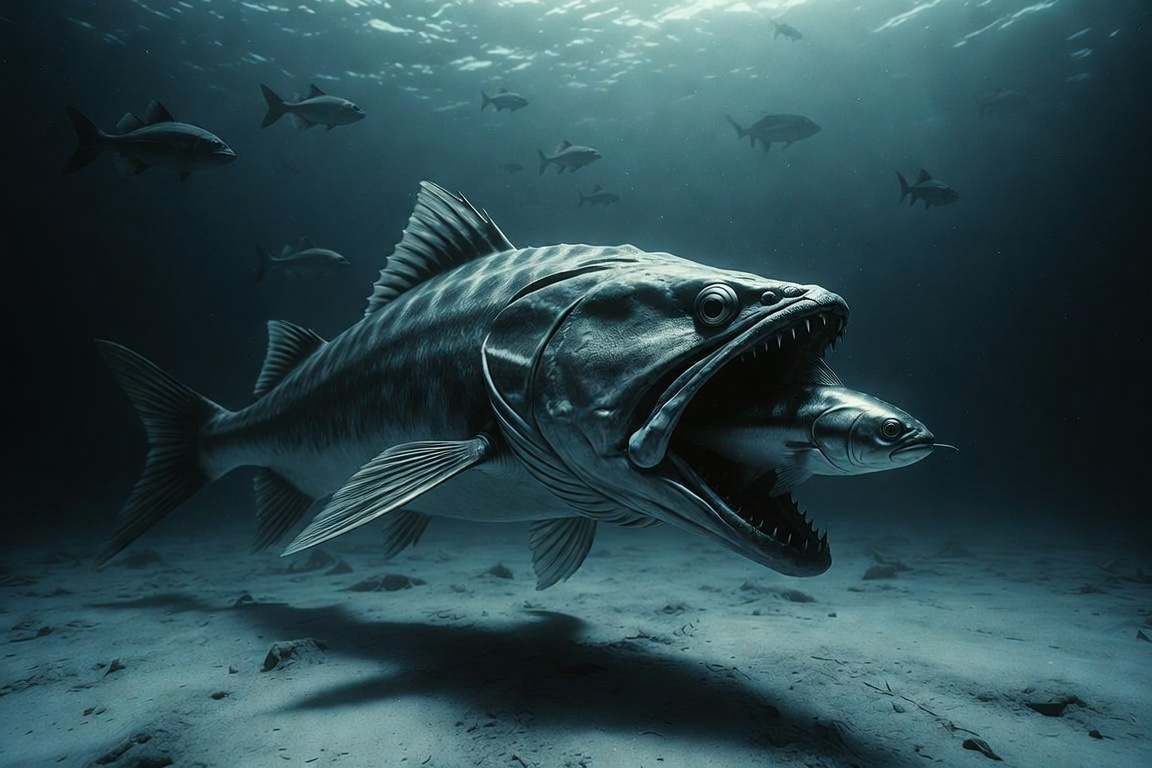
Some fossils preserve bones. Others preserve a moment.
Xiphactinus is famous because one specimen appears to capture the aftermath of a violent feeding event from the Late Cretaceous seas. This large predatory fish lived in the Western Interior Seaway, the ancient body of water that once split North America.
It was not a shark, not a marine reptile, and not a mythic sea monster. It was a real bony fish, armed with:
The most famous specimen is often called the “fish-within-a-fish.” It shows a large Xiphactinus with a smaller fish, Gillicus, preserved inside its body cavity. That fossil turns deep time into a scene. A predator swallowed prey, then died before digestion erased the evidence.
Xiphactinus had a blunt, aggressive-looking skull that has often been compared to a bulldog-faced fish. Its jaws were large, its teeth were prominent, and its body could reach several meters long.
Fossils indicate that it was an active predator in a seaway that was far from peaceful, living alongside:
The fish-within-a-fish fossil is not just visually wild; it is scientifically invaluable.
Stomach contents and preserved last meals are rare windows into actual predator-prey relationships. Instead of guessing only from teeth and jaw shape, scientists can see direct, undeniable evidence of what Xiphactinus consumed.
The famous fossil has inspired dramatic interpretations. One popular idea is that the swallowed Gillicus may have injured the larger predator from inside, possibly rupturing an organ with its shapes or through violent struggling.
While that idea is a plausible hypothesis, it should be treated carefully:
The power of the story comes from that uncertainty. The fossil does not give us a full video, but it gives enough evidence to make the ancient scene feel immediate.
Xiphactinus did not live alone at the top of the food web. The Western Interior Seaway contained other terrifying apex predators, meaning a wounded or dead Xiphactinus could easily become food itself.
This matters because it prevents the animal from becoming a fake, unstoppable monster. It was dangerous, but it was part of an ecosystem where predators ate and were eaten.
That is what makes the fish-within-a-fish so strong: it shows that even a successful attack could end badly. A predator could win the chase and still lose the day.
Xiphactinus works as an EdgeCase story because the fossil has a built-in twist. The animal was already frightening, but the preserved last meal makes it feel personal—almost cinematic.
It reminds us that fossils are not just static objects in museum cases. Sometimes, they are frozen consequences. A bite, a swallow, a struggle, and then silence.
The Cretaceous sea did not need mythical monsters. It had real fish large enough to swallow other large fish whole, and sometimes, the evidence survived inside the bones.
References: