11
11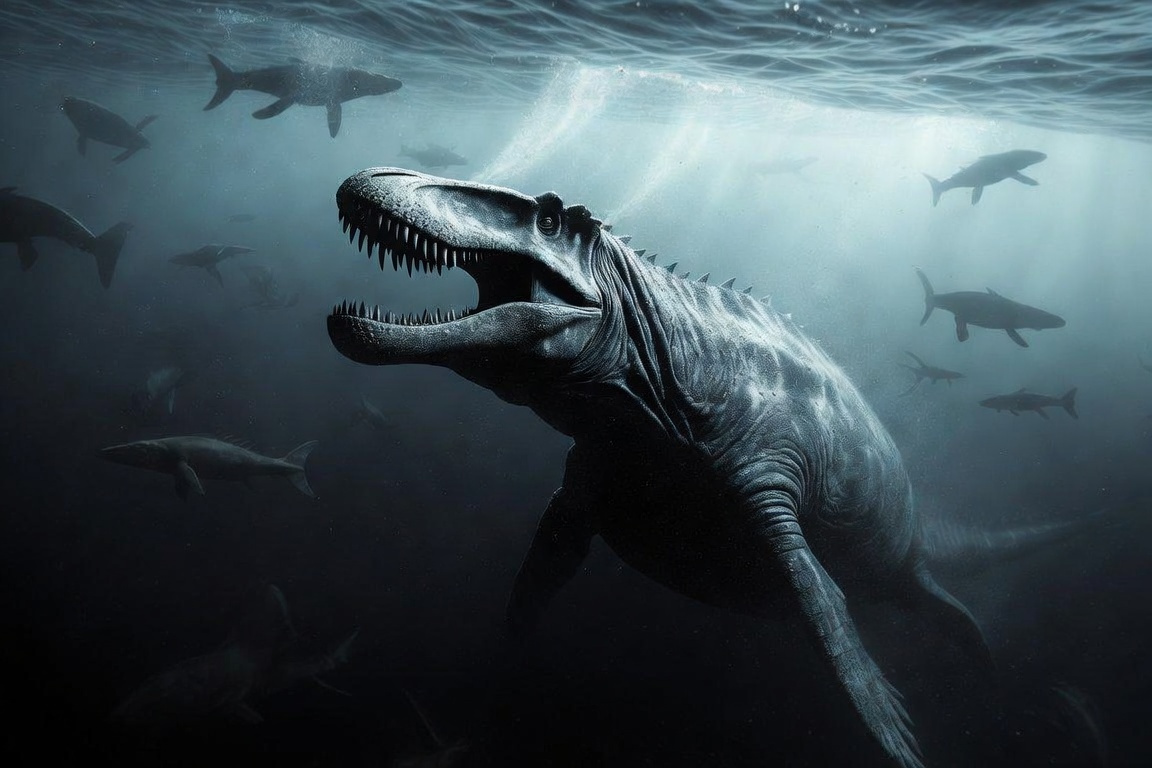
Pliosaurus funkei became famous under a nickname before the science had settled in public: Predator X.
That name created a monster-sized expectation. Media reports leaned into extreme bite force, extreme size, and ultimate-predator language. Later scientific description gave the animal a formal name and a more careful place in the pliosaur story.
The correction did not make it boring; it made it credible. Pliosaurus funkei was a real, large pliosaurid plesiosaur from the Late Jurassic of Svalbard, Norway. It was:
Pliosaurs were the heavy-jawed cousins in the plesiosaur world. While some plesiosaurs had long necks and small heads, pliosaurs had short necks, massive skulls, and powerful bodies driven by four flippers.
Pliosaurus funkei fits that intimidating design perfectly. Fossils include partial skull and skeleton material, rather than a perfectly complete animal.
This matters because incomplete fossils make size estimates difficult. The animal was undeniably large, but the most exaggerated claims should be avoided. The real evidence points to a major Jurassic marine predator, not a magical apex monster beyond comparison.
The fossils from Svalbard create a striking visual contrast. Today, the region suggests ice, cold, and polar wilderness. In the Jurassic, it recorded marine environments that preserved the remains of powerful reptiles.
A pliosaur moving through those waters would have been a serious threat to:
Its head-first body plan suggests a predator designed around bite and impact. But exact hunting tactics, prey choices, and bite performance remain interpretation. Fossils can reveal shape and potential; they cannot show every attack.
The “Predator X” nickname should be used as media history, not as scientific proof that it was the single deadliest marine reptile ever. Separating the reality from the rumor reveals:
This honest framing is stronger because it shows how prehistoric animals can become overhyped before careful research catches up.
The best story is not that Predator X was exaggerated. The best story is that the real fossil did not need the exaggeration.
A giant short-necked marine reptile with a skull built for predation is already deeply cinematic. The scientific caution makes it more trustworthy.
Pliosaurus funkei becomes a fascinating story about the tension between media monster-making and real paleontology. The legend shouted. The fossil stayed silent. The truth still had teeth.
References: