11
11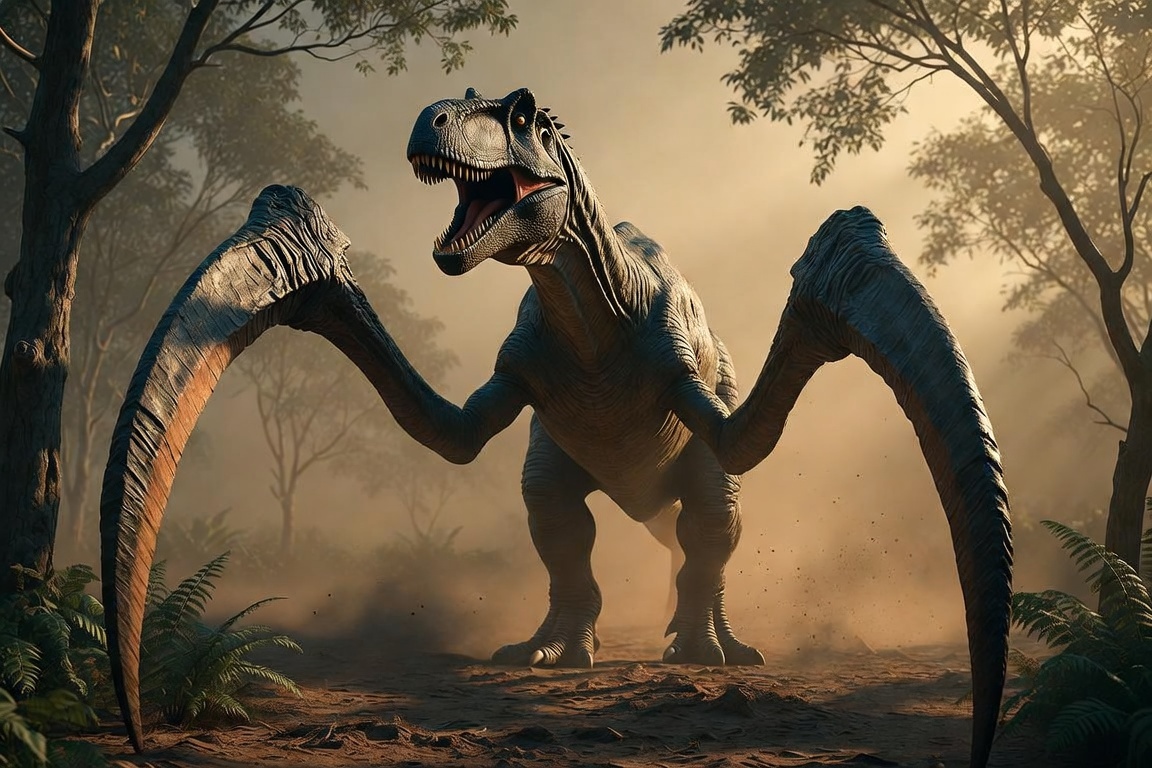
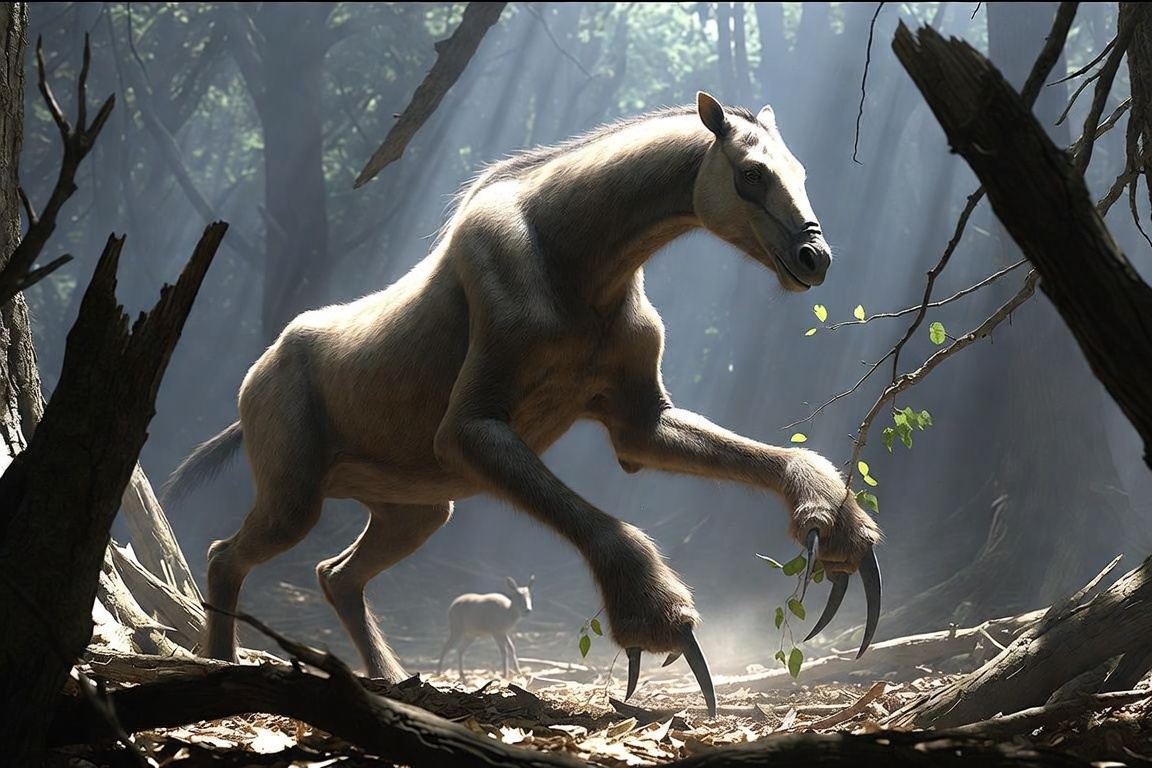
Therizinosaurus looks like a horror predator at first glance. Its claws were enormous, curved, and visually extreme.
The name itself means “scythe lizard,” and that label fits the first impression. But the story becomes stranger when you move past the claws.
Therizinosaurus was a theropod dinosaur, part of the same broad group that includes many famous meat-eaters, yet it is generally interpreted as herbivorous or mostly plant-eating. That contrast makes it one of the most counterintuitive dinosaurs in popular paleontology.
Theropods are often imagined as sharp-toothed carnivores. Therizinosaurus and its relatives complicate that picture.
Therizinosaurs had unusual bodies, long arms, big claws, wide torsos, and features linked to plant-eating. Some likely had feathers.
Therizinosaurus itself is known from incomplete fossil material, especially giant claws and limb elements, meaning:
The claws are the central mystery. Instead of being “murder knives,” they may have been multi-functional tools in a strange herbivore toolkit:
Scientists do not have a direct fossil video of behavior, but the plant-eating interpretation changes the mood completely.
It was either a peaceful-looking body with nightmare hands, or a calm browser carrying weapons nobody wanted to test.
Popular media often highlights the visual shock, but an honest scientific version separates the facts from biological uncertainty:
We know the claws were real. We do not know every reason evolution made them so extreme.
Therizinosaurus is strong because it subverts the audience. The thumbnail says monster; the story says herbivore.
That contradiction creates curiosity without lying. It reminds us that evolution does not design animals for human expectations.
Sometimes the scariest-looking weapons belong to an animal that mostly wanted leaves—and sometimes that makes the animal even stranger.
References: