11
11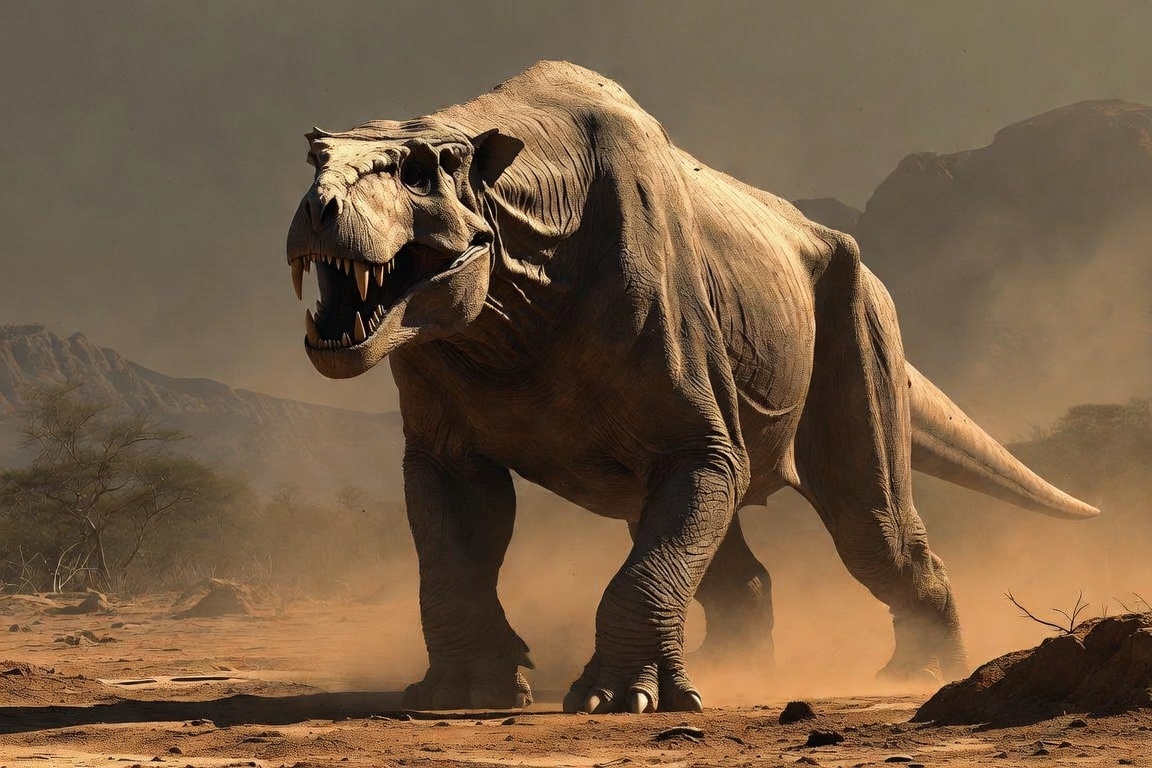
Some discoveries happen in the field. Others happen when someone looks again at fossils already sitting in a museum.
Simbakubwa kutokaafrika belongs to the second category. Its fossils were collected in Kenya decades before being formally recognized as a new giant carnivore.
They had been stored in museum collections, waiting for the right expert eyes. That detail gives the story a perfect twist: a massive predator was not hiding in a jungle; it was hiding in a drawer.
Simbakubwa means “big lion” in Swahili, but the animal was not a lion and not a cat.
It belonged to hyaenodonts, an extinct group of carnivorous mammals that lived before modern carnivore families fully dominated. Fossils include jaw and skull material, plus parts of the skeleton.
Researchers described it as a gigantic carnivore from the early Miocene of Kenya. It lived around 22 million years ago, long before:
The strongest hook is timing. Simbakubwa occupied Africa before the rise of the familiar big cats. It belonged to an older carnivore dynasty.
Its teeth and jaws suggest a powerful meat-eating animal, one that may have fed on large herbivores in its ecosystem.
Exact body mass estimates have been debated and should be treated carefully, but the animal was clearly large and formidable. It shows that Africa’s predator history did not begin with lions.
Popular media often blends this ancient beast with modern animals, but keeping it scientifically accurate means separating facts from theories:
It should not be called a hyena or lion, even though comparisons help general readers understand its apex role.
Simbakubwa combines fossil mystery, museum rediscovery, and predator scale. It is not only about a big animal; it is about how much can be missed when evidence sits quietly in storage.
A drawer opens, a jaw is reexamined, and suddenly a lost carnivore steps back into the story of Africa. That is clean, credible, and deeply dramatic.
References: