11
11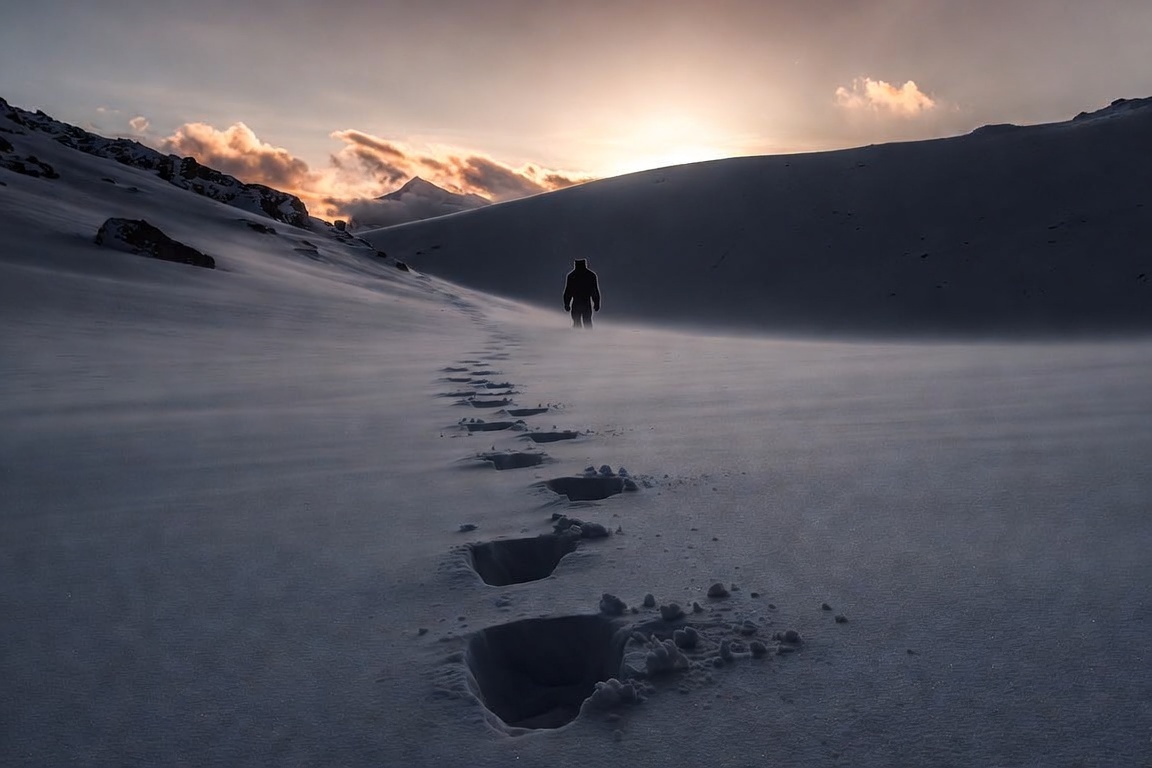
The Yeti is one of the most famous mountain legends on Earth. Often called the Abominable Snowman in Western media, it is usually described as a large, hairy, human-like creature living somewhere in the Himalayas.
The image is instantly cinematic: a white ridge, impossible cold, strange footprints, and a shadow moving where no person should be walking.
But the Yeti story is not just a monster tale. It sits at the intersection of local folklore, extreme geography, misidentification, mountaineering culture, and biology.
The Himalayas are vast, dangerous, and visually deceptive. Snow can distort tracks. Distance can change scale. Wind can erase detail. A bear standing briefly on its hind legs can look disturbingly human from far away.
In that setting, a legend can survive for centuries without needing a supernatural explanation.
The confirmed part is cultural and historical: Yeti-like beings are important in Himalayan folklore and have been discussed by explorers, climbers, and researchers for generations.
The unconfirmed part is the creature as an unknown ape-like animal. No accepted scientific evidence has confirmed a living Yeti species.
That does not make the legend useless. It makes it a case study in how real animals, difficult terrain, and human storytelling can fuse into something larger than either fact or fiction.
The strongest scientific clue comes from DNA testing of samples claimed to come from Yetis. A 2017 study analyzed hair, bone, skin, tooth, and fecal samples linked to the Yeti legend.
The results pointed not to an unknown primate, but mostly to known bear species from the Himalayan and Tibetan region. This included:
This does not prove every Yeti sighting was a bear. It does show that physical evidence promoted as Yeti material can be explained by known animals. That is a huge distinction.
Sightings remain stories unless they produce reliable evidence. DNA-tested material gives science something firmer to handle, and so far, the strongest results point toward bears.
The bear explanation is not boring. Himalayan bears are powerful, rare, and easy to misread in brutal terrain.
A bear moving through snow can leave tracks that melt, stretch, overlap, and look less like normal paw prints. A bear rising upright on a slope can become a giant silhouette.
In low visibility, the brain fills in the missing details. The result can feel like a monster before it becomes a measurement.
The Yeti remains fascinating because the legend does not collapse under science. It changes shape. Instead of a hidden ape, the story becomes about how mountains create monsters from fragments: a track, a shadow, a cry, a hair sample, a memory.
The evidence-based version is still eerie because it does not laugh at the witnesses. It asks what they may have seen and why the experience became unforgettable.
The final hook is simple. The Yeti may not be a new species waiting above the snowline. But the Himalayas still hold enough real danger, enough rare animals, and enough visual uncertainty to keep the legend alive.
Sometimes the monster is not fake because people invented it. Sometimes the monster is what happens when a real animal crosses a human imagination in the worst possible weather.