11
11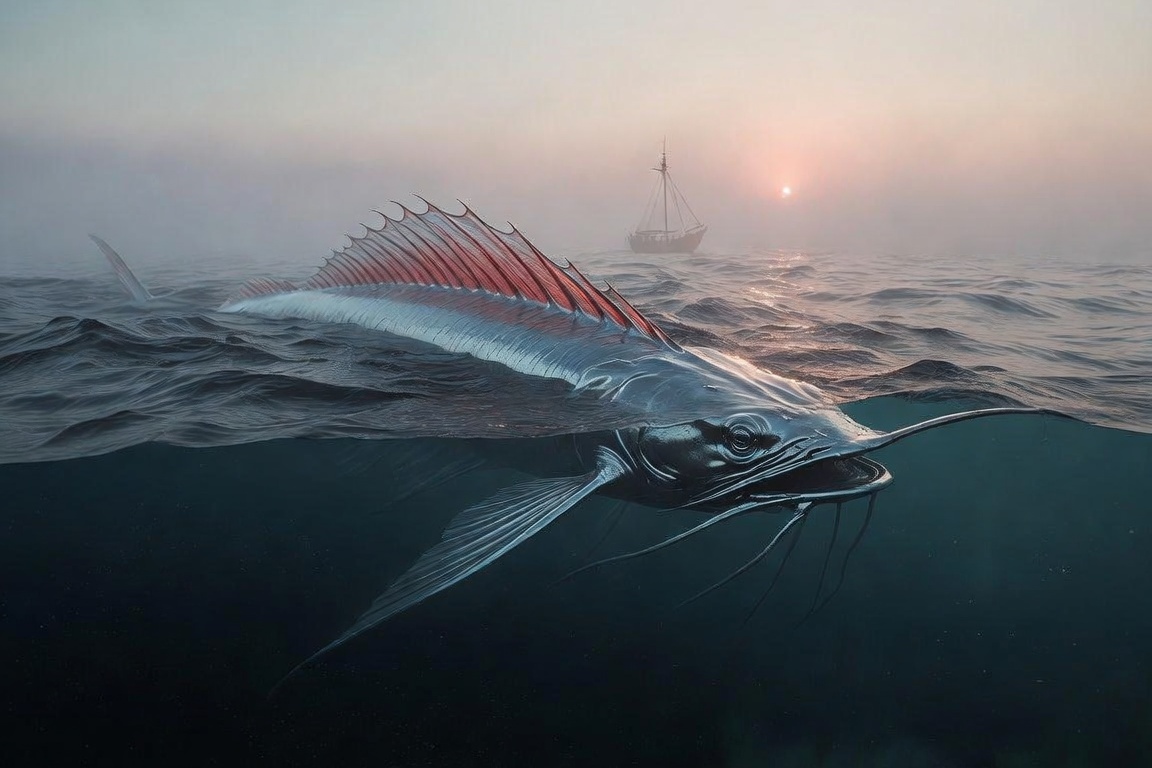
Sea serpent stories appear across maritime history. Sailors described long bodies moving through waves, strange heads breaking the surface, and creatures too large or too unfamiliar to identify.
Some accounts were exaggerated. Some were probably mistakes. Some may have been inspired by real animals glimpsed in the worst possible conditions.
One of the strongest natural candidates behind many sea serpent legends is the oarfish.
The giant oarfish is the longest bony fish known, featuring a silver ribbon-like body and red fin structures that can look almost ornamental. It usually lives in deep water, so humans rarely see it alive.
When it appears near the surface—especially when sick, dying, or washed ashore—it can easily look like something from myth.
The oarfish does not need to be dangerous to be frightening. A long pale body moving at the surface can trigger an ancient response.
From a boat, in fog or storm light, a deep-sea fish can become a serpent. Add fear, distance, and retelling, and the story grows longer than the animal itself.
The confirmed evidence is that oarfish are real, rare, deep-water fish with an appearance that strongly resembles sea serpent imagery.
NOAA and marine science sources have documented beached oarfish and discussed their unusual biology. Maritime history sources often connect them to sea serpent interpretations.
The unconfirmed part is the monster claim. There is no scientific evidence for a global population of giant unknown sea snakes attacking ships.
But that does not mean every sea serpent witness was lying. Many may have encountered real animals they could not identify, such as:
Oarfish are especially effective as an explanation because they look wrong even when clearly photographed.
Their bodies are long and flat, not thick like normal fish. Their vibrant red crest gives them a distinct, dragon-like accent.
Because of their deep-sea lifestyle, sightings are incredibly rare. Their sudden appearances near shore can feel like omens, which has historically helped attach them to earthquake and disaster folklore in some cultures.
This is the key perspective: the sea serpent is probably not one single creature. It is a category of human confusion. It is what happens when the ocean shows people fragments of animals from places humans were never meant to see clearly.
The oarfish turns the legend from fake into fascinating. The monster may not exist, but the real fish behind the story is still one of the most surreal animals alive.
Sometimes the scientific explanation is not less strange than the legend. Sometimes it is the very reason the legend survived.