11
11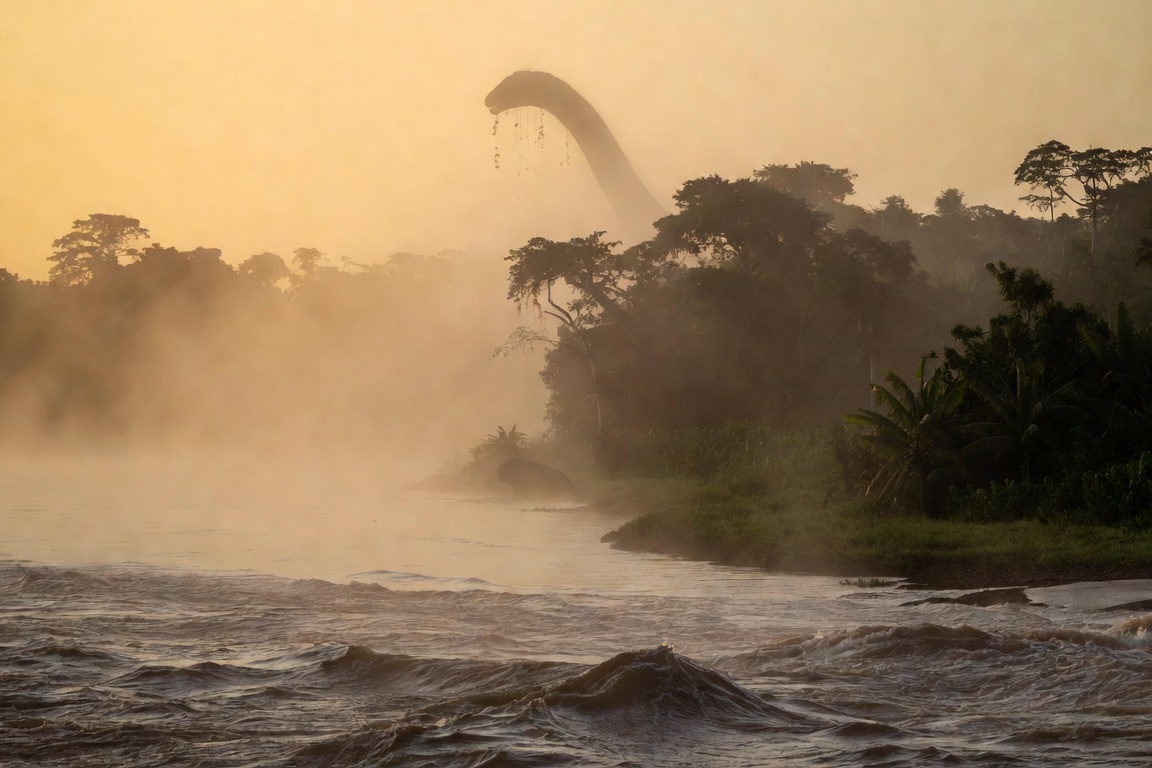
Mokele-mbembe is one of the most famous cryptid legends connected to the Congo Basin. It is often described in popular cryptozoology as a large aquatic creature with a long neck, sometimes compared to a sauropod dinosaur.
That image is powerful: deep rainforest, brown rivers, remote wetlands, and a creature that seems to belong to the Jurassic world.
But the evidence-based version must be careful. Mokele-mbembe is a legend and cryptozoological claim, not a scientifically confirmed animal.
Mainstream science does not accept that a living sauropod population exists in the Congo Basin. No bones, DNA, clear photographs, carcasses, or verifiable biological evidence have established the creature as real.
The confirmed part is that stories of unusual water creatures exist in regional and expeditionary accounts, and that Western explorers and cryptozoologists built those stories into a dinosaur-shaped mystery. The unconfirmed part is the leap from folklore to living dinosaur.
There are many reasons scientists remain skeptical about the creature’s existence. Sauropod dinosaurs went extinct with other non-avian dinosaurs about 66 million years ago.
A surviving population of giant herbivorous reptiles would need:
A creature that large would not only be seen as a shadow. It would inevitably leave behind bones, dung, tracks, feeding damage, and genetic traces.
Natural explanations are far more plausible. Reports may involve:
In dense rainforest, even known animals can become visually confusing. An elephant in deep water can look very different from a clean field guide image.
This is also a story about how legends change when they pass through outside expectations. A local water spirit or dangerous animal tradition can become a dinosaur in the hands of explorers, writers, and media.
That does not mean the original stories are meaningless. It means they should be handled with respect and context, not flattened into monster-hunting bait.
The strongest angle is not proving Mokele-mbembe exists. It is asking why the idea of a living dinosaur in a rainforest became so persistent.
The answer includes geography, colonial-era exploration, real biodiversity, incomplete knowledge of remote ecosystems, and the human desire to believe that deep time might still be hiding somewhere green.
Mokele-mbembe remains fascinating because it reveals a collision between folklore and paleontology. Science says no reliable evidence supports a surviving sauropod. The legend says the river still has a shape people cannot forget.
Between those two positions sits the real mystery: not a dinosaur, but the way humans turn hidden landscapes into prehistoric dreams.