11
11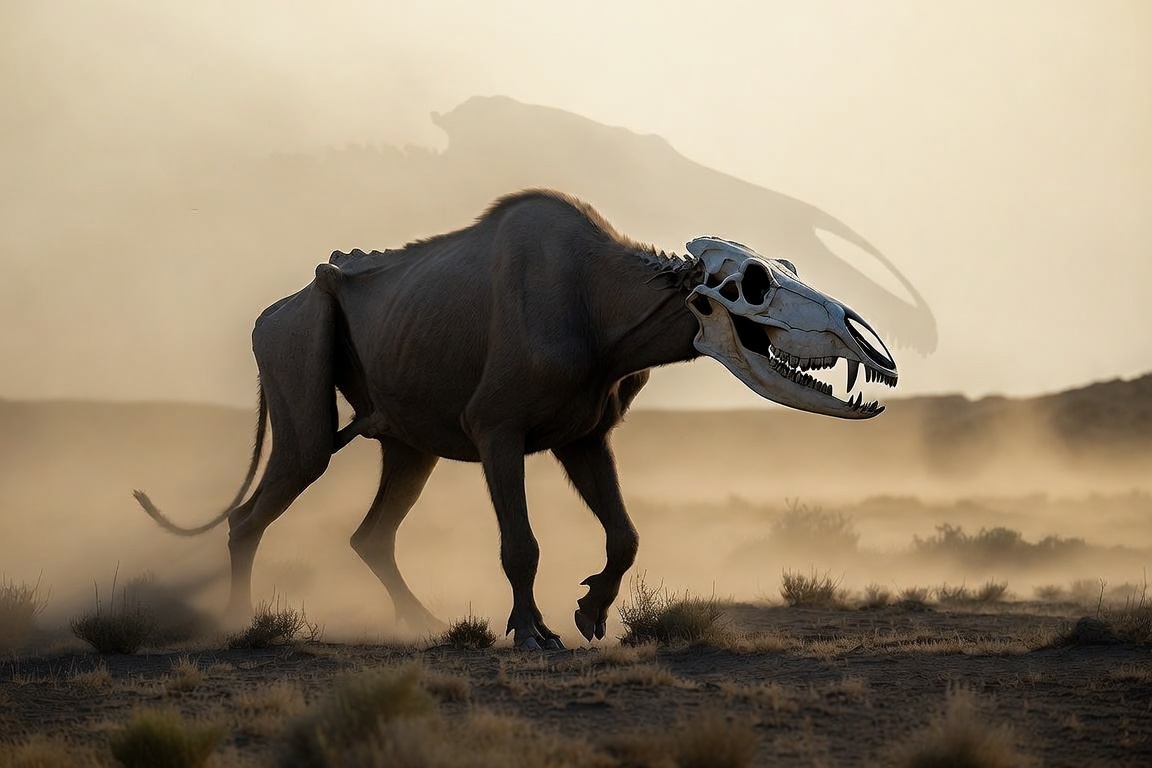
Some prehistoric animals are known from complete skeletons. Others are known from trackways, teeth, fragments, or entire bone beds.
Andrewsarchus sits in a stranger category: a creature made famous by one massive skull.
That skull was discovered in Inner Mongolia in 1923 during an American Museum of Natural History expedition. It was nearly three feet long, with huge teeth and a long snout.
The fossil looked powerful enough to belong to one of the largest meat-eating land mammals ever imagined. But the rest of the skeleton was missing, which turned Andrewsarchus into one of paleontology’s most dramatic reconstruction problems.
The headline is not just that Andrewsarchus was big. The headline is that scientists and artists have had to build the animal around limited evidence.
A skull can reveal a lot:
But a skull does not give the exact body shape, posture, fur, mass, gait, or behavior. That gap is where the mystery lives.
Andrewsarchus is often described as a giant carnivorous mammal, but it should not be imagined as a giant wolf. Its evolutionary neighborhood is far stranger. It has been linked to mesonychids or to relatives near even-toed hoofed mammals, with scientific interpretations shifting over time.
That makes the visual weird in the best way. This was not a cat. It was not a bear. It was not a canid.
A striking reality: It was a mammal with hoofed-animal connections and meat-eating anatomy—a reminder that early Cenozoic ecosystems experimented with predator designs that do not exist anymore.
The skull suggests crushing and tearing ability, but behavior remains uncertain.
Different reconstructions have leaned in different directions because the evidence is incomplete. The safest story is also the most interesting: Andrewsarchus was a giant Eocene mammal known from a terrifying skull, but its exact body and lifestyle remain partly unresolved.
Andrewsarchus lived after the non-avian dinosaurs were gone. The Eocene world was warm, filled with expanding mammal diversity, and packed with lineages that look unfamiliar today.
Mammals were taking over ecological roles once occupied by other animals, but the modern cast had not fully formed. This was a world where hoofed mammals, early whales, strange predators, and massive herbivores were still evolving into new shapes.
In that context, Andrewsarchus feels less like an exception and more like a warning: the age of mammals was not gentle. It produced predators with skulls that still look brutal under museum lights.
Confirmed: Andrewsarchus mongoliensis is known from a large fossil skull discovered in Mongolia. The skull is real, massive, and historically important. Its teeth and jaw structure suggest an animal capable of powerful feeding.
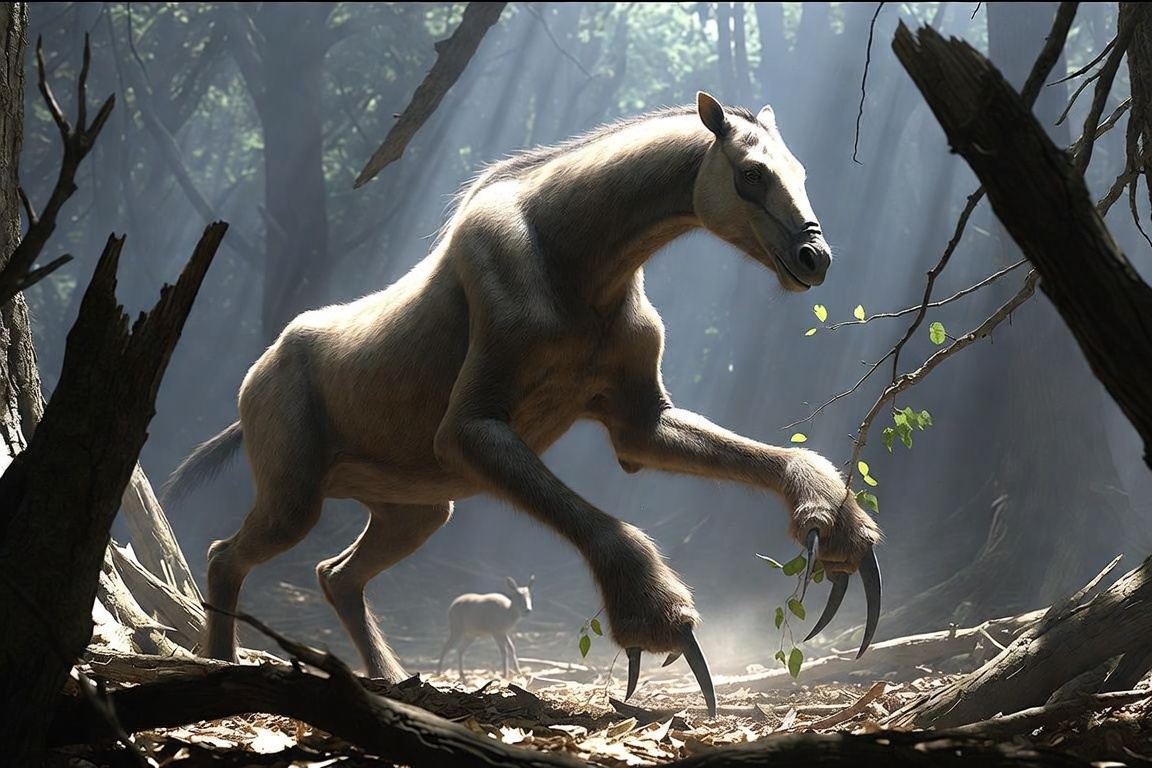
Interpretation: The full body shape, exact size, diet, hunting style, and evolutionary placement have all been debated. Any full-body reconstruction should be treated as a careful scientific guess, not a complete portrait.
That uncertainty is the story. Andrewsarchus is not frightening because we know everything about it. It is frightening because one skull is enough to suggest a whole predator, while still refusing to show the rest.
Andrewsarchus is perfect EdgeCase material because it forces a question immediately: how much can one skull reveal?
The answer is: a lot, but not everything.
It can suggest scale, power, diet, and relationship. It can inspire reconstructions. It can change the way we imagine the Eocene. But it cannot give us the living animal completely.
That leaves Andrewsarchus as a fossil shadow: huge head, crushing teeth, uncertain body, and a place in a mammal world that was much stranger than ours.
References: