11
11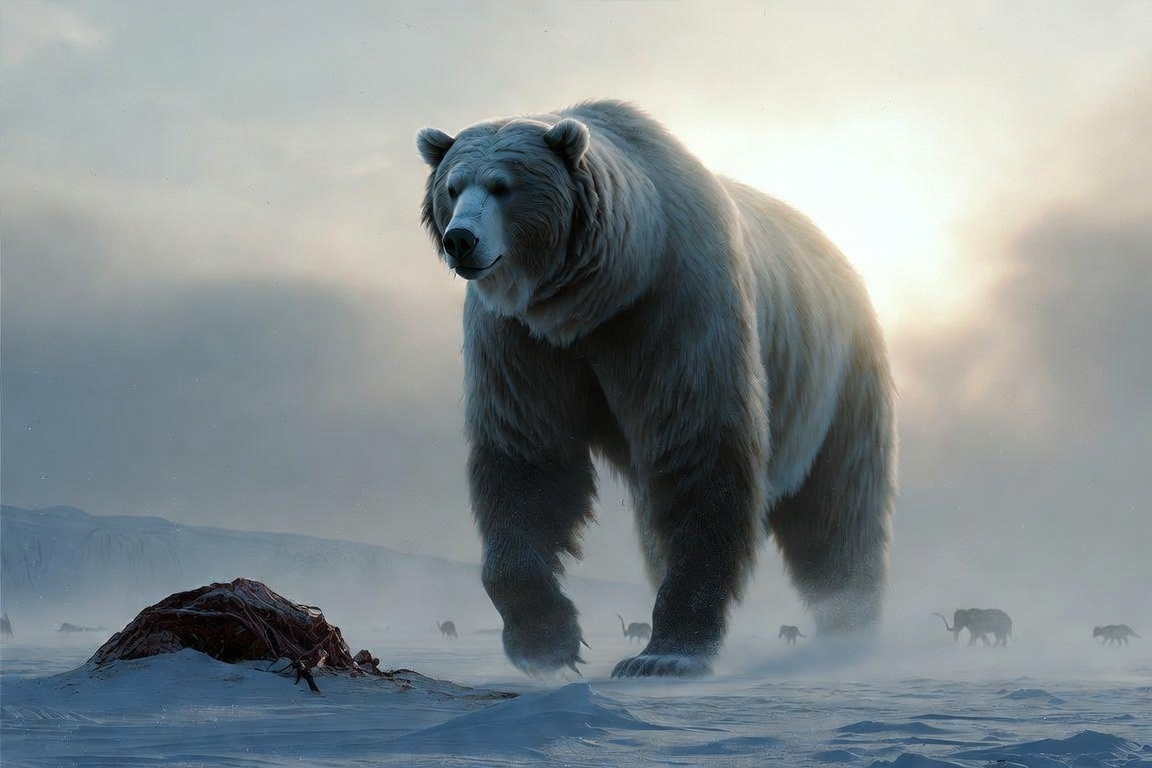
Arctodus simus, the giant short-faced bear, is one of the most impressive mammals of Ice Age North America. It was huge, long-limbed, and visually intimidating. In older popular stories, it was often framed as a hypercarnivorous super predator that could outrun prey across open plains and dominate every carcass it found.
That image is dramatic, but science has complicated it.
Arctodus was real, and it was enormous. It lived during the Pleistocene and shared landscapes with mammoths, bison, horses, camels, dire wolves, saber-toothed cats, and humans. But its role in those ecosystems was probably not as simple as “giant killer bear.”
Modern research has challenged the idea that Arctodus was a pure pursuit predator. Its anatomy and comparisons with living bears suggest a more flexible animal, possibly an omnivore and scavenger as well as a hunter depending on region and opportunity.
The real Arctodus was not less interesting than the myth. It was more complex.
The name short-faced bear comes from the skull shape, but even that detail can be misleading in popular imagination. The face was not cartoonishly compressed. It was part of a skull and body plan that differed from modern brown bears, with long limbs and a tall stance that made the animal visually extreme.
Estimates for body size vary, but Arctodus simus is widely considered one of the largest terrestrial carnivorans known from North America. Some individuals may have reached massive weights, though not every bear was a giant maximum specimen.
The fossil evidence includes skulls, jaws, teeth, limbs, and other skeletal material. These remains allow scientists to compare its movement, diet, and ecology with modern bears and other extinct carnivores.
The old version of Arctodus as an unstoppable meat specialist has been debated. Some isotope studies have suggested high meat consumption in certain populations, especially in northern environments. Other anatomical analyses argue that its skull and limb proportions do not support the extreme pursuit-predator image.
The likely answer may vary by place and time. Like modern bears, Arctodus may have been opportunistic. It could have scavenged carcasses, stolen kills, eaten plant foods when available, hunted vulnerable animals, and adapted its diet to local conditions.
That is not a downgrade. A flexible giant bear is terrifying in a more realistic way. It does not need to sprint like a cheetah to dominate a landscape. Size alone can change the behavior of other animals around it.
The best EdgeCase angle is the myth correction. Arctodus was not just a giant monster bear. It was a real animal whose public image became simpler than the evidence.
Arctodus is visually powerful because it takes a familiar animal and pushes it into extreme scale. Everyone understands bears. Now imagine one standing taller, moving across Ice Age open country, and arriving at a carcass where other predators are already feeding.
The tension is instant.
But the scientific twist is what makes it memorable. The short-faced bear may not have been the one-note super predator once imagined. It may have been something more adaptive, more opportunistic, and harder to categorize.
A giant bear does not need to be a movie monster to be frightening. It only needs to exist in the same landscape as everything else trying to survive.