11
11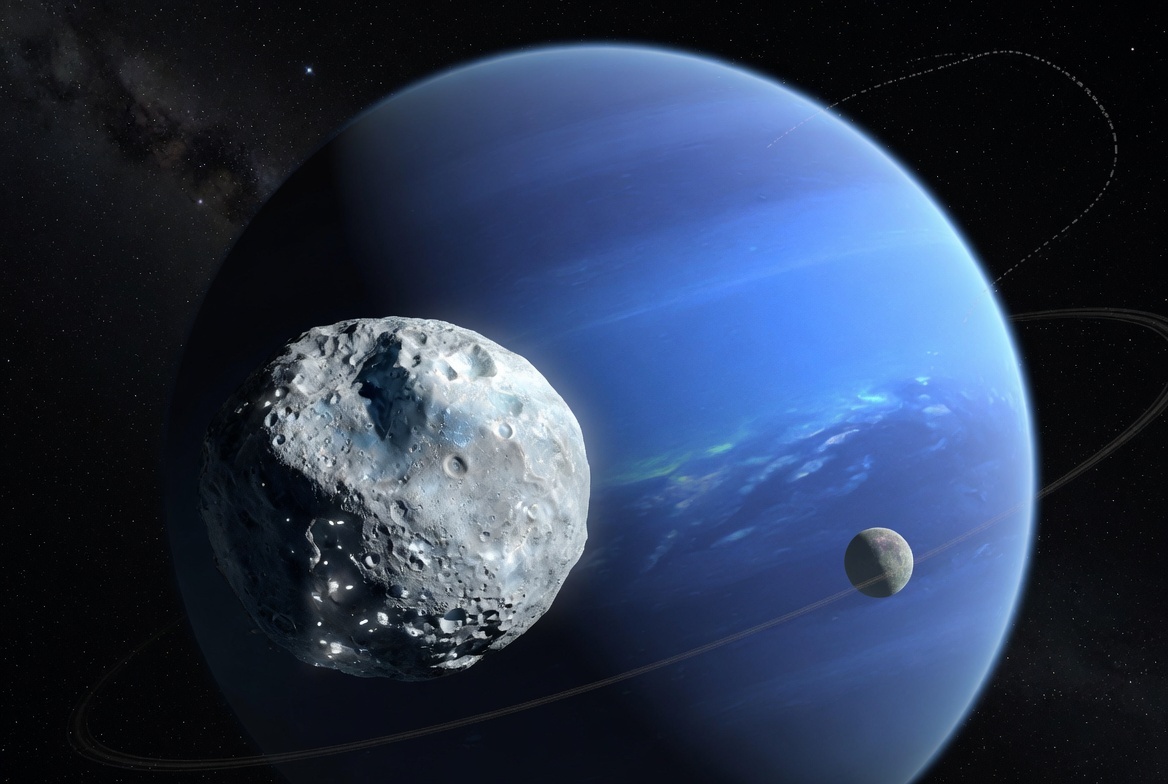
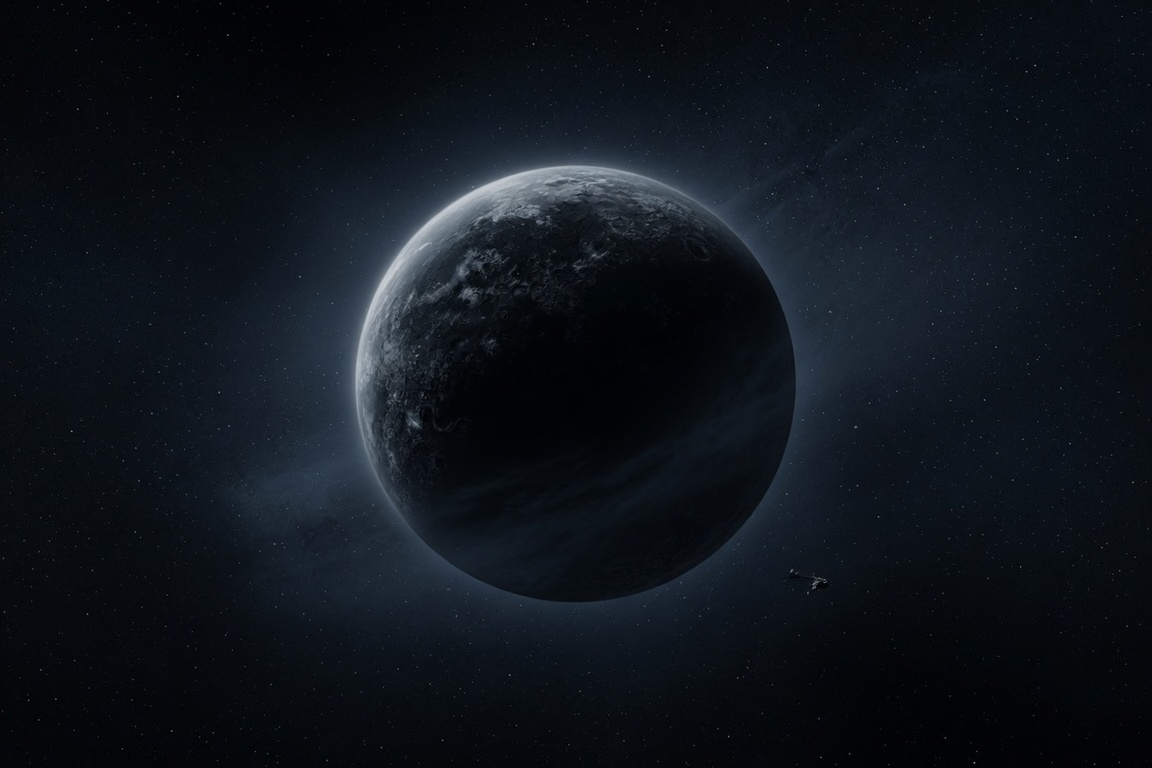
Neptune’s moon Nereid has been puzzling scientists for decades.
It was discovered in 1949, and from the beginning, it looked unusual. Its orbit around Neptune is extremely eccentric, meaning it does not follow a neat circular path like many moons.
For years, one major idea suggested Nereid might have been captured from the Kuiper Belt—the distant, icy region beyond Neptune. That sounded reasonable. Neptune already has a strange moon history; its largest moon, Triton, is widely believed to have been captured from the outer solar system. That cataclysmic event would have caused intense gravitational chaos, potentially destroying or scattering earlier moons.
So if Nereid had such a weird orbit, maybe it was also a captured outsider. But new observations are challenging that long-held idea.
Using data from the James Webb Space Telescope (JWST) and advanced computer simulations, researchers now suggest Nereid may actually be an original moon of Neptune.
If true, that makes it a rare survivor—not a captured outsider, and not a late arrival. It is a moon that somehow lived through one of the most violent chapters in Neptune’s history.
The evidence comes partly from Nereid’s surface composition. Researchers found that it looks fundamentally different from known Kuiper Belt objects:
This matters because captured Kuiper Belt objects should generally share some chemical fingerprints with their region of origin. Nereid simply does not fit that profile.
Triton remains the key to the entire mystery. Scientists believe Triton was captured by Neptune’s gravity long ago, and a capture of that scale would not have been gentle. A massive object entering an established moon system would disrupt existing moons, violently altering their paths and reshaping the entire system.
The old assumption was that Nereid could not have survived such chaos if it had originally formed around Neptune. However, new simulations suggest another possibility: Triton’s capture may not have destroyed Nereid. Instead, the intense gravitational interaction may have thrown Nereid into the highly elongated, strange orbit we see today.
That completely flips the narrative. Nereid’s weird orbit may not prove it was captured; it may actually be a scar from its survival.
Most space mysteries are not about aliens; they are about survival, violence, and time.
Nereid may be a small, icy record of a cosmic disaster. If it truly formed around Neptune, then it survived an event that should have erased or scattered much of the original moon system. That makes it more than a random rock in space—it becomes a witness. It is a frozen survivor from a time when giant planets were still aggressively shaping their neighborhoods.
The James Webb Space Telescope is often associated with distant galaxies and early-universe discoveries, but this story highlights its immense power inside our own solar system.
A few precise observations of a small, distant moon can completely change how scientists understand the evolution of an entire planetary system. Better instruments do not just show us new things—they make old mysteries look completely different.