11
11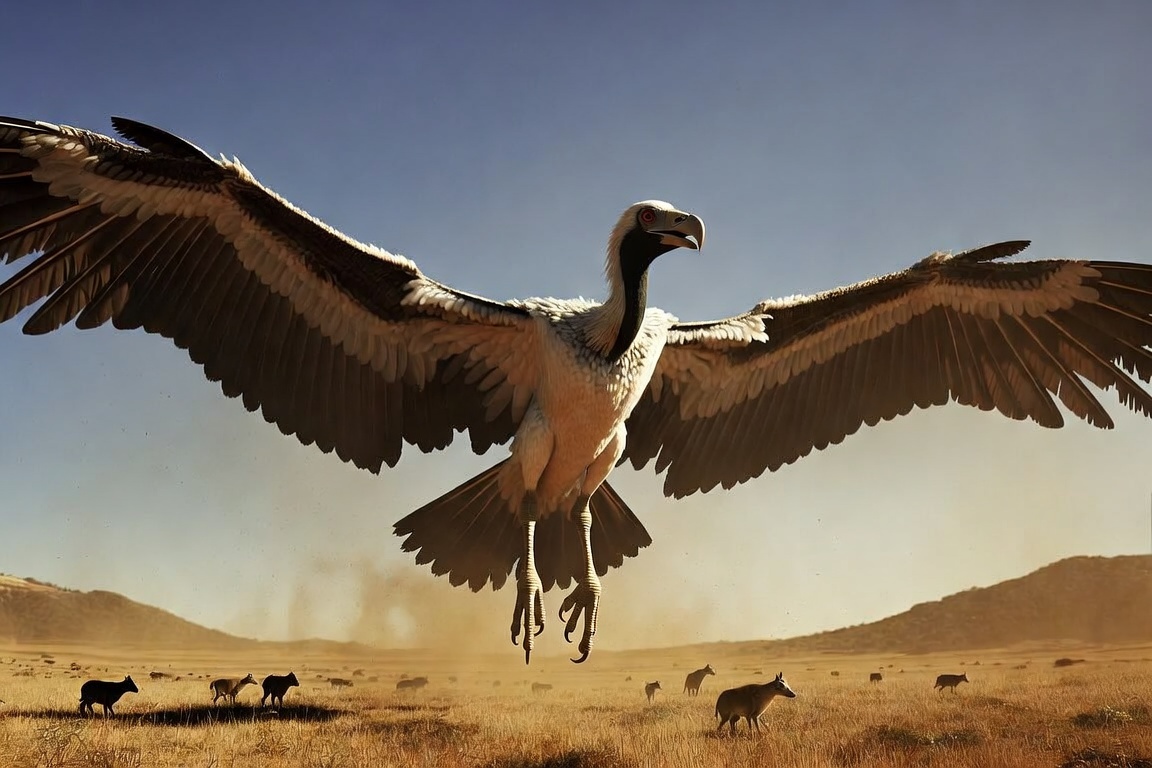
Argentavis magnificens was not a monster in the tooth-and-claw sense. It was a bird. That is what makes its size so unsettling.
This extinct giant from Miocene Argentina had an estimated wingspan of around seven meters in a major aerodynamic study, placing it among the largest flying birds known.
The comparison to a small aircraft is not just poetic. Researchers have discussed its flight mechanics in terms of:
Large flying animals face harsh physics. More mass means higher energy demands, more stress on the wings, and greater takeoff challenges.
Argentavis likely relied heavily on soaring flight, using thermal updrafts and wind over slopes to stay aloft.
That makes it feel almost like a biological glider. Instead of frantic flapping, imagine a huge bird riding invisible columns of air over open terrain, scanning the ground below.
Argentavis belonged to teratorns, a group of large extinct birds related to New World vultures. Scientists have discussed whether it hunted, scavenged, or used a combination of strategies.
Its immense size would have made active, fast pursuit difficult compared with smaller raptors, but it could cover vast distances while soaring.
Its feeding ecology remains interpreted from anatomy, flight ability, and comparison with living birds.
Popular media often builds Argentavis into a mythical beast, but separating the core facts from scientific interpretation reveals its true nature:
The key is to avoid presenting it as a dragon-like attacker. It was a bird, but one operating at a scale that changes the sky.
Argentavis is fascinating because it does not need teeth to create awe. A bird that large overhead would transform the landscape.
Its shadow would arrive before the body. Its wings would make the sky feel completely occupied.
The mystery is not whether it existed. The mystery is how a living animal so massive mastered the air.
References: