11
11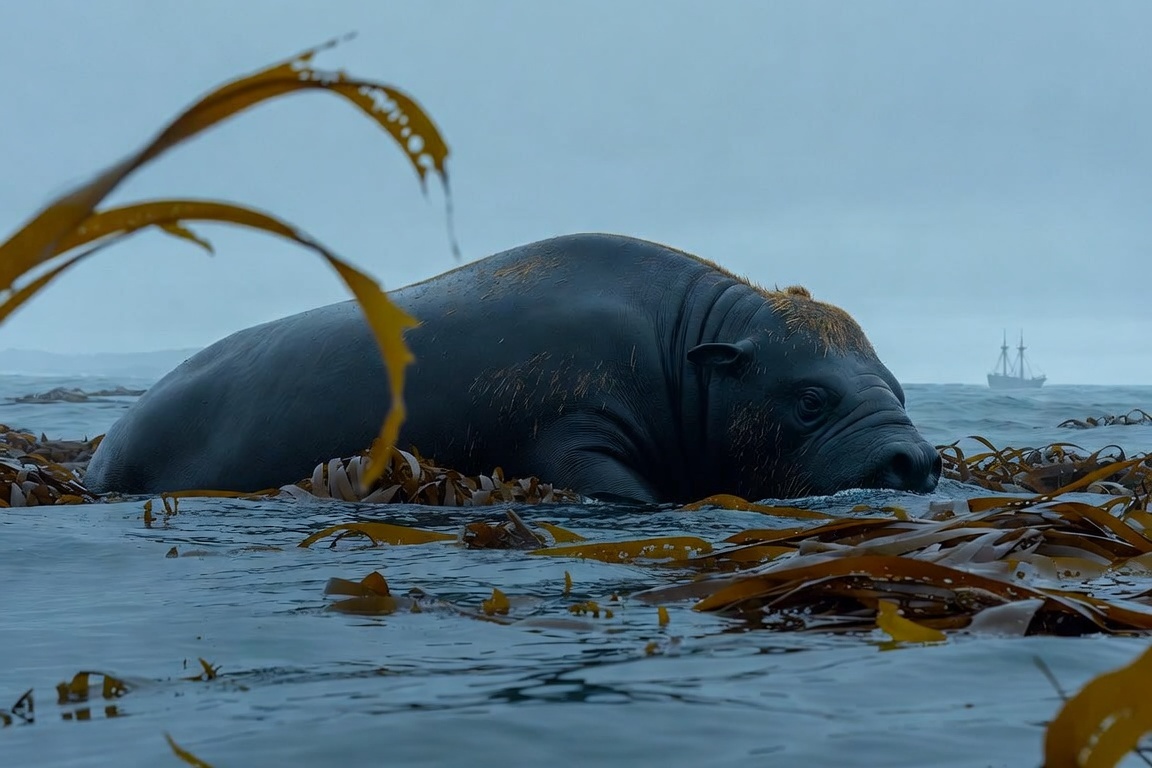
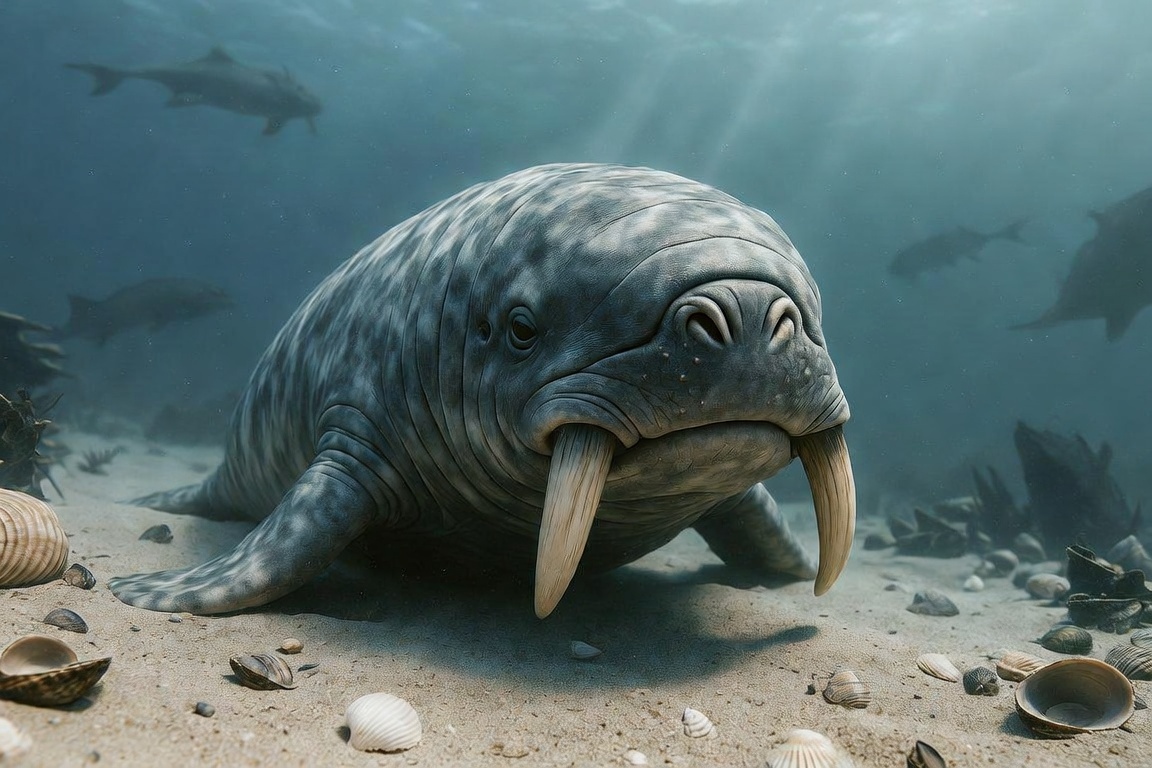
Steller’s sea cow was not a predator. It did not have huge teeth, claws, or a violent hunting strategy. It was a massive marine mammal, a relative of manatees and dugongs, adapted to cold North Pacific waters and kelp-rich coastlines.
That is what makes its story so dark.
This animal was huge, slow-moving, and apparently easy for humans to approach. It grazed on kelp near the surface. It lived in small surviving populations around the Commander Islands by the time Europeans documented it. It did not need to be a monster to become one of the most haunting extinction stories in modern history.
Georg Wilhelm Steller described the animal in 1741 after the Bering expedition became shipwrecked in the region. By 1768, only 27 years later, Steller’s sea cow was extinct.
For EdgeCase, the horror is not anatomy. It is speed. A giant marine mammal survived deep time, then disappeared almost immediately after entering European scientific awareness.
Fossil and historical evidence suggests Steller’s sea cow once had a wider North Pacific range. By the eighteenth century, however, the last known population was restricted to the waters around Russia’s Commander Islands.
These animals were enormous compared with living sirenians. Estimates often place them around eight to nine meters long, with heavy bodies adapted for cold water. They fed heavily on kelp and lived close enough to shore that hunters could reach them.
Their behavior, as described by Steller, suggests social and slow-moving animals. They were not equipped to flee fast boats, organized hunting, or sustained human pressure.
That made them vulnerable in the worst possible way.
After Steller’s sea cow was documented by Europeans, fur hunters and sailors killed them for meat, fat, and hide. The species could not withstand that level of exploitation. The last known individuals were gone by 1768.
Some ecological discussions have also explored how sea otter hunting and kelp forest disruption may have affected the broader ecosystem. Sea otters help control sea urchins, which can overgraze kelp when otters decline. Since Steller’s sea cows depended on kelp, ecological change may have added stress. But the direct and best-supported driver of their final extinction was unsustainable hunting.
The tragedy is brutal because the timeline is so short. This was not a slow disappearance over thousands of years after scientific discovery. It was a collapse within one human lifetime.
The honest story is already devastating. A peaceful giant, adapted to kelp forests and cold water, had no defense against rapid human exploitation.
Steller’s sea cow proves that not every eerie story needs a predator. Sometimes the most haunting creature is the one that could not fight back.
Its size gives the visual hook. Its calm behavior gives the emotional contrast. Its extinction timeline gives the shock. The animal itself was real, documented, and gone almost as soon as the modern world noticed it.
The final image is quiet: cold water, drifting kelp, a huge body grazing near the surface, and a ship on the horizon. There is no monster in the water.
The monster is what happens next.