11
11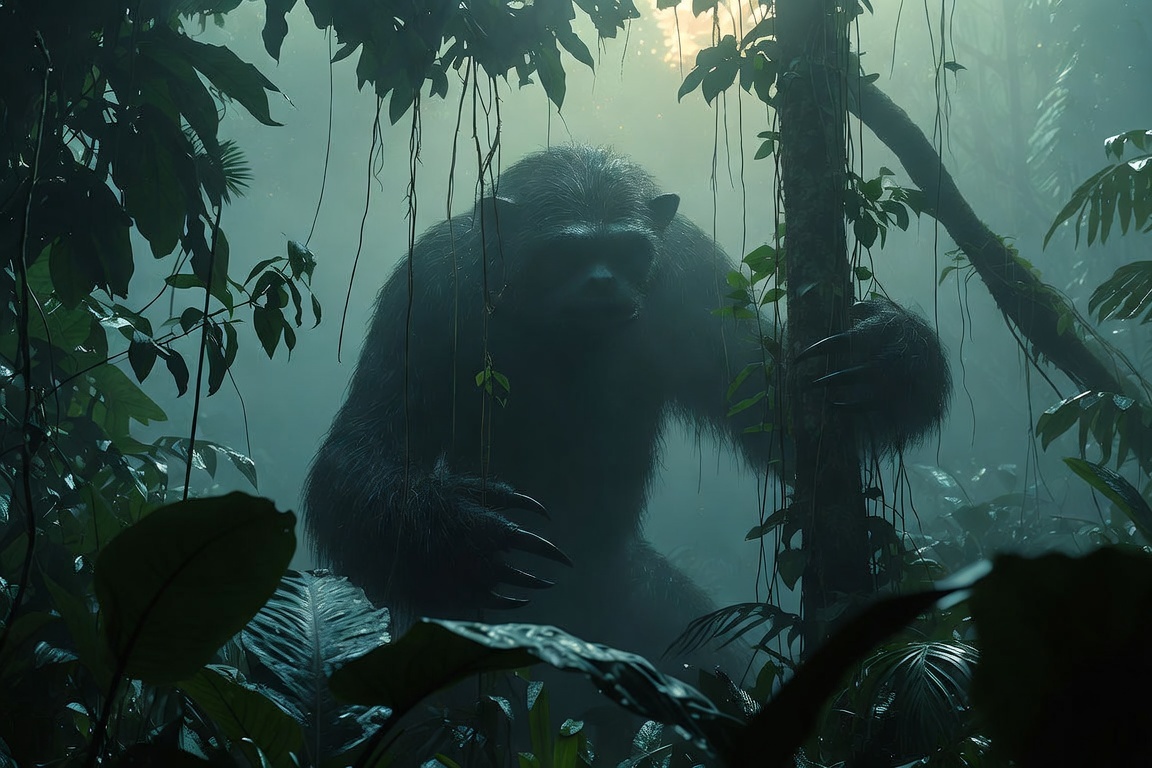
The Mapinguari is one of the most unsettling legends associated with the Amazon. Stories vary across regions, but the creature is often described as huge, powerful, foul-smelling, and dangerous.
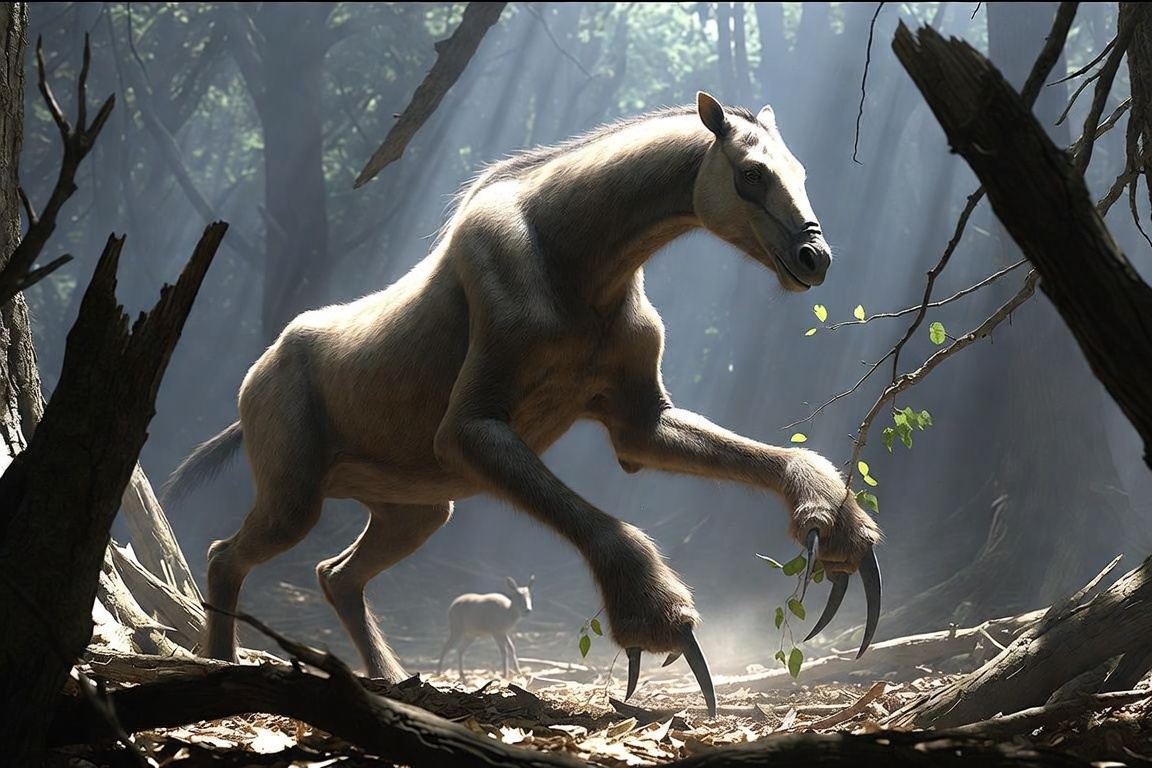
Some versions lean heavily into folklore, with features that are clearly mythic. Other versions have been interpreted by some researchers and cryptozoology writers as possible echoes of giant ground sloths.
That distinction matters.
The Mapinguari is not a proven living animal. It belongs first to folklore and reported encounters. But the legend became especially fascinating because a few scientists and writers explored whether some descriptions could connect to extinct ground sloths that once lived in South America.
The EdgeCase Focus: This idea is controversial, speculative, and not accepted as proof. But it sits perfectly at the boundary of folklore, extinction, memory, and real fossil animals.
Giant ground sloths were real. South America was once home to enormous sloth relatives, some far larger than modern tree sloths. They had strong limbs, large claws, and bodies built for a very different lifestyle.
Many disappeared near the end of the Pleistocene, around the time of major environmental changes and human expansion.
David Oren, an ornithologist, became associated with the idea that some Mapinguari reports could represent surviving ground sloths or cultural memories of them.
In his own writing, Oren also acknowledged problems with the idea, including details in witness descriptions that do not neatly match known ground sloth anatomy. That honesty is important. The giant sloth hypothesis is not proof. It is an attempt to explain some reports through a real extinct animal.
The Mapinguari story can go wrong fast if it is presented as confirmed science. It should not be.
Folklore can preserve:
It can also change over time, mixing human fears, real animals, spiritual ideas, and storytelling traditions.
A legend with similarities to a ground sloth does not prove a ground sloth survived. A witness report does not equal a specimen. No confirmed modern Mapinguari body, DNA sample, or clear scientific evidence has established the creature as a living species.
The responsible angle is stronger: the Amazon has a legend so powerful that some people have looked for real-world explanations, including misidentified animals, cultural memory, and extinct megafauna.
Confirmed: Mapinguari is part of Amazonian and Brazilian folklore, with reported descriptions varying widely. Giant ground sloths were real prehistoric animals in South America. David Oren and others discussed the possibility that some reports might relate to ground sloth survival or memory.
Speculation: That Mapinguari is a living ground sloth, unknown primate, or undiscovered giant animal. There is no accepted scientific proof for that claim.
This separation keeps the story credible. The mystery is not that scientists proved an Amazon monster exists—they have not. The mystery is how legends, fossils, and rainforest encounters can overlap in ways that keep the question alive.
Mapinguari is powerful because the Amazon itself is powerful. Dense forest, low visibility, real biodiversity, remote regions, and long oral traditions create the perfect atmosphere for monster legends. But the best version of the story does not need fake proof.
It asks something more interesting: can extinct animals leave shadows in human culture?
The Mapinguari remains fascinating because it is not one thing. It is folklore, ecology, extinction, speculation, and scientific caution tangled together in the dark green maze of the Amazon.
References: